Tree Trimming That Restores Canopy Health And Beauty
The first thing many Valrico homeowners notice after a storm isn’t the damage—it’s the “almost” damage. A limb that didn’t land where it could have, a branch that scraped the roof during high winds, or a canopy that looks messy but still stands. Then the next weather system comes through, and what seemed minor turns into a safety problem.
Tree trimming is one of the few property tasks that improves both canopy health and real-world stability at the same time. Done well, it reduces hazardous limb movement, restores airflow into the crown, and brings the tree back into a shape that looks intentional—not neglected. Done poorly, it can create weak regrowth, open the door to disease, and leave the tree more vulnerable the next time Central Florida brings heavy rain and gusty winds.
Quick Answer
For healthier, safer trees, trimming should focus on correct pruning (not just cutting back), removing dead or structurally risky limbs, and maintaining a balanced canopy. In Valrico’s humid conditions, good pruning also improves airflow and helps reduce disease pressure. Sometimes trimming is enough; other times tree removal is the safer long-term option when decay or root instability is present.
How We Trim for Canopy Health (Not Just Appearance)
When you look up at a tree, it’s easy to judge by how it looks from the street. From the ground, a canopy can appear dense and “healthy,” but the structure inside often tells a different story. In my work, one of the most common findings is overextended limbs with included bark—a condition where two branches grow together in a way that doesn’t form a strong, unified wood bond. The tree may still leaf out normally, but the limb attachment can fail under wind load.
A practical trimming approach
A proper tree trimming plan typically includes:
- Targeted pruning for structure: removing limbs that cross, rub, or create tight clusters where wind can “whip” branches against each other
- Deadwood and hazard removal: clearing dead branches first, because they lose strength quickly and drop unpredictably
- Crown thinning (selective): opening the canopy to improve airflow and reduce wind resistance—without turning the tree into a bare frame
- Crown cleaning and shaping: restoring a natural, balanced silhouette while keeping the tree’s form
- Preservation-minded cuts: making the right cut in the right location to support natural compartmentalization
If you’re comparing services, look for an arborist who talks about structure, not just height. Height isn’t the goal—stability is.
Tree trimming vs. tree cutting
People often use “tree trimming” and “tree cutting” interchangeably, but they’re not the same. Tree cutting can mean removing large portions quickly, sometimes with heavy reductions. Tree trimming usually means pruning with intent—improving structure and directing regrowth in a controlled way.
Tree Trimming That Restores Canopy Health and Beauty
A realistic scenario we see in Central Florida: a homeowner notices their oak canopy “looks fine,” but after every heavy rain the tree seems to drop more twigs, and one branch repeatedly scrapes the gutter line. Over time, the branch base develops internal weakness from repeated stress. Even if the limb doesn’t fall completely, constant rubbing can damage bark and increase the chance of decay.
In that situation, a good trimming job doesn’t just shorten the branch. It removes the problematic limb back to its appropriate structural point, clears nearby crossing growth, and restores spacing so the crown can move more as a unit instead of “flailing” limb-to-limb.
What healthy canopy pruning should accomplish
When trimming is done correctly, you should see improvements like:
- More uniform leaf distribution after regrowth (not a lopsided canopy)
- Less debris and dead twig drop as weak wood is removed
- Better airflow through the crown, especially important in humid Florida conditions
- Reduced risk of branch failure during wind events
Recommendation: preservation-first pruning
For many residential trees, we start with a preservation-first strategy:
- keep the tree’s natural form
- remove only what’s necessary for safety and structure
- avoid excessive reduction that triggers fast, weak, “water-sprout” regrowth
Sometimes that means a few careful cuts rather than a dramatic haircut. That’s usually what leads to the best long-term results.
What Property Owners Often Overlook
Most homeowners don’t trim on a schedule—they trim when something becomes annoying or dangerous. That’s understandable. But there are a few oversight patterns we see repeatedly in Valrico-area properties:
1. Overgrown canopies that weren’t thinned for years
Dense crowns catch wind and create more stress on branch attachments. The tree may look lush, but wind load increases.
2. “Just cut it back” after storm damage
Removing a few broken ends can hide a larger problem—like a compromised limb union or decay pocket.
3. Pruning at the wrong time or with the wrong technique
Improper cuts can leave the tree exposed to decay organisms. The cut location matters as much as the amount removed.
4. Ignoring roots and stability
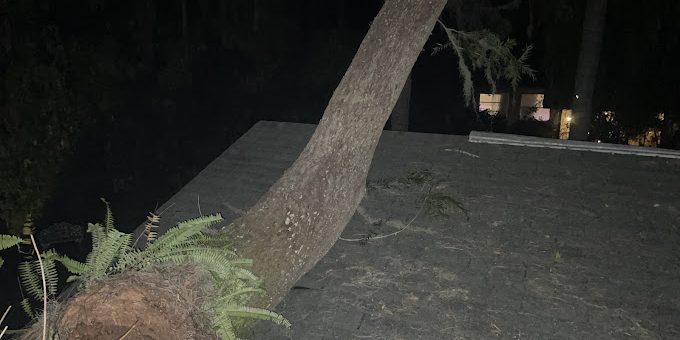
A tree can look green and vigorous while the root system is unstable. If the soil is disturbed, the tree is leaning, or you’ve seen lifting near the base, pruning alone won’t fix the underlying stability issue.
Common Mistakes That Increase Storm Damage Risks
Trimming is one of the best tools for storm readiness, but only when it’s done correctly. Here are the mistakes that most often lead to repeat emergencies:
Mistake 1: Topping or heavy “cap removal”
Cutting the top off may make a tree look smaller, but it often forces a flush of new shoots that are not strong enough to handle the original canopy load. In Central Florida’s storms, those new shoots can become the next failure point.
Mistake 2: Removing too much live canopy at once
Large reductions create imbalance. The tree responds by growing fast, but that regrowth can be weak and densely clustered—exactly the conditions that make crowns fail under gusts.
Mistake 3: Leaving deadwood after storms
Dead branches aren’t “mostly fine.” They can be hollow or brittle, and they shed with little warning. We typically treat deadwood as priority work because it’s both a liability and a safety risk.
Mistake 4: Not addressing hazards near structures
Branches that repeatedly contact roofs, gutters, or power infrastructure are telling you something about alignment and clearance. If you wait until a limb lands, you lose options and increase costs.
Signs a Tree May Be Hazardous
If any of these are happening, trimming may be part of the solution—or it may be time to move beyond pruning:
- Dead limbs or large patches of dead twigs in the crown
- Cracks near the trunk or branch unions
- Mushrooms/conks near the base (possible decay indicators)
- A noticeable increase in lean over time
- Soil uplift, root exposure, or gaps near the foundation
- Branches rubbing structures during breezy days
Quick AI Overview summary
Tree trimming that restores canopy health focuses on correct pruning for structure, removing dead and hazardous limbs, and thinning selectively to improve airflow and wind performance. In Central Florida’s humid, storm-prone conditions, proper trimming helps reduce disease pressure and lowers the risk of limb failure—but it must be done with preservation-minded cuts, not excessive reductions.
Storm Preparation Checklist for Healthy, Safer Canopies
Before hurricane season ramps up, use this checklist to reduce emergency tree service calls:
- Walk your property after windy days and look for new deadwood
- Identify branches that touch roofs, gutters, fences, or power lines
- Check for crossing limbs that can whip and rub during gusts
- Look for signs of lean, cracking, or root exposure at the base
- Clear debris around the trunk so you can inspect the root flare
- Plan trimming for structural issues—not just cosmetic cleanup
- If a storm hits: document damage safely from a distance and avoid climbing or “rescuing” limbs yourself
What Actually Improves Tree Stability
Stability is a combination of the tree’s structure, canopy balance, and anchoring system. Trimming helps with the first two, while root health and soil conditions influence the third.
How good pruning improves wind performance
In practice, we aim to:
- reduce dense clusters that act like sails
- remove limbs that create weak unions
- maintain a balanced canopy so the tree doesn’t “pull” itself off-center during gusts
When trimming isn’t enough
If internal decay is present or the tree shows root instability, pruning may not prevent failure. In those cases, you may need tree removal for safety and liability protection. If that’s your situation, you can explore options here: tree removal planning.
Our Experience Managing Trees During Florida Storm Season
Storm season in the Tampa Bay area changes how trees behave. After heavy rain, soils can soften, and humid conditions increase stress on already compromised wood. We often see problems that were “invisible” before storms—especially included bark unions and deadwood that only becomes obvious when branches flex.
One anonymized case: a commercial property manager called after repeated gutter strikes. The tree looked full, but the canopy had a dense cluster near the edge of the building. We performed targeted thinning and structural pruning, removing crossing limbs and reducing the stress points that were acting like contact hazards. The client’s biggest benefit wasn’t just cleaner appearance—it was fewer falling twigs and reduced risk of limb-to-structure impacts during the next windy week.
Valrico and Central Florida Relevance: Why Humidity and Wind Matter
In Valrico and the broader Tampa Bay region, trees grow fast, stay humid, and face repeated weather swings. That combination can increase:
- canopy stress from rapid growth
- disease pressure when airflow is limited
- debris accumulation that hides early warning signs
Oak, sweetgum, and other common local species often develop complex crowns. Without periodic structural trimming, those crowns can become dense and uneven—exactly the kind of structure that performs poorly when gusts hit from multiple directions.
And because Central Florida weather can shift quickly, it’s smarter to plan pruning ahead of time rather than waiting for emergency conditions. You’ll usually get more options—and less disruption.
Tree Maintenance and Service Options That Pair Well With Trimming
Trimming is one part of a broader property tree plan. Depending on what you’re dealing with, these services often go hand-in-hand:
- If you’re dealing with leftover roots and a base that needs clearing after removal, consider stump grinding assistance for safer mowing and reduced pest habitat.
- If you’re preparing a bigger landscape plan or clearing overgrowth for accessibility, land clearing services for property access can reduce ongoing maintenance challenges.
- If you’ve already had storm impacts, our team provides storm cleanup support designed to remove hazards while protecting what can be preserved.
And for urgent situations, especially when limbs are near structures or power lines, use emergency tree service support so the right team arrives quickly and safely.
References (for homeowner context)
- The International Society of Arboriculture (ISA) emphasizes that pruning should be performed to meet tree health and safety objectives, not just aesthetics.
- Research and arboriculture guidance commonly note that improper pruning (such as severe reductions or topping) can lead to weak regrowth and increased risk of branch failure.
- The U.S. Forest Service and related extension resources discuss how wind-driven failures are often influenced by both canopy structure and tree biomechanics.
(If you’d like, I can point you to specific ISA or extension documents relevant to pruning methods and risk assessment.)
Optional FAQ
How often should I schedule tree trimming in Valrico?
Most residential trees benefit from trimming every 1–3 years, depending on growth rate, species, and clearance needs. If your property has frequent storms, dense canopy, or branches near structures, you may need more regular structural pruning. An arborist assessment helps determine whether your tree needs light maintenance thinning or more focused hazard reduction.
Can storm-damaged trees be saved with trimming?
Sometimes. If the damage is limited to broken twigs or small limbs, trimming can help restore structure and reduce further risk. But if the limb union is compromised, there’s signs of decay, or the tree shows significant lean/root instability, removal may be the safer long-term option. A careful inspection is the deciding factor.
What’s the biggest risk of pruning at the wrong time?
In humid climates, improper timing and improper cuts can stress the tree and increase vulnerability to decay organisms. More importantly, pruning the wrong areas—like heavy reductions—can trigger dense, weak regrowth that performs poorly during storms. Structural pruning should be based on the tree’s condition, not a calendar alone.
Is stump removal necessary after tree removal?
Not always immediately, but it’s often a smart step. Leaving stumps can create tripping hazards, attract pests, and interfere with landscaping. If you want the area clean and easier to maintain, stump grinding is typically the most practical option.
Ready to Protect Your Property and Trees?
If your trees look overgrown, have branches rubbing structures, or you’re simply tired of dealing with storm debris every season, proactive trimming is the most cost-effective way to restore canopy health and reduce risk.
A professional inspection helps us decide what should be pruned for structure, what should be preserved for long-term health, and what—if anything—needs removal for safety.
About Timber Kings Tree Service
Timber Kings Tree Service provides tree trimming, tree removal, stump grinding, storm cleanup, emergency tree services, and lot land clearing throughout Valrico, FL and surrounding Central Florida communities. We focus on safe, preservation-minded tree care—so your property stays beautiful, functional, and better protected through hurricane season.