Tree Service Solutions for Healthy Canopy Management
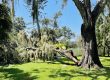
After a strong rain and wind event in the Tampa Bay area, we often get calls from Valrico homeowners who notice something “off” in the yard: a large oak leaning a few degrees closer to the house, branches hanging lower than they used to, or a crown that looks fine until you look under the canopy. The unsettling part is that many tree hazards don’t look dangerous from a distance—until the next storm finishes what the last one started.
Healthy canopy management is how you reduce those surprises. Proper tree trimming, selective pruning, and—when needed—tree removal, stump removal, and storm cleanup all work together to keep trees thriving while lowering risk to people, roofs, fences, and power lines.
Quick Answer
Healthy canopy management means matching the right service to the tree and the hazard level:
- Tree trimming / tree pruning: improves structure, reduces wind resistance problems, and removes dead or rubbing limbs.
- Crown reduction (carefully done): can lower weight and stress on weak unions without “topping.”
- Tree removal (when justified): protects life and property when a tree is structurally unsound or diseased beyond practical treatment.
- Stump grinding / stump removal: prevents regrowth and helps stabilize the site for landscaping or future work.
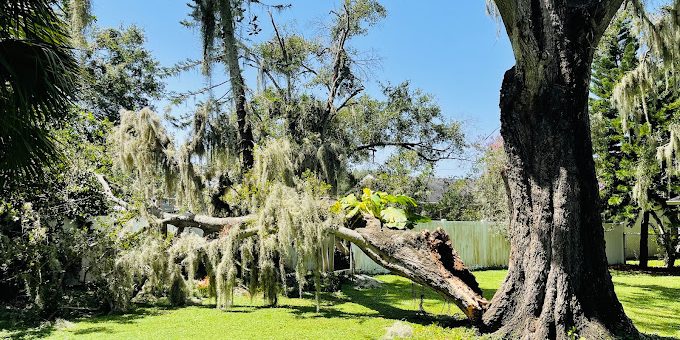
- Emergency tree service: handles fallen tree removal, blocked access, and immediate safety concerns after storms.
If you’re unsure, a tree health assessment by an arborist is the fastest way to separate “needs pruning” from “needs removal.”
When Canopy Problems Become Emergencies
One of the most realistic scenarios we see involves a mature live oak with a beautiful, dense top that homeowners love—until it starts to show subtle failure signs.
A few years of Florida growth can create:
- Overextended limbs that act like sails in wind
- Cracks or weak unions where two branches meet
- Interior decay that isn’t visible from the ground
- Root instability from soil saturation and repeated heavy rain
During a storm, wind doesn’t just push the leaves. It loads the whole crown. If the tree has internal weaknesses, those loads can cause limb failure, partial crown collapse, or—worst case—uprooting.
A firsthand observation from the field
In a recent Central Florida inspection, we found a tree that looked mostly “alive” but had deadwood concentrated high in the canopy and a soft, hollow area near a major fork. The homeowner had done occasional trimming, but the cuts were mostly cosmetic—shortening branches without addressing the structural risk at the union. When we probed lightly with an arborist tool, the internal condition confirmed what the canopy hinted at: the tree needed a targeted plan, not more thinning in random spots.
Valrico weather insight you can plan around
Valrico properties often face fast transitions between heavy rainfall and gusty winds during tropical storms and hurricane season. That combination can:
- increase soil saturation, reducing root grip
- accelerate limb breakage when wood has hidden defects
- worsen humidity-driven issues like fungal decay and certain leaf/branch diseases
That’s why we recommend scheduling inspections before peak season—not after the first major weather system exposes weaknesses.
Signs a Tree May Be Hazardous
Not every hazard is obvious. Look for a pattern—hazards usually show up as multiple symptoms, not just one.
Common warning signs:
- Cracks at branch unions or the trunk
- Mushrooms or conks near the base or on major limbs
- Hollow-sounding wood when tapped
- Dead branches above live growth
- Leaning that’s increasing over time
- Roots lifting, heaving, or exposed by soil erosion
- Branches that repeatedly break or rub against structures
- Fungal growth or persistent leaf issues that worsen season to season
Tree trimming vs tree removal (quick comparison)
| Situation | Best option | Why |
|---|---|---|
| Dead limbs, rubbing branches, minor structural issues | Tree pruning / tree trimming | Removes weak material and improves airflow without destabilizing the tree |
| Crown is too dense, but structure is sound | Crown thinning / selective pruning | Reduces wind resistance and weight without “opening holes” |
| Major fork has decay, severe cracking, or instability | Tree removal | Prevents catastrophic failure where structural integrity can’t be restored safely |
| Tree is blocking access after a storm | Storm damage services | Immediate safety and cleanup, followed by a structural recommendation |
What Property Owners Often Overlook
A lot of hazards begin with a few well-meaning but risky decisions. Here are the most common ones we see in Valrico and across the Tampa Bay area.
1) “It looks healthy from the street”
Trees can have interior decay or weak unions that aren’t visible until wind loads the canopy. If a tree has a dense top but deadwood appears inside, that’s often a sign of internal stress.
2) Over-trimming or topping
Property owners sometimes request heavy cuts to “make it smaller fast.” That often leads to:
- vigorous regrowth that’s weaker at the cut ends
- more mass later (and faster), increasing wind loading
- poor branch attachments over time
Proper pruning is not just about removing volume—it’s about removing risk and improving structure.
3) Delaying action after minor damage
If a limb breaks and you wait, decay organisms can move into that wound. After repeated storms, a once-manageable defect becomes a larger failure point.
4) Treating stump issues as purely cosmetic
When a stump is left too long, it can lead to regrowth and can complicate mowing, landscaping, and future hardscaping. For long-term cleanup, stump grinding is often the practical solution.
Mistakes That Increase Storm Damage Risks
Here’s what commonly increases storm damage—not just to the tree, but to the house, fence, driveway, and nearby landscaping.
- Pruning at the wrong time or with the wrong method: careless cuts can worsen structural weaknesses.
- Ignoring root disturbance: soil compaction, grading changes, or repeated erosion can reduce stability.
- Letting branches grow into power lines or rooflines: even minor contact can create weak, rubbed tissue that fails under stress.
- Not accounting for species behavior: live oaks, pines, and palms respond differently to pruning and wind load.
- Assuming “green leaves = safe tree”: foliage doesn’t guarantee structural integrity.
A realistic example (anonymized service case)
A commercial property manager called after a lightning storm left several limbs hanging over a parking area. The tree’s crown was still green, but we found that the storm had created micro-cracks at a major union. Removing only the visibly broken parts would have left the weakened structure behind. We recommended a targeted structural pruning plan to reduce future risk, and we coordinated removal of the compromised limbs that couldn’t be made safe.
What Actually Improves Tree Stability
Good canopy management isn’t about making trees “look neat.” It’s about managing forces—wind, weight, and gravity—so the tree can handle Florida weather year after year.
Arborist-level practices we prioritize
- Dead tree removal of compromised limbs and stems that can’t be safely retained
- Tree shaping through selective pruning, not aggressive volume removal
- Crown thinning to reduce wind resistance while preserving healthy form
- Crown reduction when weight needs to be lowered safely (not as a substitute for structural correction)
- Tree health assessment to identify disease and pest pressure early, before it turns into structural decline
- Tree disease treatment / tree pest control recommendations when symptoms suggest internal stress or progressive decline
Preservation recommendation (when removal isn’t the answer)
If the tree is healthy enough to keep, we’ll often recommend a preservation-focused plan:
- remove the highest-risk deadwood first
- reduce rubbing and crossing limbs
- thin selectively to improve airflow and reduce sail-like loading
- monitor the specific unions that show early stress
This approach typically costs less than repeated emergency removals and helps keep your property’s canopy intact.
Maintenance, Removal, or Prevention: A Storm-Ready Checklist
Use this checklist to guide what to schedule before storm season and what to address right after weather events.
Storm Preparation Checklist (homeowners & commercial managers)
- Walk your property slowly and look up: identify deadwood, leaning sections, and rubbing limbs.
- Check forks/unions for cracks, separation, or signs of decay.
- Inspect the base of the tree for exposed roots, soil heave, or fungal growth.
- Confirm clearance from structures: rooflines, fences, sheds, and driveways.
- If you manage a commercial site, check egress routes (parking access, entrances, and sidewalks).
- Plan pruning with an arborist so cuts target structure, not just appearance.
- After storms: document damage with photos, then contact an emergency tree service provider for unsafe conditions.
Our Experience Managing Trees During Florida Storm Season
Storm season is a rhythm we’ve learned to respect. In the field, we see two types of problems:
1. Problems that were already there—they just became visible during wind and rain.
2. Problems created during the storm—splits, uprooting, and broken unions that weren’t obvious beforehand.
For many properties, the best “storm plan” is proactive canopy management before the first major system arrives. When we do get called for cleanup, we approach it in two phases:
- Immediate hazard control: remove or stabilize what threatens people and property
- Long-term tree plan: decide whether preservation trimming is safe, or whether hazardous tree removal is the correct move
That sequencing matters. If you remove the wrong parts without addressing structure, you can create new weaknesses for the next event.
Tree Service Options You May Need (and when)
Depending on what we find, Timber Kings Tree Service supports the full range of canopy management needs:
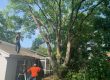
- Tree cutting and tree pruning: targeted removal of weak, dead, and structurally unsound limbs
- Tree trimming services: seasonal maintenance and clearance work for residential and commercial properties
- Storm damage cleanup: fallen tree removal, limb extraction, and hazard mitigation
- Stump grinding assistance: long-term stump removal solutions that reduce regrowth and improve site usability
- Dead tree removal and hazardous tree removal planning: when safety and structural integrity require it
If your property suffered damage, you can explore storm cleanup support here: storm cleanup support. If a tree needs to be taken down, our team handles safe, efficient removals through tree removal near me. For clearance and structure work, our process is detailed in professional tree trimming services. After a removal, many homeowners ask about site finishing—stump grinding is covered in stump grinding near me. And for properties that need broader site prep, we coordinate land work through land clearing services.
Valrico and Central Florida Relevance: Why Canopy Management Here Is Different
Valrico’s climate and soils shape how trees grow and how they fail. With frequent humidity, strong growth spurts, and storm cycles, canopy management has to address both health and structure.
A dense canopy can look lush after a rainy stretch, but it can also:
- increase wind load during tropical systems
- hide deadwood inside the crown
- encourage disease pressure when airflow is reduced
We also see that many Central Florida properties have mixed species—oaks with pines, palms near structures, and ornamentals that respond differently to pruning. A one-size approach doesn’t work. The goal is a canopy that’s shaped around safety, not just aesthetics.
Common Questions Property Managers Ask
Can storm-damaged trees be saved?
Often, yes—if the damage is limited and the tree’s structure can be made safe. We look for cracked unions, internal decay indicators, and whether the remaining wood can hold future wind loads. If the failure risk is still high, preservation trimming won’t be enough, and hazardous tree removal may be the safer choice.
What time of year is best for tree trimming in Florida?
Many trimming and pruning tasks can be done year-round, but timing matters for specific species and for managing stress. We typically focus on long-term structure and hazard reduction rather than calendar-only rules, especially when storms are approaching.
How do I know if a tree is dangerous during storms?
Start with symptoms: deadwood, visible cracks at forks, increasing lean, root heave, and fungal growth. If limbs are already contacting roofs or hanging after a weather event, treat the tree as a hazard and request a tree health assessment.
Does stump grinding prevent regrowth?
Stump grinding helps significantly by removing much of the stump tissue that can produce new shoots. However, results vary based on species and how much root structure remains. A proper plan often includes follow-up cleanup and monitoring.
Ready to Protect Your Property and Trees?
Healthy canopy management is one of the most practical ways to reduce storm risk in Valrico and the Tampa Bay area. When pruning is done for structure—not just appearance—you protect property, reduce emergency calls, and help trees remain assets instead of liabilities.
If you’ve noticed leaning branches, deadwood inside the canopy, or storm damage from recent weather, the next step is a professional inspection and a clear plan for preservation, pruning, removal, and site cleanup.
About Timber Kings Tree Service
Timber Kings Tree Service provides tree removal, tree trimming, stump grinding, storm damage cleanup, emergency tree services, and lot land clearing solutions throughout Valrico, FL, and surrounding Central Florida communities. We focus on safe tree management, storm preparedness, long-term tree health, and helping homeowners and commercial property owners protect their properties with professional arborist guidance and dependable service.