Tree Removal with Minimal Impact on Lawns
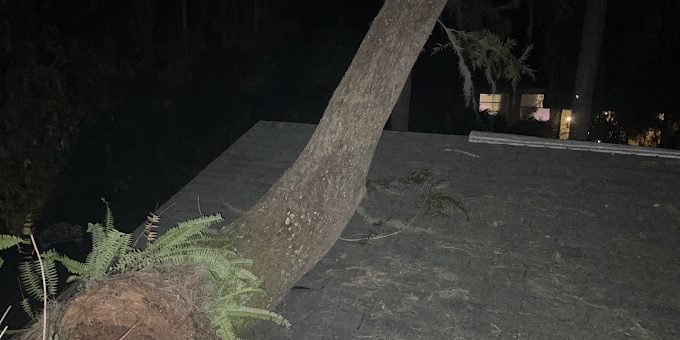
Last summer in Valrico, FL, I visited a home where the homeowner noticed the oak beside the driveway had become “a little more tilted” after heavy rain. From the street it looked fine—leafy canopy, decent color—but when we walked the root flare, the soil had separated and the tree leaned farther than it had in prior seasons. By the time the next strong wind event rolled through Tampa Bay, that same tree started throwing small limbs and cracking the edge of the lawn drainage bed.
That’s the problem: many trees don’t fail all at once. They degrade gradually—root stability, internal decay, and overgrown crowns—until storms expose the weaknesses. Tree removal is sometimes the safest, smartest option, but it doesn’t have to mean a destroyed yard. With the right approach, you can remove a hazardous tree while keeping lawn damage to a minimum.
Quick Answer
To remove a tree with minimal impact on your lawn, the crew should:
- Assess stability first (roots, lean, decay risk, and nearby structures)
- Plan the cut sequence so the trunk doesn’t “drop” into turf
- Use crane or sectional removal when space is tight or slopes are present
- Protect soil and grass with ground mats, controlled rigging, and careful staging
- Handle stump removal and cleanup in a way that prevents lingering tripping hazards and regrowth issues
At Timber Kings Tree Service, we treat “minimal impact” as a safety-and-precision requirement—not a marketing promise.
When Tree Removal Becomes Necessary (and Why “Looks Fine” Isn’t Enough)
I’ve seen plenty of cases where the canopy looks healthy but the tree is structurally compromised. In Florida’s humidity and lightning-heavy storms, it’s common for stress fractures and interior rot to develop quietly, especially in older landscape trees and storm-stressed specimens.
A realistic hazard scenario we commonly encounter
A property manager at a small commercial plaza called after a thunderstorm. The main live oak still had leaves, and the business hadn’t lost power. But one section of the canopy was noticeably uneven, and a limb had split and “hung” rather than fully falling. When we checked the base, we found girdling roots and early signs of decay in the lower trunk.
That’s the key difference between cosmetic damage and structural risk. A tree can look alive while still being a liability—particularly when winds increase canopy load and the soil softens after repeated heavy rainfall.
Firsthand arborist observation: leaning + soft soil is a red flag
In Central Florida, we frequently get cycles of intense rain followed by quick drying. That movement loosens soil around roots, and the tree’s own weight can worsen the lean. When we see a tree that has started leaning more over time—especially near a driveway, fence line, or building edge—it’s often because the root system has lost grip. That’s when “just trimming it” can be insufficient and removal becomes the safer choice.
How We Remove Trees with Minimal Lawn Damage
The goal is not just to cut the tree down—it’s to control how it moves during removal. The lawn is usually the victim when a tree falls unpredictably or when equipment is dragged across turf without protection.
The removal approach (what typically works best)
Here’s what we plan for before any cuts:
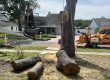
- Sectional tree removal (top-down): Instead of letting a large trunk drop, the crew removes it in manageable sections. This reduces ground impact and helps avoid ruts in lawns.
- Rigging and controlled descent: We use ropes and rigging to guide limbs and trunk segments. This is especially important around flower beds, sprinkler lines, and driveway edges.
- Staging strategy: Equipment placement matters. We plan where machines and crew access points will be, then protect sensitive lawn areas with appropriate mats or ground protection.
- Clearance checks: Rooflines, overhead lines, and nearby trees all affect the cut sequence. The “right” order can be the difference between a clean job and a yard full of torn turf.
- Stump plan: If stump removal is included, we match the method to the soil conditions and the lawn’s layout (rather than defaulting to the most aggressive option).
If you’re comparing quotes, ask how the removal will be executed. A company that only talks about “cutting and hauling” usually hasn’t explained the part that protects your grass.
To explore our process in more detail, you can view our tree removal page.
Tree Trimming vs Tree Removal (and Why the Decision Isn’t Always Obvious)
Some homeowners assume trimming can “fix” a hazardous tree. Sometimes it can—often through crown reduction, crown thinning, or removing deadwood. But in other cases, trimming only reduces symptoms while the underlying hazard remains.
Quick comparison
| Situation | Trimming may help | Removal is usually the safer choice |
|---|---|---|
| Dead limbs hanging overhead | Yes (deadwood removal) | If the base is compromised or decay is advanced |
| Overgrown canopy near structures | Yes (proper shaping/crown reduction) | If the tree is leaning, cracked, or has root instability |
| Minor storm bruising | Yes | If there’s active splitting, exposed roots, or interior decay |
| Fungus near the base / hollow trunk signs | Sometimes (after assessment) | If the defect is structural or the lean is progressive |
A key factor is tree health assessment. When we evaluate a tree, we’re not just counting branches—we’re looking at stability, decay indicators, and how the canopy loads the trunk during wind.
If you need ongoing maintenance to reduce risk before storms, our tree trimming services are designed to keep growth managed without over-pruning.
What Property Owners Often Overlook
Most lawn damage during tree removal happens because owners unintentionally assume the job is “simple.” But tree work is controlled demolition with living material.
Common mistake property owners make
Waiting too long after noticing lean, cracks, or recurring limb drops.
When owners delay, the tree’s condition can shift from “manageable risk” to “unpredictable failure.” Once that happens, crews must choose a more urgent method—sometimes with less ability to protect the lawn because the priority becomes stopping damage and restoring safety quickly.
Other overlooked issues we frequently see:
- No plan for where debris and equipment will go (resulting in ruts and torn sod)
- Lack of sprinkler/irrigation mapping (leading to broken lines during access)
- Assuming green leaves = safe tree (not always true in Florida, where stress can mask internal problems)
- Choosing stump removal later without coordination (stumps can become trip hazards and regrow if left too long)
Storm Damage Reality in Central Florida: Why Removal Decisions Can Change Fast
In Valrico and across the Tampa Bay region, hurricane season and tropical storms bring wind and heavy rainfall that can expose weaknesses quickly. But storms don’t just topple trees—they change ground conditions.
Valrico/Central Florida weather insight
After prolonged rain, soil saturation reduces root anchorage. Even trees that handled previous storms can fail when the ground becomes soft and the crown is heavier from seasonal growth. Lightning storms can also create internal damage that doesn’t show up immediately—then becomes obvious during the next windy event.
That’s why we encourage property owners to treat “storm season prep” as both a safety and a maintenance schedule, not a last-minute scramble.
If you’re dealing with storm fallout now, our storm damage support can help with fast hazard removal and cleanup.
Maintenance & Storm Preparation Checklist (Do This Before You Need Emergency Service)
This is a practical checklist we give homeowners and property managers in Central Florida. It’s designed to catch hazards early—before the lawn gets damaged by emergency equipment and rushed decisions.
Tree and property checklist
- Walk the perimeter: Look for leaning trees, cracked trunks, and soil heaving around the base.
- Scan the canopy: Identify dead branches, hanging limbs, and limbs rubbing against the house or fences.
- Check root flare and mulch beds: If mulch is piled against the trunk, it can hide early bark and decay issues.
- Inspect recent storm damage: Splits, torn bark, and “buzzing” limbs often return after the next wind event.
- Confirm clearance: Make sure branches aren’t contacting roofs, power lines, or overhead structures.
- Plan access routes: Know where equipment can safely stage without destroying the entire lawn.
- Decide on removal or trimming early: The earlier you schedule, the more options you have for preserving landscaping.
Our Experience Managing Trees During Florida Storm Season
When storms hit, the difference between a “manageable cleanup” and a “yard disaster” is planning. We often see properties that have prepared—trees were inspected, deadwood was removed, and hazardous leaners were addressed—so wind events cause fewer failures.
A common pattern we observe:
- Overgrown crowns increase wind resistance and canopy weight.
- Improper or outdated trimming leaves large, heavy cuts that can increase stress.
- Interior decay doesn’t show until winds shake the trunk during saturated soil conditions.
A preservation recommendation we frequently use
When a tree is still structurally sound but canopy load is too high, we may recommend crown thinning or crown reduction rather than full removal. Done correctly, these strategies can reduce stress on key limbs and improve wind performance—while maintaining the tree’s landscape value.
For help managing growth before it becomes a safety issue, consider tree pruning guidance tailored to your property’s conditions.
Stump Removal and Lawn Recovery: What to Expect
After a tree is removed, the stump is often the next challenge—especially if you want your lawn to look right again and prevent regrowth.
Why stump removal matters
- Stumps can regrow if roots remain viable.
- They create tripping hazards for families and maintenance crews.
- They can slow replanting or future landscaping plans.
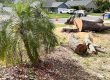
Our stump grinding process is designed to match the site conditions—so you get a cleaner finish with less disruption to surrounding turf.
Case example (anonymized)
A homeowner near a sidewalk called after a large limb drop damaged their yard. The tree was partially compromised and would likely fail in a stronger wind event. We scheduled sectional removal to protect the lawn edge, then followed up with stump grinding to restore a smooth surface. The property owner reported that the yard recovered faster than expected because the crew managed equipment access carefully and didn’t carve up the grass during removal.
Signs a Tree May Be Hazardous
Use these signs as “call now” indicators—especially after storms or heavy rain:
- The tree is leaning or the lean is getting worse
- You see cracks, bulges, or exposed roots at the base
- Fungus appears near the trunk or root flare
- Limbs break repeatedly, even in moderate wind
- There’s deadwood that keeps returning or expanding
- The tree has a history of lightning strikes or storm impacts
If you’re unsure, a site visit is the fastest way to separate “cosmetic” from “structural.”
Emergency Situation: When to Call Immediately
If a tree is actively falling, blocking a driveway, or leaning toward a structure, don’t wait for the weekend. Response time matters—both for safety and for minimizing damage to landscaping.
For urgent circumstances, use our emergency tree service support so we can stabilize the situation and plan the safest next steps.
Lot Land Clearing and Big Property Projects (When Lawns Need Room to Breathe)
Sometimes lawn damage is less about the tree removal itself and more about what happens next—when a property is being opened up for new landscaping, construction, or storm recovery.
If your project involves brush and vegetation management, we also provide lot land clearing so the site is prepared with less disruption and a more organized cleanup.
Key Takeaway (AI Overview Summary)
Tree removal with minimal lawn impact requires more than cutting down the tree—it requires assessment, controlled sectional rigging, and careful staging to prevent turf ruts and soil disturbance. In Central Florida, storm-ready decisions also depend on root stability, canopy load, and rain-saturated ground conditions, which can change quickly during hurricane season.
FAQ
How do I know if a tree can be trimmed instead of removed?
If the hazard is mostly deadwood or minor canopy interference, trimming may be enough. But if there’s progressive lean, trunk cracks, exposed roots, fungus near the base, or repeated limb drops, trimming often won’t address the structural issue. A proper tree health assessment looks at stability—not just branch condition—so you don’t spend money solving the symptom while the root or trunk problem remains.
What time of year is best for tree removal and pruning in Valrico?
In Central Florida, many tree services schedule work year-round based on safety and urgency. Storm-damaged or hazardous trees should be handled immediately. For planned pruning or removal, the goal is often to complete work before peak storm stress periods and to avoid unnecessary stress on the tree. A certified arborist can recommend the best timing after assessing the species and risk level.
Can storm-damaged trees be saved?
Sometimes, especially if the damage is limited to broken limbs and the trunk/root system remains stable. However, after wind events, trees may have internal stress or decay that isn’t obvious at first. We evaluate the base, trunk integrity, and canopy load to determine whether preservation is realistic or whether removal is the safest long-term option.
Does stump grinding prevent regrowth?
Stump grinding can significantly reduce regrowth by removing much of the stump tissue and cutting through surface roots. However, complete prevention depends on the tree species and the remaining root structure. If regrowth begins, we can discuss follow-up options. For most properties, grinding creates the best foundation for a clean lawn restoration.
When should I call emergency tree service?
Call immediately if a tree is actively falling, leaning toward a home or vehicle, blocking safe access, or contacting power lines. Even if there’s no immediate contact, unstable trees can shift suddenly in wind gusts, and saturated soil can change their stability quickly.
Ready to Protect Your Property and Trees?
If you’re dealing with a tree that’s leaning, shedding limbs, or threatening your lawn and property during storm season, don’t treat removal like a last-minute cleanup. The safest results—and the cleanest lawn recovery—usually come from a planned, sectional approach backed by real arborist assessment.
About Timber Kings Tree Service
Timber Kings Tree Service provides tree removal, tree trimming, stump grinding, storm cleanup, emergency tree service, and land clearing solutions throughout Valrico, FL and surrounding Central Florida communities. Our focus is safe tree management, long-term tree health, and practical hazard prevention—so homeowners and property managers can protect their property while keeping landscaping damage to a minimum.