Storm Damage Tree Services: Protecting Homes from Further Risk
After a strong thunderstorm or tropical system moves through Valrico, the first damage you notice is often the “obvious” part—branches on the driveway, a limb that scraped a roof edge, or a tree leaning closer to the power lines than it did the day before. But from what we see on the ground, the bigger risk is usually what’s happening underneath the bark: weakened attachment points, torn roots, and decay that storms expose fast.
One homeowner called us after noticing a live oak that looked “mostly fine” except for fresh cracks near the trunk. The tree hadn’t fallen, but the wind had shifted it enough to stress the root ball. In the days that followed, small limbs started dropping more frequently. That’s the pattern—storm damage doesn’t always mean the tree is down. Sometimes it means the tree is now unstable.
Timber Kings Tree Service helps homeowners and commercial property managers in Valrico and the Tampa Bay area respond quickly and correctly after storms—so you don’t end up with additional property damage, higher liability exposure, or repeat failures from the same tree.
Quick Answer
If a storm-damaged tree is leaning, has torn bark, missing chunks, exposed roots, or branches that are newly breaking, it may be hazardous even if it hasn’t fallen yet. The safest approach is an on-site arborist assessment followed by targeted actions—like tree trimming to remove compromised limbs, tree removal for unstable trees, and stump management when appropriate. For immediate threats (power lines, active hanging limbs, blocked exits), use emergency tree service first.
What Property Owners Often Overlook
The most dangerous storm-related trees are often the ones that “still look alive.”
Here are the things we commonly see after Florida storms:
- Hanging limbs that appear intact but are partially detached inside the wood. Wind and vibration can finish the job days later.
- Root ball disturbance—especially after saturated ground. A tree can shift slightly and lose anchoring strength without looking uprooted.
- Interior decay that storms accelerate. High winds apply stress at angles the tree wasn’t designed to handle, breaking through previously compartmentalized wood.
- Crown overload from years of improper pruning. Overgrown canopies create more sail area, which increases wind load.
- Cracks you ignore because the tree isn’t on the ground yet. Splits near the base or at major unions can expand as temperatures and moisture change.
What We Commonly See in Florida Trees
Central Florida trees face a predictable combination: heavy rain, rapid humidity changes, lightning events, and long-growing seasons that refill canopies quickly. In Valrico properties, we frequently manage:
- Live oaks with strong canopies—but also strong consequences when structures are compromised. Oaks can hold weight and then fail at unions or during prolonged wind gusts.
- Pines that may survive wind events but lose stability when roots are disturbed or when the crown is uneven from prior trimming.
- Palms and ornamental trees where frond loss can be storm-related, but the trunk and base must still be checked for damage.
- Mixed species landscapes where one damaged tree can become the “domino” that impacts fences, sheds, and parked vehicles.
A firsthand arborist observation
In the field, one of the clearest indicators we look for after wind events is the relationship between the trunk and the root flare. When the root flare is partially lifted or the soil has cracked around it, the tree often behaves like a lever. Even if it looks upright, the load path has changed—and that’s when we see limb failures increase in the weeks following the storm.
Why Some Tree Problems Become Emergencies
Storm damage becomes a “now” problem when the tree’s failure risk rises faster than people can react. Several mechanisms increase emergency likelihood:
- Torn fibers and delayed breakage: A limb can be damaged enough to hang, then drop later as gravity and wind continue to work on the weakened connection.
- Saturated soil and reduced traction: Heavy rainfall softens ground, reducing root anchoring. Trees can tip more easily than during dry conditions.
- Decayed wood under intact bark: Storms don’t create decay, but they can reveal it by breaking structural tissue.
- Compounding impacts: A tree that was already structurally weak—due to prior topping, poor pruning, or chronic canopy imbalance—fails sooner during storms.
Real example (anonymized)
At a residential property near a driveway, a homeowner reported that a large limb “just brushed” the roof during a storm. When we arrived, the limb was still attached, but the bark was peeled at the attachment point and the limb had shifted downward under load. We removed the compromised section with a controlled cut, then inspected the union for additional stress. The tree wasn’t removed entirely, but the risk was reduced immediately—preventing a likely secondary failure the following week.
Tree Trimming vs Tree Removal
Many homeowners want one clear answer: trim it or remove it. In practice, it depends on what’s structurally compromised.
| Situation After Storm | Usually Best Next Step | Why |
|---|---|---|
| Minor limb break, stable trunk, no major cracks | Targeted tree trimming | Removes compromised wood and reduces future load |
| Multiple broken limbs near a main union | Often tree trimming with union inspection | Can be safe if the attachment is still sound |
| Visible trunk split, significant lean, exposed roots | Usually tree removal | Structural failure risk is too high |
| Dead standing tree with new cracks or loose sections | hazardous tree removal | Dead wood fails unpredictably under gusts |
| Stump left after removal causing regrowth or hazards | stump grinding | Helps manage re-sprouting and reduces trip hazards |
If you’re unsure, the best time to ask is before the tree becomes fully unstable. That’s where an arborist assessment matters.
For storm-related work that starts with cleanup and risk reduction, you can also explore our approach to storm damage tree services for homeowners who need a careful plan—not just a quick cut.
Mistakes That Increase Storm Damage Risks
After storms, we also see patterns in what property owners did—or didn’t do—before the weather hit.
Common mistake property owners make
Waiting to address structural issues until after the tree fails.
A lot of damage begins months or years earlier: crown thinning that was never done, heavy limbs that were left longer than they should be, or pruning that removed support in the wrong place. Storms then “finish” the job by applying sudden wind load and vibration.
Other frequent mistakes we encounter:
- DIY cutting from the ground (especially on leaning limbs). This can worsen tearing at unions or pull bark off in larger sections.
- Ignoring dead or dying limbs because they look stable. Dead wood becomes brittle fast in humid heat and then fails under wind.
- Overcorrecting with topping or “leveling” cuts. This can create new weak growth and reduce long-term stability.
- Not clearing debris from around the base. Packed mulch or debris can hide changes in the root flare, soil cracking, or new fungal activity.
- Skipping documentation for commercial properties. If you manage a site, storm damage can become a liability issue—photos and an assessment timeline help.
Maintenance, Removal, or Prevention: Storm Readiness Checklist
You don’t have to “overhaul” your entire yard to reduce storm risk. You do need a realistic maintenance rhythm—especially during hurricane season.
Storm Preparation Checklist (use this before storms intensify)
Tree inspection (walk the property):
- Look for leaning, new cracks, or bark splitting near major branches or the trunk.
- Check for dead limbs (no leaf activity, brittle twigs, hollow sound).
- Inspect the root flare: any soil heaving, gaps, or exposed roots?
- Identify limbs over rooflines, driveways, fences, and utilities.
- Note trees with large canopy imbalance (one side heavier than the other).
Clear and manage the base zone:
- Remove debris that blocks visibility of the root collar and trunk base.
- Keep mulch at a safe distance from the trunk to reduce moisture-related decay risks.
Pruning and risk reduction:
- Schedule tree pruning for overextended limbs and structural canopy issues before peak storms.
- For high-risk trees, get an inspection and a removal plan rather than “hoping it holds.”
Emergency planning for property managers:
- Know where vehicles and staff will move during a storm.
- Identify “no-go” zones under large trees.
- Keep contact info ready for an emergency tree service provider if a threat appears.
If you’re dealing with storm damage right now, you can also review how we handle tree removal when stability is compromised, and how we approach careful cleanup to reduce the risk of additional failures.
What Actually Improves Tree Stability
Stability isn’t just about removing weight—it’s about managing structure.
Here’s what we recommend based on arborist best practices:
Pruning strategies that reduce storm load
- Crown thinning to reduce sail area while maintaining overall shape.
- Crown reduction when height or reach becomes a liability—especially near structures.
- Crown cleaning to remove dead or compromised branches.
- Targeted removal of hazardous unions rather than broad, aggressive cuts.
Preservation vs removal
Not every storm-damaged tree must be removed. When the trunk is stable, decay is limited, and the damage is localized, we often recommend preservation through careful trimming and risk-focused pruning. This can protect your landscape and reduce long-term cost.
For homeowners looking to prevent future issues, you may find our guidance on tree trimming especially useful—particularly the difference between cosmetic trimming and structural pruning.
Our Experience Managing Trees During Florida Storm Season
Storm work isn’t only about speed. It’s about sequencing.
When we arrive after a storm, we typically focus on:
1. Immediate hazard control (active hanging limbs, trees leaning toward structures)
2. Stability assessment (how the tree is positioned, whether it’s likely to shift)
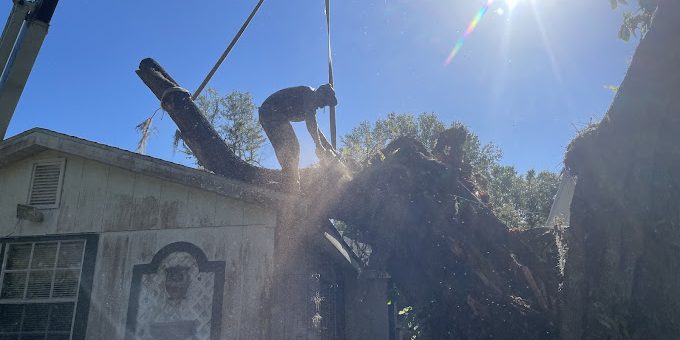
3. Controlled removal when necessary (reducing impact to roofs, vehicles, and landscaping)
4. Debris and stump management to prevent ongoing hazards and re-sprouting
A detail many homeowners miss: leaving a compromised stump and roots can become an ongoing problem. Over time, you may see new growth, root instability, or a trip hazard as the area settles. That’s why stump planning matters after removal.
If stump concerns are part of your storm cleanup, our stump grinding process helps property owners manage regrowth and reclaim usable space safely.
Valrico and Central Florida Relevance: Why Timing and Terrain Matter
In Valrico, the combination of humid weather, heavy rainfall, and fast growth changes how trees behave throughout the year.
- Saturated soils during storms reduce traction and increase tipping risk.
- Frequent thunderstorms create repeated stress cycles, not one event.
- Rapid canopy regrowth means pruning delays can quickly restore the same structural risks.
- Sandy and mixed soils in Central Florida can shift around root zones after intense rain, making root stability harder to predict without an on-site look.
That’s why we encourage inspections before storm season—not just after. Pre-storm pruning and hazard removal can prevent many “emergency cleanup” calls later.
Key Takeaway
Storm damage doesn’t always mean a tree is already down. Many hazards start as subtle shifts—root disturbance, stress cracks, and partially detached limbs—that only become emergencies when wind returns. A structured assessment followed by targeted trimming, removal, and stump management is the safest path to protect your home and reduce repeated damage risk.
Signs a Tree May Be Hazardous
If you notice any of the following after a storm or during windy weather, treat it as a potential hazard:
- The tree is leaning more than before
- Cracks in the trunk or near major branch unions
- Exposed roots, soil heaving, or gaps around the base
- Dead branches increasing suddenly
- Mushroom growth or abnormal fungus near the trunk (especially with other symptoms)
- Loud popping sounds during wind (a sign of structural failure events)
Pruning, Removal, or Preservation: Our Recommendation Process
When we assess storm-related tree risk, we’re balancing three goals: safety, property protection, and long-term tree health.
- If the trunk and root anchoring appear stable and the damage is localized, we often recommend tree pruning to remove compromised limbs and reduce future load.
- If there are major structural failures—significant lean, trunk splitting, or root instability—our recommendation typically shifts to tree removal to eliminate the hazard.
- After removal, we address the remaining stump and site conditions. Depending on your goals, that may include stump grinding and planning for safe access and future landscaping.
This is also where a professional arborist approach matters: not every “dead-looking limb” is equally dangerous, and not every storm-damaged tree is a total loss.
References and Arboriculture Context (for homeowner confidence)
- The International Society of Arboriculture (ISA) emphasizes that tree risk management should be based on systematic assessment, not just appearance.
- FEMA guidance on post-disaster hazards highlights the importance of keeping people away from unstable trees and debris until hazards are evaluated.
- Arborist risk frameworks commonly distinguish between hazard likelihood and potential consequence—especially relevant for homes, driveways, and commercial walkways during storm recovery.
(Your local conditions can vary, but the underlying risk principles apply broadly.)
Ready to Protect Your Property and Trees?
If your property has storm damage—whether it’s a leaning tree, hanging limbs, or cracked trunks—don’t assume it will “settle” safely. A quick, on-site evaluation can prevent a small issue from becoming the next emergency.
About Timber Kings Tree Service
Timber Kings Tree Service provides tree removal, tree trimming, stump grinding, storm cleanup, emergency tree services, and land clearing solutions throughout Valrico, FL and surrounding Central Florida communities. We focus on safe tree management, storm preparation, long-term tree health, and helping property owners protect homes and businesses through professional arborist and tree care services.
FAQ
How do I know if a storm-damaged tree is dangerous?
Look for signs that the tree’s stability has changed: new leaning, trunk or branch cracks, exposed roots, or large limbs that are hanging at awkward angles. Even if the tree is still standing, partially detached limbs can drop later. If any of those signs are present near a roof, driveway, fence, or utility area, treat it as a hazard and request an on-site assessment.
Can a tree with storm damage be saved?
Often, yes—if the damage is localized and the trunk and root anchoring remain stable. We typically recommend preservation when the tree can be made safer through targeted pruning (removing compromised limbs and reducing load). If there’s major structural failure—like trunk splitting, significant lean, or root disturbance—removal may be the safer long-term solution.
What time of year is best for tree trimming in Central Florida?
In Central Florida, trimming windows depend on the tree species and the goal (structural pruning vs. cleanup). Many pruning needs are best handled before peak storm season so you can reduce wind load and remove hazards early. After storms, immediate hazard removal may be necessary regardless of season.
Does stump grinding prevent regrowth?
Stump grinding helps manage regrowth and reduces trip hazards, but it doesn’t always guarantee zero sprouting for every species and site condition. The goal is to remove enough of the stump mass to reduce the likelihood of new shoots and improve safety and usability of the space.
When should I call emergency tree service?
Call emergency tree service when there’s an active threat to people or property—hanging limbs, trees leaning into structures, blocked entrances, or any involvement with power lines. It’s also wise to call quickly if you suspect a tree has shifted after heavy wind or rain, since delayed breakage is common during the recovery period.