Tree Removal Done Right: Safer Yards, Clear Views
Last week, a Valrico homeowner called after noticing their large live oak was starting to lean—subtly at first, then more noticeably after a heavy rain. The yard still looked “green and healthy,” but one side of the root flare was shifting, and a couple of limbs had begun to rub against the roofline during wind gusts. In Central Florida, that’s a common pattern: trees can look fine until the combination of saturated soil, high winds, and canopy weight reveals the weak points.
When tree failure happens, it’s rarely random. It’s usually connected to structure (how the tree is built), roots (how the tree is anchored), and maintenance (what’s been pruned—or left to grow unchecked). Whether you’re dealing with a hazardous tree, storm cleanup, or simply wanting clearer views and safer landscaping, quality tree removal is about more than cutting down a trunk. It’s about doing the job safely, protecting nearby structures, and making sure the property is left stable and clean.
Quick Answer
Professional tree removal should start with a site-specific hazard assessment—looking at root stability, lean, decay, limb attachment, overhead clearance, and nearby utilities. In many cases, we can avoid full removal through targeted tree trimming or pruning (like crown thinning or dead limb removal). If removal is necessary, safe rigging, proper equipment, and controlled dismantling help prevent property damage and reduce the risk of the tree shifting unexpectedly.
Key Takeaway
If a tree is leaning, showing deadwood, or cracking near the base, don’t wait for “the next storm” to find out how unstable it is. Call for an arborist-style evaluation before you’re forced into emergency decisions.
Signs a Tree May Be Hazardous
From an arborist’s perspective, the biggest danger signs aren’t always dramatic. Some of the most concerning issues show up as “slow changes” that homeowners may dismiss.
Here are the indicators we commonly look for during inspections:
- Leaning or increasing sway after storms or heavy rain
- Cracks in the trunk, or splits that open wider over time
- Mushroom growth or fungal conks near the base (often tied to decay)
- Dead branches in the upper canopy (especially if they spread year to year)
- Root flare heaving—soil lifting or gaps forming around the trunk
- Friction points where limbs rub buildings, fences, or roofs
- Exposed, damaged, or lifting roots near sidewalks or driveways
- Crown imbalance (more weight on one side from years of growth)
A realistic Valrico scenario we often see
We’ll frequently assess trees that appear “mostly alive” but have interior decay. The crown may still hold leaves, especially on oaks and other long-lived species, but the structural failure starts below the surface—where decay weakens the wood. In high winds, those trees can shed large limbs or fail at the union points.
Tree Trimming vs Tree Removal
A lot of property owners assume the only options are “leave it alone” or “cut it down.” In practice, many Central Florida situations call for preserving what’s healthy and removing only what’s unsafe.
Here’s the practical difference:
| Situation | Best Approach | Why |
|---|---|---|
| Dead limbs, rubbing branches, or overextended canopy | Tree trimming / pruning | Reduces weight and improves clearance without removing the whole tree |
| Crown is dense but healthy, and wind exposure is high | Crown thinning (selective pruning) | Reduces wind resistance while keeping the tree’s structure intact |
| A storm already exposed cracks or root shifts | Tree removal or staged removal | Prevents a secondary failure during cleanup |
When preservation is realistic, we recommend it. For example, crown thinning and crown reduction are often used to manage size and risk while maintaining tree health. But if the trunk or root system is compromised, trimming alone can’t fix the underlying stability problem.
If you’re trying to decide what your tree needs, our team can help you compare options through a focused tree health assessment and hazard evaluation—without automatically defaulting to removal.
Tree trimming services can be a smart first step when the goal is clearance, shape, and reduced storm stress rather than full removal.
What Property Owners Often Overlook
This is where many problems grow—quietly—until hurricane season makes them urgent.
Common mistake: “DIY cutting” or “topping”
One of the most frequent mistakes we see is homeowners or crews removing large branches in a way that creates new weaknesses. Cutting too much at once, making improper cuts, or “topping” can lead to:
- Weak regrowth (fast but structurally inferior)
- Wound expansion and increased decay entry
- More canopy imbalance, which can worsen wind loads
Another mistake is delaying action after you notice early warning signs. In Central Florida, high humidity and frequent storms accelerate stress. A tree that’s stable in calm weather can become unstable when roots are saturated.
What we commonly see in Florida trees
Because of rapid growth and frequent rainfall, it’s normal for canopies to expand quickly. Over the years, that can lead to:
- Heavier limb loads over driveways and roofs
- Dense internal shading, which can reduce structural resilience
- Deadwood accumulation that isn’t visible from the ground
If the tree’s been “left to grow” without periodic pruning, the canopy can become a sail—especially when it overhangs structures or utility corridors.
Firsthand arborist observation
During one recent assessment, we noticed a live oak with a full green canopy but a tight, cracked branch union higher up. The homeowner assumed it was just heavy growth. When we probed the union and examined the attachment, it was clear the structure was weakening internally. That’s the kind of problem that doesn’t always show up until wind and rain combine. In that case, we recommended targeted removal of the failed union and staged work to prevent secondary failures.
Mistakes That Increase Storm Damage Risks
Storm-related tree failures usually come from a combination of tree stress and management gaps. Here are the issues we see most often after tropical storms and strong thunderstorms:
- No clearance over roofs, fences, or driveways
- Overgrown canopies that trap wind and increase leverage on weak limbs
- Improper pruning history (large cuts, poor branch collars, or topping)
- Ignoring soil and root movement after heavy rain
- Assuming “it’s healthy because it has leaves”
- Leaving dead trees or dead limbs that become brittle during humidity swings
This matters for insurance and liability too. When a tree fails, it can create property damage that’s expensive and complicated—especially for commercial sites where liability concerns are immediate.
Maintenance, Removal, or Prevention Checklist
Whether you’re trying to prevent problems or prepare for removal, this checklist helps you stay practical and safety-focused.
Storm Preparation Checklist for Tree Safety
- Walk your property after heavy rain and look for root flare movement, fresh soil gaps, or new leaning
- Inspect for deadwood—branches that are brittle, hollow-sounding, or missing leaves out of season
- Check for rubbing limbs against structures and fences
- Look up: if limbs touch power lines, treat it as an emergency planning issue (don’t approach)
- Assess canopy balance—does one side look dramatically heavier?
- Clear access routes for equipment if removal becomes necessary
- Plan for debris management (especially after storms—branches can block drainage and create hazards)
A preservation-first recommendation we often use
If the trunk is sound but the canopy is risky, we’ll usually recommend a tree pruning plan that improves stability—such as removing dead and weak limbs, reducing problematic weight, and thinning crowded sections. The goal is to reduce stress points without turning the tree into a patchwork of wounds.
If removal is required, we recommend doing it before the next weather event—not after.
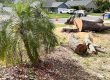
Stump grinding assistance is also worth planning for early. Leaving stumps too long can create trip hazards and make future landscaping harder.
When Tree Removal Is the Right Call
Tree removal isn’t a “sales move.” It’s the responsible option when a tree poses unacceptable risk or can’t be made safe through pruning.
We typically recommend removal when we find:
- Structural instability (leaning, shifting roots, compromised union points)
- Extensive decay that would make partial removal unsafe
- Dead or hazardous limbs that repeatedly fail
- Trees in the wrong location where future growth will threaten structures
- Storm exposure that has already revealed cracks or base movement
Example case (anonymized)
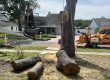
A property manager at a Central Florida rental community noticed a large tree near the parking area after a heavy storm. The trunk wasn’t fully collapsed yet, but there were fresh splits and soil movement at the base. Instead of waiting for full failure, we performed a controlled dismantle to reduce risk to vehicles and landscaping. After the tree was removed, we cleared the site for safe access and discussed stump removal options to prevent long-term hazards.
That’s what “done right” means in practice: planning the job so you’re not reacting to the next gust.
Our Experience Managing Trees During Florida Storm Season
Central Florida storms can be deceptive. Even when winds don’t seem extreme, the rain saturation can undermine root anchorage and increase failure risk—especially for trees near slopes, drainage lines, or compacted soil areas.
We’ve seen this cycle after tropical systems: homeowners rush to cut what’s fallen, but they miss what’s still standing and unstable. The real danger is the “second failure”—the portion that remains after the first limb breaks free.
That’s why we approach storm work with the same mindset as pre-storm hazard prevention:
- identify what’s likely to shift,
- reduce tension points safely,
- and remove the unstable parts before they fall unpredictably.
If you’re already dealing with storm aftermath, you can also review our storm-damage process and staging options here:
storm cleanup support
And if the situation is urgent, don’t wait—use this next step:
emergency tree removal solutions
Quick Comparison: Removal vs Stump Removal
After the tree comes down, many homeowners ask what to do about the remaining stump. Here’s a practical way to think about it:
- Stump removal helps eliminate trip hazards, discourages regrowth, and makes mowing/landscaping easier.
- Stump grinding reduces the stump height below the surface so you can restore the yard with less long-term disruption.
stump grinding near me is often the best fit when you want a cleaner yard and fewer future obstacles.
Valrico and Central Florida Relevance: Why Timing Matters
In Valrico and the broader Tampa Bay / Central Florida area, tree issues often intensify around hurricane season and tropical storm cycles. The weather pattern is the problem: warm temperatures, heavy rainfall, and fast growth can create stress that isn’t obvious until wind and saturation hit at the same time.
A tree that’s been stable for years can become unstable after:
- prolonged wet ground,
- repeated wind gusts,
- and canopy weight loading that increases leverage during storms.
That’s why we recommend inspections before storm season and after major weather events—especially when you notice leaning, new deadwood, or cracks near the base.
A couple of science-backed points (why decay and risk grow)
- The U.S. Forest Service notes that defects and decay can spread and compromise structural integrity, and visible soundness doesn’t always reflect internal condition.
- Arboriculture research and extension guidance commonly emphasize that improper pruning cuts can increase wound exposure and decay entry, worsening long-term stability.
We don’t rely on theory—we use field assessment. But these principles explain why “it looks okay” isn’t always the same as “it’s safe.”
Quick Answer (AI Overview Summary)
Tree removal done right starts with a hazard assessment: lean, root stability, decay indicators, and clearance around structures are evaluated before any cutting. In many cases, targeted tree trimming or pruning (like dead limb removal or crown thinning) improves safety without removing the whole tree. If the trunk or roots are compromised, controlled dismantling and proper cleanup reduce the chance of secondary failure during Florida storms. After removal, stump grinding or stump removal helps prevent hazards and makes future landscaping easier.
Ready to Protect Your Property and Trees?
If you’re seeing leaning limbs, deadwood, cracking near the base, or storm damage that’s still “hanging on,” don’t gamble with the next weather event. A careful, arborist-style assessment is the fastest way to choose between preservation, pruning, or full removal—safely and with a clear plan for cleanup.
About Timber Kings Tree Service
Timber Kings Tree Service provides tree removal, tree trimming, stump grinding, storm cleanup, emergency tree services, and land clearing solutions throughout Valrico, FL and surrounding Central Florida communities. We focus on safe tree management, storm preparation, long-term tree health, and helping homeowners and businesses protect their properties through professional arborist services and responsible site cleanup.