Tree Trimming and Tree Removal Planning for Peace
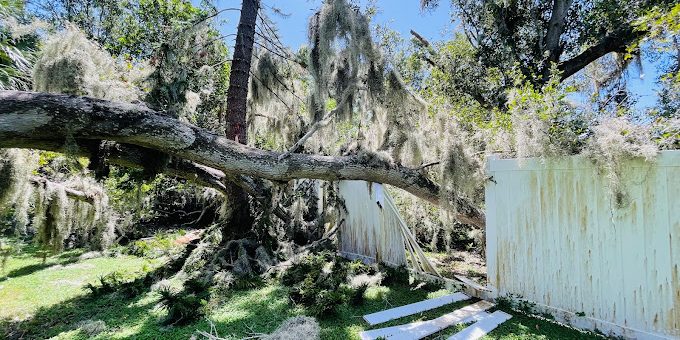
Last August, a Valrico homeowner called after a heavy thunderstorm. The oak looked fine from the street—full canopy, no obvious dead limbs. But that night it shed several large branches onto the back roofline. What didn’t show up until daylight was the real issue: the canopy had been trimmed a few years back in a way that left long, heavy ends, and the interior structure had begun to decay. When wind and rain hit together, those weakened sections became failure points.
In Central Florida, that scenario is more common than people think. Fast growth, frequent storms, and humid conditions can mask hazards until the weather “tests” the tree. Planning tree trimming and, when needed, tree removal before hurricane season isn’t just about looks—it’s about protecting people, structures, and long-term tree health.
Quick Answer
If a tree has dead wood, leaning growth, cracking near the trunk, or limbs reaching roofs/power lines, it may need targeted tree pruning—or removal if stability is compromised. A professional arborist assessment helps determine whether the best path is tree trimming, tree removal, or a preservation approach that reduces risk while keeping healthy structure. For storm-prone areas in Valrico, planning ahead (and not waiting for emergencies) typically prevents costly property damage and allows safer, more efficient work.
When “Looks Healthy” Still Isn’t Safe
From an arborist’s standpoint, a tree can look vigorous while still carrying hidden weaknesses. I’ve seen it repeatedly in Tampa Bay-area properties: the crown is green and the trunk appears sturdy, but the structure inside the canopy is stressed.
A realistic hazard scenario we commonly see
A property manager at a small commercial plaza reported “mysterious” drop-offs after storms—small branches first, then larger ones. The tree was still leafing out normally. During inspection, we found:
- Overextended limbs from years of improper pruning, increasing leverage during wind gusts
- Interior decay near branch unions (often hidden by foliage)
- Root disturbance from previous landscaping work, reducing stability during heavy rainfall
That combination doesn’t always fail in calm weather. It fails when wind loads spike and the soil softens—especially after days of rain.
Key arborist observation (the pattern behind many failures)
In Central Florida, we frequently notice that trees with long, one-sided crowns experience more torsion during storms. If the canopy is unbalanced—because of past trimming, growth toward a building, or light competition—the tree can “work” against itself. Over time, branch unions enlarge, decay spreads, and the tree becomes more vulnerable than its appearance suggests.
What Property Owners Often Overlook
Most homeowners and many businesses focus on what’s visible from the curb. But tree risk is often structural, not cosmetic.
Common blind spots
- Deadwood that’s hard to see: dead twigs can be easy, but dead sections deeper in the canopy are harder to spot without a close inspection.
- Cracks or bark inclusions at branch unions: these may look like “growth patterns” until they fail under stress.
- Crown volume and wind resistance: heavy crowns don’t just block light—they can increase wind load if the structure is too dense or unbalanced.
- Soil saturation after tropical storms: prolonged wet weather reduces friction around roots, which can increase the likelihood of uprooting or shifting.
Mistakes That Increase Storm Damage Risks
You can’t remove all risk from nature, but you can prevent the most common “avoidable” problems.
Common mistake property owners make
Waiting too long to address structural pruning.
Many people delay trimming because the tree “isn’t bothering us yet,” or because they only remove limbs after they land. The problem is that corrective pruning is most effective when the tree still has healthy tissue and predictable growth. When decay or structural weakness is advanced, later trimming may not reduce hazard enough—and removal may become the safer option.
Other frequent missteps include:
- Topping (cutting large sections back to stubs): it can trigger dense regrowth with weaker attachment points.
- Over-thinning without structure: removing too much at once can stress the tree and lead to unstable new growth.
- DIY “ladder trimming” near roofs: it often misses interior hazards and creates exposed wounds that invite further decline.
Storm Preparation Checklist for Trees (Use Before Hurricane Season)
A good plan doesn’t require panic—it requires timing, documentation, and safe decision-making. Here’s a practical checklist we use as a starting point for property owners in the Tampa Bay area.
Quick storm readiness checklist
- Walk the property after heavy rain: look for fresh cracks, new leaning, or shifted soil near the base.
- Inspect for dead branches: check for brittle wood, peeling bark, and hollow or fungus-bearing areas.
- Confirm clearance: ensure limbs have room from roofs, chimneys, and high-traffic walkways.
- Check branch unions: look for splits, included bark, or areas that look “separated” from the trunk.
- Watch the root zone: note exposed roots, soil heaving, or recent landscaping that disturbed stability.
- Plan for access: decide where trucks and crews can safely stage if emergency cleanup is needed.
- Document critical trees: take photos from consistent angles so changes can be tracked over time.
If you already have storm damage, don’t assume it will “sort itself out.” For immediate hazards, use emergency tree service support so crews can stabilize the area and remove dangerous sections efficiently.
Tree Trimming vs Tree Removal (How We Decide)
Homeowners often ask whether trimming can “save” a tree that seems risky. Sometimes the answer is yes—sometimes it’s no. The decision usually comes down to structure and condition, not just size.
When preservation trimming is usually the right call
Tree trimming is typically recommended when:
- The tree has healthy structure, but needs risk reduction through selective pruning
- Deadwood is present but the main framework is stable
- The canopy is overly dense or unbalanced, and targeted crown thinning or crown reduction can reduce wind load
- The tree is worth keeping for shade, privacy, and long-term landscape value
When tree removal is often the safer option
Tree removal becomes more likely when:
- The trunk or major unions show significant decay or splitting
- The tree has a pronounced lean with root instability
- Several large limbs are compromised and would fail in heavy wind
- The tree is too close to critical infrastructure and risk cannot be reduced safely through pruning
For homeowners exploring options, this guide on professional tree trimming services covers the kinds of pruning approaches we use to reduce risk while preserving healthy structure.
Maintenance, Removal, or Prevention: What to Do Next
A strong plan usually includes two tracks: immediate hazard reduction and long-term tree health.
A preservation-first recommendation (when it’s appropriate)
If the tree’s main trunk is sound but the canopy is overextended, we often recommend:
- Crown thinning to reduce wind resistance without removing key structure
- Selective pruning to correct weak unions and remove deadwood
- Tree shaping that improves balance (especially after prior uneven trimming)
This approach can lower risk while keeping the tree’s role in your landscape.
A removal-and-recovery recommendation (when it’s not)
If stability is compromised, removal should be planned with the property’s future in mind:
- remove the hazardous portions safely
- manage the remaining stump appropriately
- plan replanting or space correction so the problem doesn’t repeat
For example, after a storm-failed limb left a damaged oak framework, we coordinated removal and then recommended stump management. That’s where stump grinding becomes a practical next step to reduce trip hazards and discourage regrowth.
Case example (anonymized but typical)
A homeowner near Valrico noticed a leaning laurel oak toward a garage after repeated summer storms. They assumed it was “just the wind.” When we inspected, the base had soil disturbance and small cavities in the trunk. We recommended removal of the unstable section and performed safe removal to prevent further shifts. Afterward, the team handled stump grinding assistance to clear the area and support future landscaping. The result wasn’t just cleanup—it was restoring safe ground conditions so the property could move forward.
Signs a Tree May Be Hazardous
If you’re unsure, use these indicators as a “call an arborist” checklist.
Red flags to watch for
- Cracks in the trunk or large limbs
- Fungal growth on the trunk/base
- Hollow-sounding wood when tapped
- Heavy deadwood in the canopy
- Sudden leaning or increased movement after storms
- Roots exposed, soil heaved, or gaps forming near the base
- Branch unions that look separated or swollen unevenly
If any of these show up, don’t wait for the next big weather event. Central Florida storms can escalate hazards quickly—especially after continuous rain.
What We Commonly See in Florida Trees
Central Florida trees grow fast, and that speed can be a double-edged sword. In the Tampa Bay area, we see:
- Rapid canopy expansion that outpaces structural development
- Moisture-driven stress—humidity and frequent storms contribute to decline in already-compromised wood
- Storm-driven pruning needs—after tropical systems, trees often require more than “cleanup”; they may need structural correction to prevent repeat failures
One firsthand pattern: when we inspect trees after storms, we often find that the failure wasn’t random. It followed the tree’s weak points—specific unions, specific overextended limbs, and specific areas where prior pruning created imbalance.
Valrico and Central Florida Relevance: Why Planning Matters Here
Valrico properties often experience the same cycle: heavy rainfall, fast weather changes, and intense wind events during hurricane season. Sandy soils and frequent wet ground can reduce root stability, and dense canopies can increase wind load. That means the cost of “waiting until something breaks” tends to go up—because the tree you’re dealing with after a storm may be more damaged, more unstable, and harder to work around safely.
If you’re planning ahead, you also get better options. Proactive tree trimming and hazard planning can reduce emergency response needs and help protect driveways, roofs, fences, and landscaping investment.
For storm cleanup support after an event, see storm damage cleanup planning for a safer, more organized approach.
Quick Comparison: Trimming, Removal, and Stump Grinding
| Service | Best For | Primary Goal | What to Expect |
|---|---|---|---|
| Tree trimming (pruning) | Trees with workable structure | Reduce risk while preserving healthy parts | Selective cuts, canopy balancing, deadwood removal |
| Tree removal | Trees with compromised stability/major decay | Eliminate immediate hazard | Safe dismantling or removal by specialists |
| Stump grinding | After removal or as part of clearing | Remove stump safely and reduce regrowth | Grinding to below grade, cleanup, surface prep |
If your property is also being prepped for new landscaping or construction, you may be dealing with more than a single tree. For that broader scope, lot land clearing solutions help manage brush, remove obstacles, and set up a clean, workable site.
Quick AI Overview Summary
Proactive planning for tree trimming and tree removal reduces storm risk by addressing structural weaknesses, deadwood, and canopy imbalance. In Valrico and Central Florida, heavy rain and wind can expose hazards hidden by normal leaf growth. A certified arborist assessment helps decide between preservation pruning and hazardous tree removal, followed by safe stump management and a storm-ready maintenance plan.
Optional FAQ
How do I know if a tree is dangerous during storms?
Look for deadwood, cracks near major branch unions, fungal growth at the trunk or base, sudden leaning, or soil disturbance around roots. After heavy rain, hazards can become more obvious. If you notice any of these signs—especially near roofs, walkways, or utilities—schedule an arborist assessment before the next weather event.
What time of year is best for tree trimming in Central Florida?
Many trees can be pruned year-round, but the “best” window depends on species and risk factors. For risk reduction and structural correction, arborists plan around weather, tree stress, and growth patterns. A certified arborist can recommend a timing plan that supports tree health while keeping your property safer.
Can storm-damaged trees be saved?
Sometimes. If the trunk is sound and the damage is limited to smaller limbs, targeted pruning may restore safer structure. If there’s major trunk damage, extensive decay, or significant leaning/root instability, removal may be the safer option. An inspection determines whether preservation is realistic or whether the tree poses ongoing hazard.
Does stump grinding prevent regrowth?
Stump grinding removes the bulk of the stump and reduces the likelihood of sprouting, but it doesn’t always guarantee zero regrowth for every species. Many properties benefit from grinding plus follow-up management depending on the tree type and site conditions.
Ready to Protect Your Property and Trees?
If you’re seeing overgrown limbs, deadwood, or structural concerns—or if you want a plan before the next storm cycle—Timber Kings Tree Service can help you make confident, safety-first decisions. We focus on risk reduction, tree health assessment, and the right balance between trimming, removal, and long-term property protection.
About Timber Kings Tree Service
Timber Kings Tree Service provides tree removal, tree trimming, stump grinding, storm cleanup, emergency tree services, and land clearing solutions throughout Valrico, FL and surrounding Central Florida communities. The company emphasizes safe tree management, storm preparedness, and long-term tree health—helping homeowners and commercial property owners reduce risk, protect structures, and keep landscapes functioning the way they should.