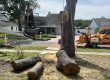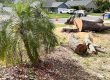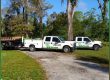
Precision Tree Service: Shape Growth, Boost Property Value
The first time many homeowners in Valrico notice a problem is after a storm—when a “mostly healthy” oak drops a limb onto the driveway or a leaning branch starts scraping the side of the house. During hurricane-season weather, wind and heavy rain don’t just break branches; they expose weak structure that was quietly forming over years.
That’s why precision matters. The goal of skilled tree service isn’t simply to make trees look neat—it’s to manage growth, reduce hazard risk, and protect the parts of your landscape that add curb appeal and value. With Central Florida’s fast growth and frequent storms, the difference between basic trimming and real arborist-level care can be the difference between a tree that weathes the next system… and one that becomes an emergency.
Quick Answer
Professional tree trimming and tree pruning improve structure and reduce storm damage risk, while tree removal is reserved for trees with severe instability, decay, or unacceptable hazard conditions. For safe results, an arborist evaluates the tree’s health, root stability, canopy balance, and target hazards (homes, power lines, sidewalks). After storms, storm damage assessments determine whether a tree can be preserved, partially reduced, or must be removed.
How Precision Tree Shaping Protects Property Value
A well-managed tree canopy does more than look good. It acts like a long-term “wind sail”—and how that sail is shaped changes how forces transfer through branches and into the trunk and roots.
Here’s the arborist perspective I use in the field:
- Canopy balance matters: Overextended limbs on one side increase torque during wind events. Precision pruning can reduce that imbalance through crown thinning or targeted crown reduction—removing select weight rather than cutting “evenly all around.”
- Pruning quality affects strength: Bad cuts (especially topping or heavy “lion tail” reductions) can trigger dense regrowth that may look fuller but is weaker and more prone to future failures.
- Deadwood isn’t just cosmetic: Dead branches can break under normal wind and become projectiles. Removing deadwood is part of responsible tree care and often the first step in hazard mitigation.
- Roots and soil stability are part of the job: In Central Florida, saturated soils after heavy rain can reduce root anchorage. A tree that looked fine in dry weather can become unstable once the ground softens.
A realistic example: we once evaluated a mature live oak behind a commercial parking lot. The owner had “trimmed it” themselves a year earlier. The tree still had green leaves, but the canopy had become lopsided with heavy regrowth. After a tropical downpour, a major limb cracked near a prior cut site. The tree wasn’t dead—it was structurally compromised. That’s a common scenario where precision pruning and hazard assessment could reduce risk long before it becomes emergency work.
Tree Trimming vs Tree Removal (and When Each One Makes Sense)
In practice, we often see property owners assume the only options are “leave it alone” or “cut it down.” The better approach is to match the solution to the tree’s condition and the hazard level.
When trimming and pruning are usually the right choice
- Overgrown limbs threatening roofs, gutters, fences, or walkways
- Branches rubbing each other or creating weak union points
- Excessive canopy density that increases wind resistance
- Deadwood and minor broken limbs that can be safely removed
When removal is more appropriate
- Significant lean with evidence of root instability
- Large limbs or trunk sections with advanced internal decay
- Repeated failures or cavities that compromise structural integrity
- Trees located where failure would immediately endanger people or critical structures
If you suspect a tree may be leaning, cracking, or repeatedly dropping limbs, don’t wait for the next storm to “test it.” A professional assessment gives you options—often including preservation strategies before conditions worsen.
What We Commonly See in Florida Trees
Central Florida’s climate creates a unique combination: strong growth, high humidity, and frequent weather events that stress trees in different ways than in colder regions. Some patterns we see often include:
- Rapid canopy expansion: Growth can outpace what homeowners expect, especially after pruning that’s too aggressive (leading to dense, fast regrowth).
- Moisture-driven stress: After periods of heavy rainfall, the soil can remain saturated long enough to reduce anchorage and increase the likelihood of limb or root failures.
- Storm-driven pruning needs: Tropical systems frequently leave hanging limbs, split unions, and compromised branch attachments that require careful, staged removal rather than “cut-and-go.”
A firsthand observation from the field
One of the most telling things I’ve noticed during post-storm cleanups: trees often fail at the attachment point, not the “middle” of the limb. When we investigate, we commonly find prior wounds, weak codominant stems, or decay columns that were present long before the storm. That’s why a professional tree service doesn’t just remove what’s down—they evaluate what remains standing.
What Property Owners Often Overlook
The common mistake property owners make
Many property owners wait too long—and when they finally act, they choose speed over safety. The most common mistake we see is “DIY pruning” that removes the wrong parts of the canopy. This can include:
- Cutting large limbs without understanding branch unions and included bark
- Topping trees to “reduce height” (which triggers weak regrowth)
- Removing too much live tissue at once, stressing the tree
- Leaving hanging limbs after a storm because “they’ll fall eventually”
This approach can increase risk. It may also complicate future work because the tree becomes more difficult to manage structurally.
For example, a homeowner might remove a few branches near a roof to stop scraping, but if the cuts create new weak sprouts or expose internal decay, the tree can become more hazardous over the next season.
When Storm Damage Turns Into a Liability
Storm damage is rarely just a landscaping inconvenience. For property managers, it can become a liability issue and a disruption issue—parking lots, walkways, and building access are often the first targets.
Why some tree problems become emergencies
- Hanging limbs act like pendulums, swinging and breaking during wind gusts
- Split trunks may hold for days, then fail after additional rain
- Partially uprooted trees can look stable until soil conditions shift
- Dead or decayed wood loses strength faster during storms
If you’re dealing with storm impacts, it’s wise to get a professional evaluation before clearing everything. Sometimes the safest “cleanup” is leaving certain sections in place until they’re properly supported or removed.
For storm cleanup support, see storm damage support for guidance on what to prioritize first.
Maintenance, Removal, and Prevention Checklist
You don’t have to wait for hurricane season to start protecting your trees. Use this practical checklist to stay ahead:
Tree maintenance checklist (pre-storm)
- Walk the property and look for: deadwood, cracks, peeling bark, and mushrooms or cavities at the base
- Check canopy balance: Are heavy branches clustered on one side of the trunk?
- Inspect pruning history: Are there recent large cuts, especially near unions?
- Look for root and ground issues: soil heaving, leaning trunks, or exposed roots after rain
- Assess target hazards: branches over roofs, sheds, fences, parking areas, and walkways
- Plan trimming timing: schedule work before peak storm months so trees can recover
After-storm quick safety steps (for homeowners and managers)
- Keep people away from downed limbs and unstable trunks
- Don’t pull on hanging branches—support may be compromised
- Take photos for documentation, then wait for professional assessment if the tree is still standing
- If there’s any sign of power-line proximity, treat it as an emergency and call immediately
If the situation is urgent, you can also explore emergency tree service solutions so you know what to expect during time-sensitive cleanup.
A Practical Service Example: Shaping for Safety and Appearance
One anonymized case we handle frequently involves homeowners who want their trees to look “tidy” without losing shade or character.
A few years back, a family in the Tampa Bay area had a large backyard oak that shaded the patio but had a dense canopy with several dead limbs. The tree wasn’t dead overall, but the structure was creating risk: deadwood over a footpath and an overextended limb hovering near a roof edge.
Instead of removing the entire tree, our crew completed a precision pruning plan:
- removed deadwood and hazardous limbs first
- thinned the canopy to reduce wind resistance without stripping too much foliage
- reduced one overextended section to improve balance
The result was a tree that looked cleaner, opened the view, and—most importantly—reduced the likelihood of storm-driven failures over high-traffic areas.
Tree Pruning Recommendations That Actually Improve Stability
Not all pruning improves stability. The best recommendations depend on the tree’s species, structure, and risk factors. In many Central Florida yards, we recommend one or more of these approaches:
- Crown thinning: Reduces density and wind stress while maintaining natural form
- Crown reduction: Lowers risk by removing weight from specific sections—without “shearing” the entire canopy
- Targeted deadwood removal: Keeps the tree safer with minimal impact to healthy growth
- Corrective structural pruning: Addresses weak unions and problematic branch attachments when feasible
A strong pruning plan is also a long-term plan. Trees respond to pruning by growing into the spaces we create—so we shape with future stability in mind, not just immediate clearance.
If your goal is to reduce hazards and improve canopy structure, you may want to review professional tree trimming services for how precision work is typically approached.
Stump Grinding and Stump Removal: Why It’s More Than Cleanup
After a removal, many homeowners focus on the above-ground result and forget what’s happening below. Stumps can become trip hazards, and they can also lead to regrowth depending on the species and conditions.
What we recommend
- Stump grinding to remove the stump down to below the surface level
- Stump removal planning where future landscaping or hardscaping will be installed
- Follow-up management to reduce the chance of unwanted sprouts
If you’re trying to handle this quickly and safely, it helps to plan for stump grinding assistance before the area becomes overgrown or difficult to access.
A note on timing: waiting too long can make grinding harder if roots spread or if the stump area fills with debris. Early action often keeps the cleanup cleaner and more manageable.
Lot Land Clearing and Forestry Mulching for Property Projects
Sometimes the “tree problem” isn’t a single tree—it’s the entire property layout. Whether you’re preparing land for construction, clearing for a new fence line, or restoring a neglected yard, clearing work needs the same attention to safety and planning as pruning.
We often coordinate clearing plans that protect remaining trees and reduce unnecessary damage.
For project-focused clearing work, explore lot land clearing solutions to understand how clearing is typically sequenced for safer access and better results.
In some larger overgrowth situations, forestry mulching can help manage brush while leaving mulch on-site to reduce erosion and improve site conditions—especially when you want to avoid hauling everything away.
Valrico and Central Florida Relevance: Why Timing and Structure Matter Locally
In Valrico and the wider Tampa Bay area, trees grow quickly and face frequent weather stress. Between tropical storms, heavy rainfall, and high-wind events, weak structure can go unnoticed until conditions align for failure. That’s why we emphasize:
- pre-storm inspections rather than reactive cleanup
- structural pruning that reduces wind stress and improves balance
- clearance management around roofs, walkways, and driveways
- post-storm hazard assessment to identify what’s still standing but compromised
Central Florida’s humidity and frequent rainfall can also contribute to tree stress and disease development. When trees are already weakened, storm impacts accelerate decline. A good arborist approach doesn’t treat storms as the only problem—it treats them as the test of what’s been building underneath.
Quick Comparison: Precision Pruning vs Removal-First Decisions
| Goal | Precision Pruning / Crown Care | Removal-First |
|---|---|---|
| Preserve shade and natural form | Often yes | Usually no |
| Reduce storm hazard risk | Yes, when structure supports it | Yes, when stability is unacceptable |
| Improve canopy balance | Yes through targeted thinning/reduction | N/A |
| Minimize long-term damage | Typically better for healthy, viable trees | Best for severely compromised trees |
| Best for | Overgrowth, deadwood, manageable clearance issues | Advanced decay, severe instability, unacceptable hazard location |
Signs a Tree May Be Hazardous
If you notice any of these conditions, treat it as a reason to schedule an arborist assessment:
- Fresh cracks in the trunk or major limbs
- Mushrooms or cavities at the base
- Significant leaning or shifting after storms
- Dead limbs overhead, especially over entrances or parking areas
- Soil heaving, exposed roots, or gaps forming at the base
FAQs
How do I know if I need tree removal or just pruning?
If the tree has structural issues like significant lean, large decay, or repeated failures, removal may be necessary. If the tree is generally healthy but has overextended limbs, deadwood, or canopy density issues, precision pruning is often the better option. A professional assessment looks at attachment points, included bark, and root stability—not just whether the tree looks green.
What time of year is best for tree trimming in Florida?
In Central Florida, trimming is often scheduled during periods when trees are actively growing but before peak storm intensity. That said, safety work—deadwood removal, clearance, and hazard pruning—should be handled whenever risk is present, not just on a calendar.
Can storm-damaged trees be saved?
Sometimes. Many trees survive storms but become compromised in specific areas—especially at unions and cut sites. The key is evaluating whether the remaining structure is stable and whether further failures are likely after additional rain and wind.
Does stump grinding prevent regrowth?
Grinding reduces the stump well below the surface, which can help limit regrowth. However, some species may still produce sprouts depending on the root system. A stump management plan based on the tree species and site conditions is the most reliable approach.
Ready to Protect Your Property and Trees?
If your trees are overgrown, leaning, or have storm-related damage, don’t guess. A precise plan—whether that means careful pruning, hazardous tree removal, stump grinding, or emergency storm cleanup—helps protect people, buildings, and long-term property value.
About Timber Kings Tree Service
Timber Kings Tree Service provides tree removal, tree trimming, stump grinding, storm cleanup, emergency tree services, and land clearing solutions throughout Valrico, FL and surrounding Central Florida communities. We focus on safe tree management, storm preparation, long-term tree health, and helping homeowners and businesses protect their properties through professional arborist-level guidance and reliable service.