Tree Service Tips for Preventing Branch Failures
On a typical summer afternoon in Valrico, it only takes one strong thunderstorm to turn a healthy-looking oak into a serious hazard. Hillsborough County emergency crews respond to hundreds of storm-related tree calls every year, and a large percentage of those involve failed branches that damage roofs, vehicles, and power lines—not entire trees tipping over.
For local property owners, that’s the hidden risk: branches that look fine from the ground can be structurally weak, decayed, or poorly attached. In Florida’s combination of sandy soils, high humidity, and intense wind, those weaknesses show up fast. Studies from urban forestry programs estimate that over 60% of storm-related tree damage in residential areas involves branch failures, not full tree uprooting.
This guide walks you through how branch failures happen, what warning signs to watch for, and what proactive steps you can take to protect your property. You’ll also see how professional Tree Trimming, risk assessments, and emergency planning can dramatically reduce your chances of costly storm damage in Valrico and surrounding communities.
Key Insight: Preventing branch failures is less about reacting to storms and more about year-round structural care, proper pruning, and timely intervention from qualified tree professionals.
Understanding Why Branches Fail in Florida’s Climate
Branch failures are rarely “random.” Most of the time, the tree has been signaling a problem for months—or even years. Understanding the causes helps you spot trouble early and decide when to bring in a professional.
Common structural and environmental causes
In Valrico and greater Tampa Bay, branch failures often result from a combination of:
- Weak branch attachments (narrow, V-shaped unions that trap bark)
- Over-extended limbs reaching toward sunlight or open space
- Hidden internal decay from fungi or past wounds
- Old storm damage that never healed correctly
- Overly aggressive past Tree Cutting or topping
- Saturated soils and high winds amplifying leverage on large limbs
“Most branch failures we see were predictable if someone had looked closely six months earlier.” — ISA Certified Arborist, Timber Kings Tree Service
Fast-growing species common in Florida—like laurel oaks, water oaks, and some ornamental trees—are especially prone to weak wood and poor branch structure as they age. Palms behave differently, but their heavy fronds can still fail and cause damage or injury.
Local example: The overlooked oak in a Valrico subdivision
A homeowner in a Valrico neighborhood had a mature laurel oak hanging over both their driveway and their neighbor’s fence. The tree looked green and full, but two major limbs had narrow, V-shaped attachments and visible cracks where they met the trunk.
During a summer storm, one of those limbs snapped, crushing a vehicle and damaging the neighbor’s fence. A post-incident inspection showed internal decay and years of included bark at the union. A routine structural inspection and targeted pruning years earlier could have significantly reduced the risk—or prompted safe Hazardous Tree Removal of the limb altogether.
Spotting Early Warning Signs of Branch Failure
You don’t need to be an expert to see many of the early indicators of branch problems. A short, regular walk around your property can reveal a lot—especially after storms.
Visual red flags to watch for
Walk your property a few times per year and look for:
- Cracks or splits where branches meet the trunk or other limbs
- Dead or leafless sections on one side of a branch
- Mushrooms, conks, or soft, crumbly wood along limbs
- Branches that suddenly lean or sag lower than usual
- Bark bulges, seams, or “ripples” along large limbs
- Old pruning cuts that never sealed and now appear decayed
“Trees almost always communicate stress; we just have to learn their language.” — Municipal Arborist, Tampa Bay Region
Even your lawn care routine can offer clues. If you’re constantly picking up small dead twigs beneath a particular limb, that branch may be slowly declining or already dead at the tips.
Case study: A commercial property’s near miss
A small office park near Brandon called Timber Kings Tree Service after tenants noticed a large live oak limb suddenly drooping over the parking area. On inspection, the limb had a long vertical crack and decay at its attachment point.
Because the property manager called quickly, our team provided same-day Emergency Tree Service, safely removed the failing limb, and performed a broader Tree Health Assessment on the rest of the canopy. The next week, another strong storm hit the area. Without that intervention, the cracked limb almost certainly would have come down on parked vehicles.
How Proper Pruning Prevents Branch Failures (And When DIY Isn’t Enough)
Thoughtful, strategic pruning is one of the most effective ways to prevent branch failures, especially in storm-prone regions like Valrico. The key is structural pruning—not just thinning or “shaping” for appearance.
What effective structural pruning does
A certified arborist uses pruning to:
- Encourage strong, well-spaced branches with wide attachment angles
- Reduce the length and weight of over-extended limbs
- Remove dead, diseased, or rubbing branches before they cause problems
- Improve wind flow through the canopy, reducing sail effect
- Maintain a balanced crown that matches root support
Improper cuts—like topping, lion-tailing (removing too many inner branches), or flush cuts—actually increase the risk of branch failure by causing decay, weak regrowth, and poor structure.
“Correct pruning when a tree is young can eliminate many of the structural problems that lead to branch failures later in life.” — ISA Best Management Practices
DIY pruning vs. professional pruning
Here’s a quick comparison of typical homeowner pruning versus professional structural pruning:
| Aspect | Typical DIY Pruning | Professional Structural Pruning |
|---|---|---|
| Primary goal | Clear space, improve view, quick cleanup | Long-term strength, safety, and health |
| Tools used | Basic saws, loppers, sometimes dull chainsaws | Sharpened, specialized tools and safety equipment |
| Cut placement | Wherever limb is convenient to reach | At proper branch collar with correct angles |
| Risk assessment | Minimal or none | Formal tree risk evaluation before and after work |
| Likelihood of future failures | Higher (due to poor cuts, topping, over-thinning) | Lower (focus on structure, load reduction, and balance) |
| Typical in Valrico yards | Seasonal “chopping back” before hurricane season | Scheduled Tree Pruning every 2–3 years |
Local example: Reshaping a storm-prone live oak
A Valrico homeowner had a mature live oak that had been “hacked back” every few years by non-specialized crews. The tree developed long, weak sprouts and unbalanced weight over the roof. During a risk assessment, our arborist recommended phased structural work instead of another aggressive cutback.
Over two seasons, we:
- Reduced and reshaped over-extended limbs with proper crown reduction cuts
- Thinned selective interior branches to improve airflow (not lion-tailing)
- Removed dead and diseased wood throughout the canopy
The result: a healthier, better-balanced tree that handled subsequent storms with no major limb failures.
Balancing Tree Health and Risk: When Removal Becomes the Safest Option
Even with excellent care, some branches—and sometimes entire trees—become too risky to keep. Knowing when that line has been crossed protects both your property and your liability exposure.
Risk factors that may justify removal
A certified arborist will consider:
- Extent and location of decay in key structural limbs
- Size of the branch relative to the trunk (oversized limbs can be problematic)
- Target area beneath the branch (home, sidewalk, parking, play space)
- Past storm damage or history of partial limb failures
- Species characteristics (some are more prone to brittle wood or decay)
If the cost and complexity of ongoing pruning and support outweigh the benefits, selective branch or full Tree Removal may be recommended.
“Tree risk is always a combination of defect, likelihood of failure, and what the branch could hit if it falls.” — International Society of Arboriculture
Example: Dead limb over a Valrico playground
At a Valrico residence, a large water oak had a dead, overhanging limb above a backyard playset. The limb showed visible decay and fungal growth, and the branch union had a long vertical crack.
Our arborist recommended immediate removal of the hazardous limb and a broader inspection of the tree. The evaluation found significant internal decay in several major branches. Given the high use of the area by children and the cost of ongoing mitigation, the homeowner chose full Dead Tree Removal and replacement with a more resilient species.
The homeowner later noted that storms which followed that removal felled several similar trees on nearby properties.
Cost vs. risk in the Valrico area
Here’s a simplified look at the trade-off many local property owners face:
| Scenario | Short-Term Cost | Long-Term Risk / Potential Cost |
|---|---|---|
| Ignore cracked, overhanging limb | $0 today | Roof repair, vehicle damage, liability, higher cleanup |
| Professional limb reduction and pruning | Moderate Tree Care Services cost | Reduced failure risk, extended tree life |
| Proactive hazardous branch removal | Higher one-time expense | Minimal ongoing risk from that branch |
| Full tree removal and replacement | Highest immediate cost | Eliminates hazard, planned replanting |
Storm Season Strategy: Preparing Your Trees Before the Winds Hit
In Valrico, storm season isn’t a surprise—it’s an annual event. The trees that fare best are those prepared months in advance, not those hastily trimmed the week a hurricane is announced.
Building a pre-storm tree care plan
A smart storm-readiness plan usually includes:
- Regular structural pruning every 2–3 years
- Removal of dead, dying, or severely compromised limbs
- Thinning dense canopies slightly to allow wind to pass through
- Addressing competing or rubbing branches early
- Evaluating leaning trees or those with poor root systems
For commercial properties, this is often combined with scheduled Brush Clearing and Land Clearing Services to keep access routes and parking areas safe during and after storms.
“Trees that are regularly maintained suffer significantly less storm damage than those neglected for years and then ‘panic pruned’ right before a storm.” — University of Florida IFAS Extension
Local story: Two neighbors, two very different outcomes
In a Valrico subdivision, two homes shared similar large oaks in their front yards. One homeowner invested in scheduled Tree Shaping and crown reduction every few years. The other had not pruned the tree in nearly a decade.
After a strong tropical storm, the unmaintained tree lost multiple large limbs, blocking the street and damaging a vehicle. The regularly maintained tree lost only small twigs and leaves. The difference wasn’t luck—it was years of proactive care.
After a Branch Fails: Safe Response, Cleanup, and Recovery
Even with the best prevention, branches can still fail. How you respond in the hours and days afterward matters—for safety, insurance, and the long-term health of your trees.
Immediate steps after a branch failure
If a branch comes down:
- Check for hazards first. Look for downed power lines, hanging limbs, or structural damage.
- Keep people and pets away from the area until it’s assessed.
- Take clear photos for your insurance company.
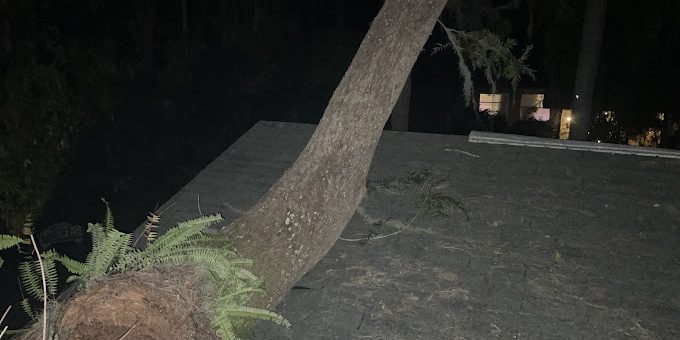
- Call a professional for Emergency Tree Service if the branch is on a structure, blocking access, or hung up in the canopy.
Do not attempt to cut or pull down “widowmakers”—branches that are partially broken and hanging. These are highly unpredictable and extremely dangerous without proper equipment.
“Some of the worst injuries we see are from property owners trying to ‘finish the job’ after a storm without the right tools or training.” — Timber Kings Crew Supervisor
Cleanup and long-term recovery
Once the immediate hazard is handled, a professional team can:
- Remove broken limbs and debris
- Assess remaining branches for hidden cracks or damage
- Recommend additional pruning or selective removal as needed
- Provide Stump Removal or Stump Grinding if the entire tree failed
In some cases, a tree that lost a major limb can be structurally stabilized and preserved. In others, the failure reveals deeper decay that justifies full removal and replanting.
What This Means for Businesses in Valrico, FL
For Valrico businesses—whether you manage an office park, retail center, HOA, or industrial site—branch failures are more than a nuisance. They’re a serious operational and liability issue.
A single failed limb can:
- Block customer access or delivery routes
- Damage company vehicles or tenant property
- Interrupt power and communications
- Create slip, trip, and fall hazards from debris
- Trigger expensive emergency calls during peak storm events
In a competitive local market, the appearance and safety of your landscape also influence customer perception. Well-maintained trees suggest a well-run operation; hanging dead limbs and obvious decay suggest deferred maintenance.
By working with a local provider that understands Valrico’s soil types, common species, and storm patterns, you can:
- Establish a predictable maintenance budget instead of surprise repairs
- Prioritize high-risk trees along parking areas, sidewalks, and building fronts
- Coordinate Commercial Tree Service, Lot Land Clearing, and routine Crown Thinning into one plan
- Demonstrate due diligence in the event of an incident or insurance claim
For many local businesses, the most cost-effective approach is a yearly or biannual tree risk walk-through with a certified arborist, followed by phased work on the highest-priority trees. This strategy keeps your property safer, your trees healthier, and your operations running smoothly—especially during Florida’s long storm season.
Frequently Asked Questions
Q: How often should I have my trees inspected to prevent branch failures?
A: In Valrico’s climate, most properties benefit from a professional inspection every 1–3 years, depending on tree size, age, and location. Mature oaks near buildings, parking lots, or play areas should be checked on the more frequent end of that range. During an inspection, a certified arborist can perform a Tree Health Assessment, identify structural defects, and recommend specific pruning or Hazardous Tree Removal if necessary. You should also schedule an inspection after any major storm if you notice new cracks, leaning, or hanging limbs. Regular assessments reduce surprise failures and allow you to budget for preventive work instead of emergency repairs.
Q: What’s the difference between regular trimming and structural pruning?
A: Regular trimming often focuses on appearance—removing low branches, clearing roof lines, or lifting canopies for views. Structural pruning, on the other hand, is a targeted approach aimed at strengthening the tree’s framework and reducing future failure risk. A professional providing Arborist Services will look at branch attachment angles, relative limb sizes, and how weight is distributed through the crown. They use specific techniques like crown reduction and selective thinning to improve stability. While both can make a tree look better, structural pruning is what truly helps prevent dangerous branch failures over time.
Q: Are some tree species in Valrico more prone to branch failures than others?
A: Yes. Fast-growing, short-lived species such as laurel oak and water oak are more prone to decay and structural weaknesses as they age. Certain ornamental trees with brittle wood can also fail more easily under wind load. Live oaks, when properly maintained, tend to be stronger, but even they can develop hazardous limbs without regular Tree Care Services. A local Certified Arborist can help you identify high-risk species on your property and prioritize them for monitoring, pruning, or replacement. Choosing wind-resistant species when planting new trees is another smart way to reduce future branch failures.
Q: When does a damaged branch require emergency service instead of waiting?
A: You should call for Emergency Tree Service if a branch is resting on a structure, entangled with power lines, blocking access, or hanging precariously where people walk or park. Partially broken “hanger” limbs can fall without warning, especially in windy or rainy conditions. In these situations, attempting DIY removal is dangerous. A professional crew has the equipment and training to safely remove the hazard, even at night or in poor weather. If the damage is minor and away from targets, it may be safe to schedule standard service, but when in doubt, call and describe the situation to a professional.
Q: Can stump grinding help reduce future branch or tree failures?
A: Indirectly, yes. While Stump Grinding Near Me focuses on removing leftover stumps rather than live branches, it plays an important role in overall site safety and tree health planning. Old stumps can harbor pests and diseases that spread to nearby trees, weakening them and increasing the risk of branch failure. They also impede new planting in optimal locations. By removing stumps through professional Stump Grinding, you can replant better-suited, wind-resistant species in safer locations and improve root space for existing trees, which supports stronger, more stable growth.
Q: How does professional land clearing relate to branch failure prevention?
A: On larger residential or commercial sites, unmanaged vegetation and overcrowded trees compete for light and resources, leading to tall, spindly growth and weak branches. Professional Land Clearing Services and Forestry Mulching remove excess brush and poorly formed trees so the remaining trees can develop stronger branching structures. Strategic Lot Land Clearing also improves access for routine maintenance and emergency response. The result is a healthier stand of trees with better spacing, less competition, and reduced risk of cascading branch failures during storms.
Q: How can I tell if a branch is dead or just dormant?
A: In Florida, many of our common landscape trees are evergreen or semi-evergreen, so a completely leafless limb in the growing season is usually a concern. You can perform a simple scratch test: use your fingernail or a knife to gently scratch the bark of a small twig. If the underlying tissue is green and moist, the branch is still alive. If it’s brown and dry, that section is likely dead. Multiple dead twigs along a larger branch may indicate a failing limb that should be evaluated. A professional offering Tree Pest Control and disease assessment can determine whether the problem is localized or part of a larger decline.
Ready to Get Started?
Valrico’s weather isn’t getting calmer, and trees don’t fix structural problems on their own. Every season that passes without proper evaluation and care increases the odds of a costly branch failure. The good news is that a thoughtful plan—built around inspections, structural pruning, and timely removal of high-risk limbs—can dramatically lower your risk.
If you’ve noticed cracks, dead limbs, overextended branches, or just haven’t had your trees checked in years, now is the time to act. Scheduling preventive work before peak storm season means you avoid emergency backlogs, rushed decisions, and higher reactive costs. Timber Kings Tree Service can assess your property, prioritize the most urgent issues, and build a maintenance plan that fits your budget.
Whether you need targeted Tree Trimming Near Me, safe Fallen Tree Removal, or comprehensive Emergency Tree Service, our local team is ready to help you protect your home or business from avoidable branch failures.
About Timber Kings Tree Service
Timber Kings Tree Service is a locally owned and operated tree care company serving Valrico, FL, and surrounding communities. Our team includes experienced professionals and ISA-certified arborists who specialize in Tree Removal Near Me, expert pruning, Stump Grinding, storm response, and long-term tree health management for both residential and commercial clients. With years of experience in Florida’s unique climate and tree species, we focus on safety, professionalism, and honest recommendations that put your property’s long-term health first. Learn more about our services at Timber Kings Tree Service.