Tree Service for Deadwood Removal and Disease Prevention
A single diseased oak in a Valrico shopping center can drop thousands of infected spores in one season. Those spores don’t stop at the property line—they drift onto neighboring trees, parking lots, and walkways, turning a small problem into a costly liability. In our humid, storm-prone Florida climate, deadwood and disease spread faster than many property owners realize, especially on commercial sites and HOA common areas.
For businesses and property managers in Valrico, neglected trees aren’t just an eyesore. They can lead to branch failures over parked cars, lawsuits from injuries, power outages, and even full Tree Removal of mature shade trees that could have been saved with timely care. Studies from the International Society of Arboriculture (ISA) show that proactive pruning and disease management can extend a tree’s life by 20–30% and reduce storm-related failures by up to half.
This guide explains how deadwood removal ties directly into disease prevention, risk reduction, and long-term savings. You’ll learn what to watch for, how professionals assess risk, and which strategies protect your trees—and your bottom line—across Valrico’s neighborhoods and commercial corridors.
Key Insight: Systematic deadwood removal and disease prevention are far cheaper—and safer—than crisis cleanups after a storm or major tree failure.
Why Deadwood Is More Dangerous in Valrico’s Climate
Dead branches might look harmless, but in Valrico’s heat and humidity they become magnets for decay, pests, and structural failure. Deadwood dries out, cracks, and weakens the tree’s structure, especially when afternoon thunderstorms roll through.
In a typical year, Hillsborough County sees dozens of severe thunderstorm warnings. Each event puts extra stress on already weakened limbs. On a commercial property off State Road 60, Timber Kings Tree Service was called after a large dead limb snapped during a storm and crushed part of a company vehicle fleet. The branch had been visibly dead for months, but removal kept getting pushed down the maintenance list.
Deadwood is especially risky because:
- It breaks unpredictably, even on calm days.
- It accelerates decay into healthy parts of the tree.
- It attracts insects and fungi that spread disease.
- It creates projectiles during high winds.
“Most serious limb failures we see in Valrico start with neglected deadwood that should have been removed a year or two earlier.” — Timber Kings Lead Arborist
For businesses, that means increased liability and potential downtime. A dead limb falling across a driveway or storefront can block access, damage signage, or injure customers and staff. Regular, professional Tree Trimming targets these hazards before they become emergencies.
How Deadwood and Disease Are Connected
Deadwood doesn’t just signal past problems—it often creates new ones. In Valrico’s subtropical climate, fungi and bacteria thrive in the moist, decaying tissue of dead branches. From there, they can move into the living parts of the tree, undermining its health from the inside out.
A large live oak at a Valrico medical plaza is a good example. At first, there were only a few dead branches high in the canopy. Over two years, decay fungi colonized those limbs and spread into the main scaffold branches. By the time Timber Kings was called, a full Dead Tree Removal was the only safe option. Early deadwood pruning could have saved a 40-year-old tree and avoided replacement costs.
Here’s how the progression typically works:
- Small dead twigs and branches form from stress, drought, or minor damage.
- Cracks and openings in deadwood allow fungi and insects to enter.
- Decay spreads into living tissue, weakening the branch collar and trunk.
- Structural integrity declines, making the tree more vulnerable to storms.
- Advanced decay leads to hazardous trees that require Hazardous Tree Removal.
CALLOUT: Removing deadwood early is one of the simplest and most cost-effective forms of disease prevention for your entire landscape.
This is where a professional Tree Health Assessment becomes essential. Certified arborists look beyond what’s visibly dead. They inspect branch unions, bark condition, fungal fruiting bodies, and canopy density to identify disease before it becomes obvious from the ground.
Professional Deadwood Removal vs. “Quick Cuts”
Many property owners assume that any crew with chainsaws can handle deadwood removal. The difference between professional arborist work and “quick cut” services shows up in tree health, safety, and long-term costs.
Traditional vs. Modern Approach to Deadwood Removal
| Aspect | “Quick Cut” Approach | Professional Arborist Approach |
|---|---|---|
| Goal | Fast cleanup, minimal time on site | Long-term tree health, safety, and structure |
| Cutting technique | Flush cuts, random limb removal | Targeted cuts at branch collar, preservation of live tissue |
| Safety standards | Basic PPE, limited rigging | ISA standards, advanced rigging, controlled lowering |
| Disease prevention focus | None – purely cosmetic | Integrated with Tree Disease Treatment & monitoring |
| Equipment | Chainsaws and ladders | Climbers, bucket trucks, rigging gear, diagnostic tools |
| Long-term impact | Higher risk of decay and future failures | Stronger structure, slower decay, extended tree lifespan |
On a Valrico apartment complex, a low-cost crew had previously done aggressive Tree Cutting and removed deadwood with flush cuts tight to the trunk. Those cuts never sealed properly, creating large decay pockets. Within five years, three mature oaks had to be removed at significant expense, not counting the impact on shade and curb appeal.
By contrast, a professional crew:
- Identifies which deadwood is truly hazardous.
- Makes precise cuts just outside the branch collar to support natural healing.
- Uses proper rigging to avoid damage to buildings, vehicles, or landscaping.
- Coordinates with ongoing Tree Pest Control or disease programs.
“Good deadwood removal is surgery, not hacking. The goal is to leave the tree stronger than we found it.” — ISA Certified Arborist, Timber Kings
Disease Prevention Strategies That Work in Valrico
Deadwood removal is a critical first step, but disease prevention requires a broader strategy tailored to our local conditions. Valrico’s sandy soils, high humidity, and frequent storms create a unique set of pressures on trees, from root stress to fungal outbreaks.
Timber Kings often starts with a comprehensive Tree Health Assessment, then develops a plan that may include:
- Targeted pruning and crown management
Proper Tree Pruning, including crown thinning and selective Crown Reduction, improves airflow and light penetration. That reduces leaf wetness periods, which in turn slows fungal growth in dense canopies.
- Soil and root zone care
Compacted soil in parking lots and drive entries stresses roots and weakens disease resistance. Mulching, decompaction, and root protection zones around mature trees help them fight off pathogens naturally.
- Sanitation and debris management
Infected branches, leaves, and stumps left on-site can harbor pests and diseases. Combining pruning with Stump Grinding and debris removal removes those reservoirs.
On a Valrico retail center, repeated leaf spot and dieback were plaguing parking-lot oaks. Instead of jumping straight to chemicals, Timber Kings implemented structural pruning, removed old deadwood, improved mulching practices, and ground out several diseased stumps. Within two seasons, tree vigor improved noticeably, and the need for treatments dropped.
These preventive measures, combined with periodic monitoring, form the backbone of effective Arborist Services for both residential HOAs and commercial properties throughout Valrico.
Managing Storm Risk: Deadwood, Structure, and Emergency Response
Valrico’s storm season is unforgiving. Strong winds exploit every weakness in a tree—especially deadwood, poor structure, and hidden decay. Reducing that risk before storm season is far less expensive than cleaning up after a major failure.
On a Valrico warehouse property, Timber Kings performed pre-season deadwood removal and structural Tree Shaping on a row of aging laurel oaks. Just weeks later, a severe storm toppled several trees in the area. The warehouse trees lost small twigs but no major limbs, and operations were uninterrupted. Nearby properties without proactive care faced blocked access roads and downed lines.
Key elements of storm-focused tree care include:
- Deadwood removal and weak limb reduction
Removing large dead branches and reducing over-extended limbs limits the “sail” area and reduces breakage.
- Crown Thinning and selective reduction
Thoughtful thinning reduces wind resistance while maintaining shade and appearance.
- Cabling and bracing (when appropriate)
For high-value or historic trees with weak unions, structural supports can buy years of extra safe life.
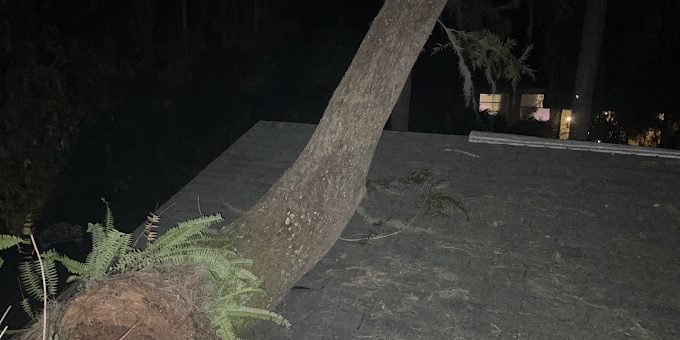
Even with the best preparation, storms can still cause failures. That’s where responsive Emergency Tree Service becomes critical. Timber Kings has been called out in the middle of the night for Fallen Tree Removal across drive lanes, roofs, and fences.
“Prepared properties bounce back faster after storms. The difference between a few hours of cleanup and days of disruption usually comes down to pre-storm deadwood and risk management.” — Timber Kings Operations Manager
From Deadwood to Ground Level: Stumps, Brush, and Site Safety
Removing dead limbs and diseased trees is only part of the equation. What’s left behind at ground level can still pose risks to safety and plant health.
Old stumps, especially from diseased trees, can harbor fungi, termites, and other pests. Those organisms can migrate to nearby healthy trees or even structures. A Valrico HOA that left several oak stumps after low-cost removals later experienced root rot spreading into adjacent trees and increased termite pressure along a perimeter fence.
Professional Stump Removal through grinding:
- Eliminates tripping hazards in common areas and walkways.
- Reduces pest and disease reservoirs in the soil.
- Opens space for replanting or turf restoration.
- Improves the appearance of high-visibility commercial frontages.
For larger commercial or development sites, integrated Land Clearing Services and Brush Clearing may be needed. Forestry mulching and selective clearing can open up overgrown sections while protecting high-value trees that simply need deadwood removal and corrective pruning.
By addressing deadwood in the canopy and decay sources at the ground, properties in Valrico gain a cleaner, safer, and healthier landscape overall.
Cost, Risk, and Long-Term Savings for Valrico Properties
Owners and managers often ask whether proactive tree care really pays off compared to “wait until something breaks.” When you factor in liability, property value, and replacement costs, the numbers favor prevention—especially in a storm-prone area like Valrico.
Reactive vs. Proactive Tree Management in Valrico
| Factor | Reactive (After Failure) | Proactive (Deadwood & Disease Prevention) |
|---|---|---|
| Typical service cost | Higher: emergency rates, complex rigging, property repairs | Lower: planned Tree Care Services on schedule |
| Liability risk | High: injuries, vehicle damage, business interruption | Reduced: hazards addressed before public exposure |
| Impact on operations | Unplanned downtime, blocked access, negative customer impact | Work scheduled off-peak, minimal disruption |
| Tree lifespan | Shortened by neglect and crisis removals | Extended through maintenance and Tree Disease Treatment |
| Overall property value | Lower curb appeal, more replacements | Strong canopy, shade, and aesthetics maintained |
On a Valrico office park, Timber Kings implemented a three-year maintenance cycle: periodic deadwood removal, structural pruning, and targeted Tree Pest Control. Over five years, the property saw:
- Fewer emergency calls during storms.
- No major limb failures over parking areas.
- Healthier, fuller canopies that improved curb appeal.
The property manager’s tree-related costs stabilized and became predictable, instead of spiking with every storm event or major failure.
CALLOUT: For most commercial and HOA properties in Valrico, a structured maintenance plan reduces both risk and long-term costs compared to one-off, reactive work.
What This Means for Businesses in Valrico, FL
For Valrico businesses, HOAs, and commercial property owners, trees are more than background landscaping. They frame entrances, shade parking lots, cool buildings, and shape how customers and residents feel about a property. But they also carry responsibility and risk.
Deadwood removal and disease prevention directly impact:
- Safety and liability
Fewer falling branches, fewer trip hazards from roots and stumps, and less exposure to storm damage claims.
- Customer perception and tenant satisfaction
Well-maintained trees signal care and stability. Neglected, dying trees send the opposite message, especially along busy corridors like SR-60 or around medical and professional offices.
- Operational resilience
Proactive tree work reduces the chance that a storm will block drive lanes, damage signage, or shut down portions of your site.
Valrico’s rapid growth and dense commercial corridors mean more competition for attention. Clean, healthy trees with no visible deadwood or dieback help properties stand out—whether it’s a small retail strip near Brandon, a church campus, or a multi-building office park.
Working with a local, experienced provider like Timber Kings Tree Service means your trees are evaluated in the context of Valrico’s specific conditions: sandy soils, high heat, hurricane season, and local pest and disease pressures. A thoughtful program of deadwood removal, structural pruning, and disease monitoring protects both your investment and the people who use your property every day.
Frequently Asked Questions
Q: How often should my Valrico property have deadwood removed?
A: For most commercial and HOA properties in Valrico, a professional inspection and deadwood removal every 18–36 months is ideal. Fast-growing species like laurel oaks may need more frequent attention, while slower-growing live oaks can often be managed on a longer cycle. Storm exposure, tree age, and site use all matter—trees over parking lots, playgrounds, or entry drives should be reviewed more often. A scheduled Residential Tree Service or Commercial Tree Service plan ensures deadwood is caught before it becomes a liability, and it allows work to be done in off-peak times to minimize disruption.
Q: Can I just have my maintenance crew cut out dead branches instead of hiring an arborist?
A: While maintenance staff can handle small, low branches, higher or larger deadwood should be addressed by professionals. Improper cuts (especially flush cuts or topping) can increase decay, weaken the tree, and create future hazards. There’s also the safety factor—working at height with chainsaws requires training, rigging, and protective equipment. A professional crew providing Tree Trimming Near Me follows ISA standards, protects structures and vehicles, and integrates deadwood removal with broader Tree Care Services to support long-term health.
Q: How do I know if a tree needs removal or can be saved with pruning and treatment?
A: That decision starts with a thorough Tree Health Assessment. Arborists look at canopy density, deadwood volume, trunk decay, root stability, and targets below the tree (buildings, cars, walkways). In some cases, strategic deadwood removal, structural pruning, and Tree Disease Treatment can restore health and reduce risk. In others—such as advanced decay, significant lean, or major root damage—Tree Removal Near Me becomes the safest option. A reputable company will explain the pros, cons, and costs of both approaches so you can make an informed decision.
Q: What does stump grinding actually involve, and why is it important?
A: Stump Grinding Near Me uses a specialized machine to mechanically grind the stump and surface roots below ground level. This eliminates trip hazards, improves appearance, and reduces pest and disease reservoirs in the soil. In Valrico, where termites and root rot fungi are common, leaving stumps from diseased or dead trees in place can create ongoing problems. After grinding, the area can be backfilled and replanted with turf or new trees. For commercial properties, clean, stump-free landscapes are also important for ADA compliance and customer safety.
Q: What should I do if a branch or tree fails during a storm outside of business hours?
A: Safety comes first. Keep people away from the area, especially if power lines are involved, and call 911 or the utility company if wires are down. Then contact a reputable provider of Emergency Tree Service. Timber Kings Tree Service regularly responds to storm-related Storm Damage in Valrico, handling Fallen Tree Removal, debris clearing, and temporary risk mitigation. After the immediate hazard is addressed, schedule a follow-up assessment to identify other trees that may have been compromised and to plan preventive work before the next storm.
Q: Are there specific tree diseases or pests I should worry about in Valrico?
A: Yes. Our area sees issues like root rot, canker diseases, and various borers and scale insects, especially on stressed or poorly pruned trees. Over-watering, compacted soils, and improper Tree Cutting can all increase susceptibility. A local provider experienced in Tree Pest Control and disease management can identify these problems early. Often, the first visible sign is increased deadwood or thinning foliage. Addressing those symptoms with proper deadwood removal, structural pruning, and environmental corrections is more effective—and less expensive—than trying to rescue a severely declining tree.
Q: How does deadwood removal fit into an overall landscape or land clearing project?
A: On larger sites, deadwood removal is often the first step in defining which trees to preserve and which areas to open up. During Lot Land Clearing or Land Clearing Services, Timber Kings frequently integrates selective pruning, deadwood removal, and forestry mulching. High-value trees are cleaned up and stabilized, while unwanted or hazardous trees are removed and stumps ground. This approach creates a safer, more attractive property and preserves mature trees that add value to future development or ongoing operations.
Ready to Get Started?
Deadwood and disease don’t wait for a convenient time to cause problems. In Valrico’s climate, a few neglected branches today can become a serious safety issue by the next storm season. Addressing these issues now means fewer surprises, less downtime, and healthier trees that enhance your property instead of threatening it.
The next step is simple: schedule a professional assessment of your trees. Timber Kings Tree Service will walk your site, identify deadwood and potential disease issues, and recommend a practical plan—whether that means targeted pruning, Tree Removal, Stump Grinding, or ongoing maintenance. Work can be planned around your business hours or community schedule to minimize disruption.
With years of experience serving Valrico and surrounding areas, Timber Kings understands local tree species, soil conditions, and storm patterns. That local knowledge, combined with professional training and equipment, helps you reduce risk, control costs, and keep your landscape looking its best.
About Timber Kings Tree Service
Timber Kings Tree Service is a locally focused tree care company serving Valrico, FL and neighboring communities. Our team combines experienced climbers, skilled equipment operators, and ISA-certified professionals to deliver safe, reliable Arborist Services for residential, commercial, and HOA clients. From precise deadwood removal and pruning to full Tree Removal Near Me, Stump Removal, and storm response, we prioritize safety, integrity, and long-term tree health on every project. Learn more about our services at Timber Kings Tree Service.