Tree Removal Near Homes: Secure Cuts, Minimal Disruption
Last week in Valrico, a homeowner called after noticing a live oak leaning toward the roofline after a heavy rain. From the street it looked “mostly fine,” but up close the trunk flare was lifting from the soil and the canopy had a slight one-sided pull—classic signs that the tree’s balance had shifted. In Central Florida, that’s the kind of situation that can escalate quickly once winds pick up, especially if the tree is already overextended or partially compromised.
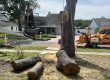
When you need tree removal near homes, the goal isn’t just to “get the tree down.” It’s to remove it with controlled cuts, protect structures and landscaping, and reduce the risk of secondary damage—like broken fence lines, damaged driveways, or limbs dropping into gutters and power runs.
At Timber Kings Tree Service, we handle removals with the same mindset we use for safety-first storm cleanup: assess stability, plan the rigging and cutting sequence, protect what matters, and leave the site ready for what comes next.
Quick Answer
For residential properties, the safest tree removal is planned around the tree’s stability (roots and lean), proximity to structures, and how the limbs will be taken down. In Central Florida, wet soil and fast-growing canopies can turn “not too bad” trees into hazards during tropical storms. A certified arborist will determine whether a tree should be removed or preserved (often via tree pruning or targeted crown thinning) and then execute the removal with controlled rigging and clean site protection.
When Tree Removal Becomes a Safety Issue (What We Look For)
The most reliable removals start with what many property owners don’t see.
Signs a tree may be failing
During a typical on-site assessment, we check for structural and mechanical risk factors, including:
- Visible lean that’s increasing after rain or wind
- Cracks at the base, raised soil, or exposed roots
- Dead or dying sections in the canopy (especially if they’re clustered on one side)
- Fungus or rot indicators near the trunk flare or major unions
- Loose bark, hollow areas, or severe limb attachment defects
- Damage history (previous lightning strike, storm impact, or improper topping)
A realistic hazard scenario we commonly encounter
One of the more common patterns we see is a tree that “survived everything” until the last storm—then a few limbs break, and the property owner assumes the damage is over. In one anonymized case, a multi-stem oak behind a garage began shedding small limbs after heavy wind. The homeowner delayed action because the trunk looked healthy. When we inspected it, we found a combination of interior decay at a major union and root disturbance from prior soil saturation, which reduced stability. The removal plan required a careful step-down rigging approach to avoid dropping sections onto the garage roof and nearby landscaping.
That’s why we treat residential tree removal as a stability and risk-management job, not a demolition job.
What Property Owners Often Overlook
Common mistake: Waiting until the tree “shows obvious danger”
A lot of homeowners and property managers assume that if a tree looks alive and hasn’t fallen yet, it’s safe. But structural failure often starts quietly—through root instability, hidden decay, or weak limb unions—and storms simply reveal what was already there.
In Central Florida, frequent heavy rainfall can loosen soil and increase movement. Combine that with fast canopy growth and humid conditions that can promote decay fungi, and you get a higher likelihood of sudden failures. By the time a tree is clearly “leaning” or shedding major limbs, it may already be near the point where wind or saturated ground triggers failure.
Tree Trimming vs Tree Removal
Not every hazardous situation requires removal. Sometimes the right work is targeted pruning that reduces load and improves clearance.
How we decide: preserve when possible
A certified arborist may recommend preservation methods such as:
- Crown thinning to reduce wind resistance (not “lightning-bolt” cuts that ruin structure)
- Crown reduction when branches are overextended toward a home or driveway
- Tree pruning for deadwood removal, reducing the chance of branch failure
- Tree shaping to restore safer geometry and improve airflow
When removal is the safer choice
Removal is typically recommended when:
- The trunk is compromised (major decay, significant hollowing, severe structural defects)
- Roots are unstable or the tree has lifted from the ground
- The tree’s failure would likely impact a home, utility line, or hardscape
- The canopy is so badly imbalanced that pruning won’t restore safe stability
If you’re weighing options, you can start by exploring our professional tree trimming services to understand what can be safely reduced or cleared—then we’ll confirm whether preservation is realistic or removal is the best risk-control step.
Maintenance, Removal, or Prevention: A Storm-Safe Checklist
If you manage a home or commercial property, this is a practical checklist we use to help owners prepare before weather ramps up. It won’t replace a professional inspection, but it helps you spot problems early.
Storm preparation checklist (for homeowners and property managers)
- Walk the perimeter after rain: look for new lean, lifted soil, or cracks at the base.
- Check clearance around roofs, garages, and fences—especially where limbs rub or hang low.
- Inspect for deadwood: brittle branches that don’t flex and have no live cambium are failure candidates.
- Look for fungus/rot indicators: mushrooms, conks, or soft, punky wood near major unions.
- Assess canopy balance: heavy limbs on one side can increase leverage during wind.
- Confirm mulch and grade: avoid piling soil against the trunk (it can worsen decay conditions).
- Plan access: if you’ll need emergency help, make sure equipment can reach the property safely.
- Document tree condition: simple photos help track changes and speed up decision-making after storms.
What we recommend after removal
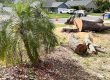
Once a tree is removed, the next safety step is usually stump removal and stump grinding. Leaving large stumps can create trip hazards, attract pests, and complicate future landscaping. For more on site cleanup after a cut, see stump grinding assistance and discuss the option that best fits your yard layout.
Our Experience Managing Trees During Florida Storm Season
In Central Florida, storm risk isn’t just about wind speed—it’s about how trees behave when the ground is saturated and how canopies respond to gust patterns. In the field, we often observe that:
- Overgrown canopies act like sails, increasing leverage on weaker unions.
- Trees with prior wound damage (lightning scarring, storm breaks, or poor pruning) can fail at the attachment points even if the trunk looks solid.
- Root instability may not be obvious until you see soil movement at the base after rain.
We also plan removals with the reality of nearby homes and landscaping. “Minimal disruption” means protecting walkways, driveways, and garden beds—often with careful rigging strategy and step-by-step sectioning so the cut pieces don’t bounce or slide unpredictably.
A note on storm-damaged trees
If your tree is already damaged—split trunk, hanging limbs, or uprooted sections—don’t attempt DIY cleanup. During storms, those limbs can shift as they dry and lose tension, changing where they fall. For immediate support, our storm damage response focuses on hazard control first, then cleanup and safe removal sequencing.
Mistakes That Increase Storm Damage Risks
Here are the errors we see most often in residential and commercial settings:
1. Topping trees or “hacking” back branches
- It creates large regrowth that’s weaker and more prone to breakage.
2. Ignoring deadwood
- Dead branches are often the first to fail, especially during gusty conditions.
3. Cutting without a plan
- Improper cuts can bind the trunk, pinch the saw, or cause unexpected movement.
4. Leaving unstable trees after minor storms
- A tree that “survived” may still be structurally compromised.
5. Delaying stump management
- Stumps can rot over time, become trip hazards, and make future landscaping harder.
If you’re also dealing with overgrowth around fences, property edges, or unused lots, brush and growth management can reduce hazard pressure. We commonly coordinate removal and cleanup with lot land clearing solutions—especially when a property has been neglected for a season or two.
Valrico and Central Florida Relevance: Why Local Conditions Matter
Valrico and the broader Tampa Bay area experience the kind of weather patterns that make tree stability problems more noticeable—and more dangerous. Heavy rainfall saturates soil, and that can reduce root anchorage. Humidity also contributes to conditions where certain decay processes progress faster than many homeowners expect.
That’s why our approach is grounded in what we see here:
- Oak and other broadleaf trees may hold dense canopies that increase wind load.
- Root instability can develop gradually and only become obvious after storms.
- Emergency timelines matter: after a tropical system, roads, access, and safety risks change quickly.
We plan around that reality—so your property is safer now and more resilient later.
Quick Comparison: Preservation vs Removal
| Goal | What’s usually recommended | Best for |
|---|---|---|
| Reduce risk without removing the whole tree | Targeted tree pruning, crown thinning, deadwood removal | Trees with sound structure and manageable clearance issues |
| Eliminate a high-failure hazard | Full tree removal with controlled sectioning | Trees with unstable roots, major decay, or failure risk toward buildings |
| Clean up after the cut | stump grinding and debris management | Returning the yard to usable condition and preventing hazards |
In many cases, preservation is a great option. In others, removal is the safest decision—and the right plan keeps disruption low.
Signs a Tree May Be Hazardous
If you’re trying to decide whether to call an arborist, watch for:
- Leaning that appears new or more pronounced after storms
- Cracks or lifting soil around the trunk base
- Branches that hang at odd angles or show active cracking
- Dead limbs dropping even during moderate wind
- Fungal growth near the trunk or major limbs
- Rotted or soft wood you can feel with a visual inspection
If several of these are present, it’s time for a professional evaluation.
Tree Health Assessment and When Disease Treatment Matters
Sometimes the “hazard” isn’t just physical damage—it’s the tree’s health and internal structure.
A tree health assessment helps us identify whether a tree is simply overgrown or whether it has underlying issues such as decay progression or structural weakness that increases failure risk. If disease-related decline is part of the problem, we may recommend a combination of trimming and targeted care strategies to improve long-term stability.
For property owners dealing with recurring pest or disease pressures, proactive monitoring is often more cost-effective than repeated emergency responses. (We can’t promise a tree can always be saved, but we can usually help you understand the odds and the safest next step.)
A small reality check
Even healthy trees can fail if conditions are extreme. That’s why we focus on structure and risk—because “green leaves” don’t always mean “sound wood.”
Our AI Overview Summary
AI Overview (concise): Secure residential tree removal depends on assessing stability, root condition, and clearance to homes before making controlled cuts. In Valrico and Central Florida, saturated soil and dense canopies can turn weakened trees into storm hazards quickly. When a tree can’t be safely preserved, professional removal and follow-up stump grinding help protect structures, reduce debris risk, and prepare the property for landscaping or rebuilding.
Frequently Asked Questions
How do I know if a tree is dangerous during storms?
Look for changes after rain or wind: new lean, lifted soil at the base, cracks, or deadwood shedding. If branches hang at unusual angles or you see rot indicators like fungal growth near major unions, treat the tree as a hazard candidate. A certified arborist can evaluate stability and determine whether removal, crown thinning, or deadwood pruning is the safest option.
Can storm-damaged trees be saved?
Sometimes. If the trunk is intact and the damage is limited to broken limbs, targeted pruning may reduce further risk. If there’s interior decay, unstable unions, uprooting, or root disturbance, removal is often the safer route. The key is assessing structure—not just removing what’s visibly broken.
What’s the best time to schedule pruning in Florida?
Many properties schedule pruning outside peak storm emergency windows, often in periods when the tree can recover well and crews can access safely. Your best timing depends on species, growth stage, and the reason for pruning (clearance, deadwood removal, or canopy reduction). We’ll recommend a plan based on your goals and hazard level.
Does stump grinding prevent regrowth?
Stump grinding removes the bulk of the stump and root flare, which reduces the chance of regrowth. However, some species can still attempt to resprout from remaining roots. A follow-up strategy may be recommended depending on the tree type and site conditions.
Ready to Protect Your Property and Trees?
If you’re seeing leaning trees, overgrown canopies near structures, or storm damage you can’t safely manage, don’t gamble with DIY cleanup. A planned approach is what keeps removals safe and minimizes disruption to your home, driveway, and landscaping.
About Timber Kings Tree Service
Timber Kings Tree Service provides tree removal, tree trimming, stump grinding, storm cleanup, emergency tree service, and land clearing solutions throughout Valrico, FL and surrounding Central Florida communities. We focus on safe tree management, storm-prep planning, and long-term property protection through professional arborist services—so homeowners and commercial property managers can make confident decisions before hazards escalate.
If your situation is urgent, our team can also support with emergency tree removal solutions when damaged trees threaten people, structures, or safe access.