Storm Damage Cleanup: Reduce Hazards With Professional Care
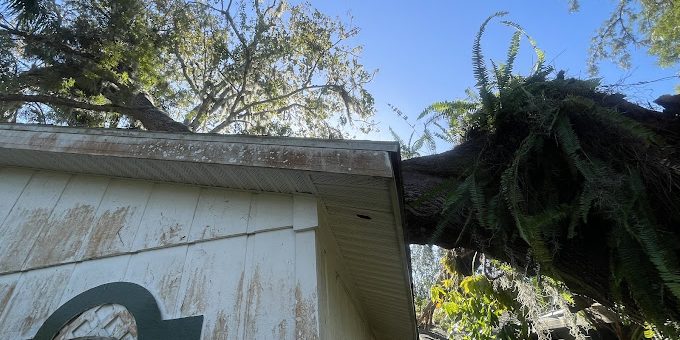
After a strong thunderstorm or a tropical system skirts the Tampa Bay area, the first calls we get aren’t always about “big” trees—they’re about the creeping hazards. A live oak that’s suddenly leaning toward a roof. A palm frond tangled in a gutter. A dead limb that finally gives way after hours of wind-driven rain.
In Valrico and throughout Central Florida, storm damage can turn into a property risk fast: falling limbs, broken branches, unstable roots, and hidden decay that weakens trees right when you need them to hold. Professional storm damage cleanup isn’t just about making things look better—it’s about reducing liability and preventing secondary damage (like leaks, electrical hazards, and further structural failures).
Quick Answer
If storm-damaged trees are hanging, leaning, cracked, or have exposed roots, treat them as hazards—not “yard debris.” Call a certified arborist or an emergency tree service to assess stability, identify decay or compromised structure, and safely remove or support the tree. For smaller branches, cleanup may be DIY, but once power lines, trunk damage, major root disturbance, or large limbs are involved, professional care is the safer choice.
Signs a Tree May Be Hazardous
During storm cleanup, we look beyond what’s fallen. Many dangerous failures start in places homeowners can’t easily see.
Common red flags include:
- A tree leaning more than before (even slightly) or with soil heaving near the base
- Cracks in the trunk, especially on the side facing the fall direction
- Exposed roots or root plates that look partially lifted
- Bark wounds around large limbs where the storm broke but didn’t fully separate
- Deadwood mixed into the canopy that suddenly becomes “active” in high winds
- Fungal activity (mushrooms/fruiting bodies) near the trunk base, which can indicate internal decay
- Canopy rubbing against structures (rooflines, fences, power equipment), increasing impact risk in future storms
Common homeowner scenario we see
A property owner reports, “The tree didn’t fall, but it’s definitely different.” When we arrive, the trunk isn’t catastrophically broken—yet there’s a fresh soil ridge on one side, and the canopy is now heavier on the damaged root side. That’s when a tree can fail later, not immediately. Storms don’t just snap limbs; they can shift the balance of the tree’s root system, setting up a delayed failure.
Storm Damage Cleanup: What Professionals Actually Do
Storm cleanup is a mix of tree risk assessment, careful removal, and hazard control. We typically start with the same sequence because it prevents the most common “cleanup mistakes”:
1. Scene safety first
- Identify electrical hazards, unstable ground, and anything that could fall during assessment.
- Establish exclusion zones so crews and homeowners aren’t near tensioned limbs or compromised trunks.
2. Tree health and structural evaluation
- Inspect for break points, cambium damage, internal decay indicators, and root plate disturbance.
- For live oaks and other heavy-wood species common in Central Florida, we pay close attention to how previous wounds may have progressed after the storm.
3. Plan the removal method
- Not every “fallen limb” should be cut the same way.
- We choose cutting techniques based on tension/compression forces in the limb, so sections don’t drop unpredictably.
4. Clean up with future risk in mind
- Removing debris is only step one. We also address what remains—dangling branches, broken limb stubs, and damaged canopy sections that can become hazards in the next wind event.
Firsthand observation from the field
One thing we consistently notice after Florida storms: the most dangerous limbs often look “almost attached.” They’ll hang by a few fibers or brace against another branch. From the ground, it seems stable. But up close, those fibers can be partially severed, and vibration from cleanup work—or even the next breeze—can trigger a sudden drop.
That’s why storm cleanup should be treated like a temporary construction site: planned, controlled, and safety-led.
What Property Owners Often Overlook
Storm cleanup is emotional—people want the mess gone. But there are a few pitfalls that can turn a one-time cleanup into ongoing risk.
Mistakes that increase storm damage risks
- Cutting the wrong limb first: Removing a supporting branch can shift weight and cause the remaining portion to roll or swing.
- Ignoring root disturbance: If soil has lifted or the root plate looks exposed, the tree’s stability may be compromised even if it “stands.”
- Leaving cracked limbs attached: A partially broken limb can fail later, especially as it dries and stresses change.
- Delaying assessment: After storms, decay organisms and moisture exposure can accelerate. A damaged canopy today may become a bigger problem next season.
- Assuming “it’s alive, so it’s safe”: Live trees can still be structurally unsound after wind and rain stress.
Maintenance, Removal, or Prevention: A Storm-Ready Checklist
Not every storm problem requires full removal. Sometimes the safest and healthiest outcome is preservation work—targeted pruning that reduces wind load without weakening the tree.
A practical storm preparation checklist (for homeowners & property managers)
Use this before hurricane season and before the next big weather window:
- Walk the perimeter: Look for leaning trunks, dead limbs, and branches contacting structures.
- Check for recent trunk wounds: Splits, torn bark, or large cavities near the base.
- Inspect root areas: New soil heaving, exposed roots, or mulch pushed away from the trunk.
- Review canopy density: Overgrown crowns can act like sails in high winds.
- Look for weak attachments: Co-dominant trunks, large included bark, and heavy limbs with narrow attachment points.
- Clear small debris regularly: Don’t let deadwood accumulate under oaks and pines—storm fragments travel and multiply.
- Plan “right-sized” pruning: Reduce targets near roofs, power lines (where applicable), and walkways.
- Document for your records (commercial properties): Photos before/after storms help with insurance and liability planning.
Tree trimming vs tree removal (how we decide)
When possible, we aim to preserve healthy structure. But preservation isn’t “leave it alone”—it’s choosing the right corrective action.
Trimming / pruning is often recommended when:
- The tree is healthy enough to retain its structure
- Damage is localized to certain limbs
- Crown reduction or thinning can lower wind resistance without compromising stability
Removal is recommended when:
- The trunk is cracked or compromised throughout
- Root stability appears disturbed
- Decay and structural weakness make failure likely
- The tree’s risk can’t be safely reduced with pruning
For a removal pathway, homeowners often ask about next steps. If you’re dealing with a stump or planning future landscaping, pairing cleanup with stump grinding assistance can prevent regrowth and reduce tripping hazards while keeping the yard usable.
Our Experience Managing Trees During Florida Storm Season
In Central Florida, storms often combine heavy rainfall, gusty wind, and saturated soils. That combination changes how trees stand. Even strong trees can fail when the root zone can’t hold steady.
We also see quick regrowth of minor debris after storms—especially when broken branches are left behind. Those fragments can become “seed points” for further damage, because they create new targets for the next wind event.
A helpful way to think about storm risk is to focus on three failure categories we assess:
- Root/anchorage issues (lifted soil, exposed roots, soil cracking)
- Trunk/structural issues (splits, decay indicators, compromised unions)
- Canopy loading issues (overextended limbs, dense crowns, weak attachment points)
A realistic anonymized case (how we handled it)
A commercial property manager called after a line of storms brought down multiple limbs across a parking area. One large live oak still stood, but a major limb had a fresh break and was hanging above a walkway. The base soil showed subtle heaving, and the crown was now unbalanced.
Instead of cutting from the ground with improvised equipment, we:
- secured the fall zone,
- evaluated the trunk and attachment strength,
- removed the compromised limb using controlled sectional cuts,
- and recommended targeted pruning to reduce future wind load near the building edge.
The result: the area reopened safely without leaving a “time bomb” limb that could have dropped later.
Quick, Evidence-Informed Notes (Why Professional Assessment Matters)
Storm failures aren’t random. Trees fail when stress exceeds what their structure and roots can withstand. Arboriculture research and extension guidance consistently emphasizes that tree risk management requires evaluating both structure and stability, not just visible damage.
A few relevant references you can trust:
- International Society of Arboriculture (ISA): Tree risk assessment is a structured process that considers likelihood and consequence of failure.
- USDA Forest Service / extension resources: Storm damage analysis highlights windthrow mechanisms and the role of root anchorage.
- National Fire Protection Association (NFPA) guidance: Electrical hazards are a primary reason to keep people away from damaged areas and let utilities handle energized lines.
- University extension materials on pruning: Proper pruning reduces hazards by addressing weak structures and limiting excessive canopy load.
(We rely on these principles when building a removal or preservation plan—especially after storms when the tree may be “wounded but not obvious.”)
Valrico & Central Florida Relevance: What Changes Here
In Valrico, the combination of warm temperatures, fast growth, humid conditions, and frequent summer storms means tree problems can develop quietly and then show up during the next high-wind event.
A few local factors we account for:
- Rapid growth and canopy density: Trees can become overextended if pruning is delayed.
- Saturated soils during heavy rain: Root anchorage can weaken temporarily, increasing the chance of windthrow.
- Species-specific structure: Live oaks often have strong wood, but included bark, decay pockets, and heavy limb architecture can still create failure points.
- Lightning storms: Even when a tree doesn’t look “burned,” internal injury can change stability over time.
That’s why, after a storm, we don’t just clean up the obvious debris—we evaluate what the storm revealed.
Pruning, Removal, and Preservation Recommendation
If your property has storm damage, the safest recommendation is rarely “do nothing” or “remove everything.” It’s more often a targeted plan:
- Preserve when the structure is sound and pruning can reduce hazard targets
- Remove when the tree’s stability is compromised or decay/structural failure is likely
- Stabilize the property immediately by addressing the highest-consequence hazards first (rooflines, walkways, parking areas)
If you’re planning longer-term landscaping or need the area cleared for replanting, consider lot land clearing services to remove debris safely and prepare the ground for what comes next—without leaving hazardous stumps or buried fragments.
Ready-to-Use Guidance: What to Do After a Storm
If you’re staring at storm damage right now, here’s the immediate, safety-first approach:
Step-by-step actions
- Keep people away from leaning trees and hanging limbs.
- If you see power lines or arcing/low-hanging lines, stop and let utilities handle it.
- Take photos for documentation (from a safe distance).
- If a tree is cracked, uprooted, or blocking a driveway/entry, schedule a professional assessment.
- Don’t attempt to “cut it down quickly” with a ladder near tensioned branches.
When to call an emergency tree service
If the hazard involves any of the following, call an emergency response:
- Trees or large limbs near structures
- Trunk damage or major limb failures
- Root plate disturbance
- Blocking emergency access or parking lots
- Uncertainty about stability
For situations that can’t wait, you can reach emergency tree service solutions designed for storm aftermath and urgent hazards.
Optional Comparison: Preservation vs Removal
| Situation after a storm | Best next step | Why |
|---|---|---|
| Small broken limbs, no trunk cracks | Targeted pruning + cleanup | Reduces targets while keeping healthy structure |
| Hanging limb with tension or partial break | Controlled removal | Prevents delayed failure |
| Root heaving or exposed roots | Stability assessment; removal may be necessary | Root anchorage can be compromised |
| Trunk split or extensive decay indicators | Removal | Risk often can’t be reduced safely |
| Crown overgrowth pulling toward roof/lines | Crown thinning or shaping | Lowers wind load and future impact risk |
If you’re trying to decide what your tree needs, professional arborist services like professional tree trimming services can clarify whether pruning will solve the hazard or whether removal is the safer option.
FAQ
How do I know if a storm-damaged tree can fall later?
Look for stability changes: new leaning, fresh soil movement, exposed roots, trunk cracks, or limbs hanging by only a few fibers. If you can see root plate disturbance or the crown looks unbalanced compared to before the storm, treat it as a delayed-failure risk. A certified arborist can inspect the structure and recommend whether corrective pruning or removal is the safest plan.
Can a tree with broken branches be saved?
Often, yes—if the damage is limited and the tree’s overall structure remains sound. We may recommend crown thinning, crown reduction, or removal of compromised limbs to reduce wind load and prevent future breakage. If there are trunk injuries, internal decay indicators, or major attachment failures, removal may be the safer long-term choice.
What’s the best time to address storm damage—right away or later?
If the tree is hazardous (leaning, cracked, blocking access, or hanging over structures), address it immediately. Waiting can increase risk because trees continue to dry out, shift, and become more unstable. For minor debris only, scheduling cleanup soon is still wise, but urgency depends on proximity to people and property.
Does stump grinding prevent regrowth?
Stump grinding removes much of the living portion of the stump, which can reduce regrowth and decay hazards. However, complete prevention depends on species and the stump’s condition. For best results, we can discuss whether grinding plus follow-up treatments are appropriate for your property.
Ready to Protect Your Property and Trees?
Storm damage cleanup is safest when it’s planned, assessed, and handled by people who understand tree structure, stability, and storm failure patterns. If you’re dealing with leaning trees, hanging limbs, cracked trunks, or debris that won’t stay “just debris,” a professional inspection can prevent secondary damage and reduce liability.
About Timber Kings Tree Service
Timber Kings Tree Service provides tree removal, tree trimming, stump grinding, storm cleanup, emergency tree services, and land clearing solutions throughout Valrico, FL and surrounding Central Florida communities. The company focuses on safe tree management, storm preparation, long-term tree health, and helping homeowners and businesses protect their properties through professional arborist and tree care services.