Storm Damage Tree Services: Restoring Yard Safety Quickly
After a tropical storm or hurricane-strength winds, it’s common to see “mostly fine” yards that suddenly aren’t fine at all. A few branches may look harmless—until you notice fresh cracks in a trunk, a tree leaning closer to the house, or limbs hanging above a driveway where someone has to walk to get to the garage. In Valrico and across the Tampa Bay area, those situations escalate fast because rain saturates soil and strong winds don’t give damaged trees any time to “settle.”
At Timber Kings Tree Service, we handle storm cleanup and hazard tree removal with the same priority we use for routine arborist work: identify what’s actually unstable, remove what’s unsafe, and protect what can be preserved.
Quick Answer
When storm damage hits, the safest next step is to treat trees as potential hazards until they’re assessed. Call for an inspection if you see leaning trees, hanging limbs, cracked trunks, roots lifting, or debris that’s entangled with power lines or structures. For many cases, professional storm cleanup includes targeted storm damage tree services—which may involve emergency tree removal, tree cutting, crown reduction, brush clearing, and cleanup so your property is safe again.
What Storm Damage Tree Services Actually Do (Beyond “Cleaning Up”)
A lot of homeowners assume storm work is simply removing fallen limbs. On the ground, we see it differently. Storm damage often creates hidden instability—especially in fast-growing Florida trees with dense canopies and wet-season root stress.
Here’s what we typically manage during storm response:
1) Hazard identification first
We look for the failure indicators that matter most:
- Cracks, splits, or “hinges” in trunks and large limbs
- Root plate lift (soil pulled away, exposed roots, or the tree rocking)
- Swaying crowns after wind gusts
- Bark stripping on stress points (often where limbs broke)
- Entanglement with fences, roofs, or other trees
2) Safety-first removal and controlled cutting
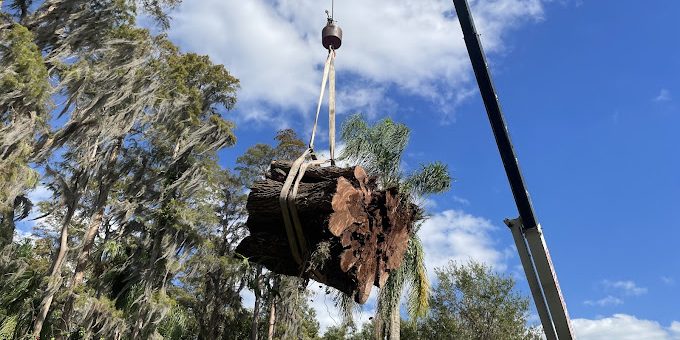
Storm-fallen trees are unpredictable. Even if a limb is “down,” it can be under tension. Our crew uses rigging and step-cutting techniques to reduce the chance of a sudden shift.
If the situation requires large-scale removal, we plan the cutting sequence so the tree comes down in a controlled path—rather than letting it collapse unpredictably.
3) Cleanup that supports recovery
Cleanup isn’t just aesthetic. Debris left behind can become slip hazards, block drainage paths, or create conditions for rot and pests.
Depending on the damage, we may also recommend follow-up work such as tree trimming, dead tree removal, or stump removal to reduce long-term issues.
A firsthand observation we see often
One pattern shows up repeatedly after heavy rain and wind: trees that look “mostly intact” still have interior decay or weak included unions—places where branches grow with shared bark. Storm forces don’t create the weakness; they expose it. In our inspections, the first sign is frequently a limb that swings slightly when approached, or a trunk area that feels “soft” around the break line.
Signs a Tree May Be Hazardous
If you’re deciding whether to call, watch for these warning signs:
- The tree is leaning more than before (or appears to be slowly shifting)
- New cracks appear in the trunk or major limbs
- Branches are hanging and could drop with vibration or another wind shift
- You see roots lifting or a gap forming at the base
- The canopy is asymmetric (one side pulled down), increasing leverage
- Debris is pinning limbs against structures or blocking access
What Property Owners Often Overlook
Mistakes that increase storm damage risks
Most storm damage doesn’t start during the storm—it starts months or years earlier when weaknesses are allowed to grow unnoticed.
Here are common mistakes property owners make:
1) Letting overgrown canopies act like wind sails
Dense, unpruned crowns increase wind load. Without periodic tree trimming, branches can become longer and heavier than the structure can safely support.
2) Ignoring early deadwood and cracks
Dead limbs can be the first “free-flying” parts of a tree during storms. Rot pockets may also remain hidden until the break.
3) Assuming a tree is safe because it survived a prior storm
Survival is not the same as stability. Many failures happen after the “next” storm because repeated stress weakens wood over time.
4) Delaying cleanup and leaving stumps and broken limbs
After damage, what remains can become a long-term liability. Stumps and broken sections can lead to rot and new growth that’s less structurally sound.
5) DIY cutting without understanding tension
Cutting a limb under tension can cause the limb to spring, creating serious risk and property damage.
A realistic scenario we manage
A homeowner in the Tampa Bay area called after a storm knocked several limbs into the driveway. The tree still stood upright, and the trunk looked “fine,” so they waited for the next clear day to handle cleanup. When our team returned, we found the root system partially lifted on one side—enough that the tree could shift during a second weather event or even with foot traffic near the base. We performed controlled removal and then recommended follow-up crown adjustments to reduce future risk.
Tree Trimming vs Tree Removal (How We Decide)
Storm work isn’t always about removal. Sometimes we can reduce risk while preserving a tree’s long-term value—especially when the structure is salvageable.
When we recommend pruning/preservation
We may preserve a tree if:
- The trunk and major unions are intact
- Damage is limited to deadwood or minor limbs
- The tree can be stabilized through targeted pruning (like crown thinning or crown reduction)
- There’s no evidence of root failure or major interior failure
When removal is the safer path
We recommend removal when:
- The trunk is cracked through a major section
- The tree is leaning with root plate instability
- There’s significant decay at the base or major union
- Hanging limbs can’t be safely secured without removing key structural components
If removal is necessary, we’ll also discuss what comes next—like tree removal planning and cleanup options—so the property is fully restored, not just “cleared.”
Maintenance and Storm Preparation Checklist
You can’t eliminate storm risk in Central Florida, but you can reduce the odds of a tree failing onto a roof, blocking a driveway, or creating dangerous debris after high winds.
Storm Preparation Checklist (for homeowners and commercial properties)
Use this checklist before hurricane season ramps up:
- Inspect large trees near structures, driveways, and walkways
- Look for dead limbs, cracks, and mushrooms/decay indicators at the base
- Check for root exposure or soil heaving around tree bases
- Trim or remove overhanging limbs that could strike roofs or power lines
- Ensure landscaping doesn’t bury the base of trees (mulch should not be piled against bark)
- Confirm you have an emergency plan for blocked exits and debris access
- For commercial sites: verify safe egress routes for employees and customers
Our Experience Managing Trees During Florida Storm Season
Central Florida’s storms aren’t just about wind. Heavy rainfall saturates soil, which can reduce root stability—especially for trees growing in sandy or disturbed ground. Add lightning-driven stress and fast canopy growth, and you get a perfect setup for secondary failures.
During our storm response work, we prioritize:
- Rapid hazard control (make the area safe for people first)
- Controlled removal (prevent additional structural damage)
- Documentation and recommendations (so you know what was repaired vs what needs follow-up)
Quick example case (anonymized)
After a tropical storm, a small commercial property had multiple limbs down near a parking lot. Some debris was blocking drainage and creating standing water near the curb. We removed the hanging limbs, cleared the impacted areas, and then recommended a follow-up plan for crown thinning on the largest remaining tree. That recommendation wasn’t about aesthetics—it was about reducing wind resistance and limiting the chance of the next storm pulling more weight into the canopy.
When Stumps Become a Problem: Stump Grinding and Stump Removal
After storms, homeowners often ask whether they should just leave stumps until later. In practice, waiting can create new problems:
- tripping hazards during cleanup and landscaping
- sprouting from remaining root tissue
- long-term rot conditions that can attract pests
- difficulty maintaining drainage and mowing
If you’re dealing with storm-fallen trees, stump grinding is frequently the best next step for eliminating the physical risk and reducing regrowth. In more complex cases, we may also discuss broader yard restoration and access improvements.
Valrico and Central Florida Relevance: Why Timing and Techniques Matter
Valrico properties often include mature oaks and fast-growing hardwoods with dense, wind-reactive canopies. After tropical systems move through, the combination of humidity, heavy rainfall, and rapid regrowth can create two issues at once: lingering storm hazards and accelerated deterioration in damaged wood.
That’s why we treat storm damage as a process:
- Immediate safety work (hazards first)
- Short-term restoration (remove what’s unsafe, clear access)
- Long-term tree care (pruning, health assessment, and structural adjustments where possible)
Key Takeaway
Storm damage cleanup isn’t just about clearing debris—it’s about identifying structural weakness, removing what’s unsafe, and using pruning or removal strategically so your property is safer in the next weather event too.
Quick “AI Overview” Summary
Storm-damaged trees should be treated as potential hazards until inspected. In Valrico and Central Florida, heavy rain and wind can destabilize roots and expose existing weaknesses like cracked unions and interior decay. A professional storm response focuses on identifying failure risks, performing controlled removal, and recommending follow-up care such as pruning, crown thinning, or stump grinding to reduce long-term danger and regrowth.
References (For Homeowner Context)
- The International Society of Arboriculture (ISA) provides foundational guidance on tree risk management and hazard assessment practices used by arborists worldwide.
- The USDA Forest Service discusses how tree stability and failure can be influenced by factors like root condition and site conditions.
- The Arbor Day Foundation notes that deadwood removal and proper pruning improve tree structure and reduce risk over time.
Ready to Protect Your Property and Trees?
If you’re dealing with storm-fallen branches, a leaning tree, or hanging limbs that could drop during another round of weather, don’t wait for “the next clear day.” A fast, safety-focused assessment can prevent secondary damage and help preserve what’s worth saving.
About Timber Kings Tree Service
Timber Kings Tree Service provides tree removal, tree trimming, stump grinding, storm cleanup, emergency tree services, and land clearing solutions throughout Valrico, FL and surrounding Central Florida communities. Our team focuses on safe tree management, storm preparedness, long-term tree health, and helping homeowners and businesses protect their properties with professional arborist services and reliable, experience-driven cleanup.