Emergency Tree Service: When Roots, Branches, Or Lines Threaten
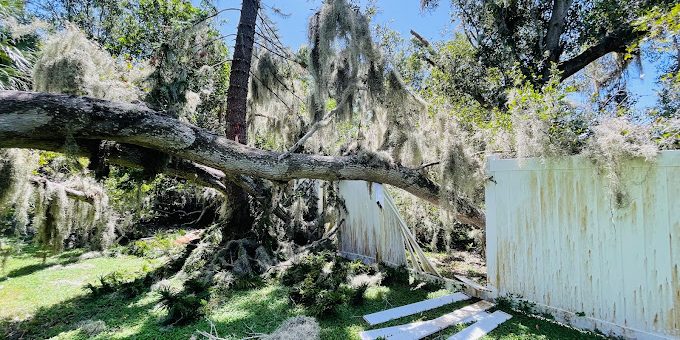
Last week, a Valrico homeowner called after hearing a “pop” during a heavy rain. A large live oak in the front yard wasn’t fully down—yet—but the base was visibly lifting and the canopy leaned toward the driveway. Within minutes, a second gust pushed more weight into the situation. That’s the kind of moment that turns a normal landscape problem into an emergency.
In Central Florida, storms don’t just snap branches. They stress roots, loosen anchors in saturated soil, and expose decay that was quietly progressing inside the trunk. When limbs or roots start threatening roofs, vehicles, fences, or utility lines, you need more than a ladder and a chainsaw—you need a trained arborist approach to safety, access, and hazard control.
Quick Answer
If a tree is leaning, cracking, rubbing power lines, hanging over structures, or lifting at the roots, treat it as an emergency. Call an Emergency Tree Service quickly so professionals can assess stability, manage electrical risk, and remove or secure hazards without causing secondary damage. After the immediate danger is addressed, proper follow-up—like tree trimming, tree pruning, or tree removal (when necessary)—helps prevent repeated failures during the next storm.
When It’s an Emergency: Signs We Don’t Ignore
From an arborist’s perspective, “almost falling” is often more dangerous than fully fallen trees. A partially failed tree can drop unpredictably, shift its weight, or rebound as tension releases.
Signs a tree may be immediately hazardous
- Cracks in the trunk or major limbs, especially after wind or heavy rain
- Bark splitting or “hinge” points where the tree looks like it’s bending
- Roots lifting (soil heaving, exposed roots, a gap forming at the base)
- Leaning that increased after storms
- Branches contacting or dangerously close to power lines
- Hanging limbs that look stable but are actually suspended by other branches
- Mushrooms, cavities, or dead sections that become weight-bearing hazards in high wind
Real-World Scenario: The “Still Standing” Oak That Failed Later
A commercial property manager we worked with had an oak near a parking lot. The tree didn’t fall completely during the storm—branches were still draped over the canopy. By the time our crew arrived, the trunk showed a new separation line, and the root plate had shifted slightly. What looked like “minor damage” had actually turned into a structural compromise.
We stabilized the hazard zone first, then removed the compromised sections in a controlled sequence. That ordering matters. If you cut in the wrong spot, you can change how the remaining weight transfers—turning a manageable risk into a sudden fall.
Firsthand observation we see often
Overgrown canopies can increase wind resistance. In storms, that extra leaf and twig mass can act like a sail, raising stress on both the trunk and the root system. When decay or prior storm damage exists, the added “load” can be the tipping point.
What Property Owners Often Overlook
Most hazard trees don’t become dangerous overnight. They become dangerous through a chain of small, overlooked conditions.
Common overlooked factors we check during inspections
- Interior decay: A trunk may look “fine” from a distance but have pockets of rot that weaken the wood.
- Compacted or saturated soil: After heavy rain, roots can lose the grip that keeps a tree upright.
- Suckering or deadwood inside the canopy: Dead branches can fall first, then the tree’s balance changes.
- Improper past pruning: Cuts made too large or at wrong angles can lead to weak attachment points and longer-term decay risk.
- Root encroachment: Sidewalks, drainage issues, or soil fill can alter how a tree anchors itself.
Common Mistakes That Increase Storm Damage Risks
Here are the mistakes we see again and again—often right before a storm turns them into emergencies.
1) Waiting until the tree “fully fails”
Many people wait for the first major fall before calling. But a leaning tree can fail in stages, and staged failures are harder to predict.
2) Cutting “one limb” without a plan
Tree cutting should account for the tree’s remaining support and balance. Removing the wrong limb can increase leverage on the trunk or trigger a secondary collapse.
3) Trimming only the outside edges
If the canopy is overloaded, trimming only the most visible branches doesn’t reduce overall wind load. In some cases, it can even make the canopy shape more vulnerable.
4) Ignoring signs of root stress
Exposed roots, heaving soil, or persistent leaning aren’t “cosmetic.” They’re clues that the stability system is already compromised.
5) Treating stump removal as optional
Stump removal and long-term site management matter because a weakened root system and decaying stump can continue to cause instability and pest issues over time.
If you’re currently dealing with aftermath cleanup, it helps to start with a proper assessment of what’s safe now and what must be removed for long-term stability.
Tree Trimming vs Tree Removal (How We Decide)
The goal is almost never “cut everything.” The goal is to keep trees healthy when feasible and remove hazards when they aren’t.
Typical preservation path (when appropriate)
- Tree pruning for deadwood removal and structural improvement
- Crown thinning or selective shaping to reduce wind resistance
- Crown reduction when a canopy is too large for the site or clearance requirements
Removal becomes the safer option when
- The trunk has major structural defects (large cavities, severe splitting, or compromised attachments)
- The tree is unstable at the base or showing progressive root failure
- The tree is too close to critical risks (lines, structures, frequent traffic paths) and cannot be made safe reliably
If your tree is already damaged, it’s worth reviewing your options with professionals rather than assuming the tree can be “saved” or that removal is always the only choice.
For planning around immediate hazards and follow-up care, our emergency tree service process is designed to address danger first, then reduce future risk.
Maintenance, Removal, or Prevention: What to Do Next
If you’re dealing with storm-related stress—or you’re trying to prevent it—use this checklist as a starting point.
Storm Preparation Checklist (Property-Manager Friendly)
Before storm season
- Walk the property after windy days (not just after storms) and note leaning trees or dead limbs
- Identify trees near roofs, fences, parking areas, and walkways
- Schedule pruning for trees with heavy deadwood or poor structure
- Check for roots lifting near hardscape, drainage swales, or retaining edges
- Plan access routes for emergency equipment (drive lanes, gates, overhead clearance)
During a storm (safety rules)
- Don’t go outside to “watch the tree”
- Keep vehicles away from leaning or cracking trees
- Keep people away from any tree that’s near utilities
After the storm
- Look for new cracks, hanging limbs, or fresh soil displacement
- Don’t attempt cleanup if the tree is still under tension (hanging or suspended)
- Document visible damage for insurance and property records
- Arrange an assessment for any tree that looks “almost down”
A Practical Example: What We Do When Branches Are the Problem
Sometimes the emergency isn’t the whole tree—it’s the limb network. We’ve seen cases where a storm dropped a few heavy limbs but left others suspended above a driveway. Those remaining limbs can stay “supported” until wind changes direction.
In those situations, we often recommend targeted tree trimming and removal of hazardous sections to restore safe clearance. If the goal is to maintain the tree while reducing risk, we’ll recommend a pruning approach that improves structure rather than just cutting for appearance. You can learn more about professional tree trimming services when clearance and safety are the priority.
What Actually Improves Tree Stability
From the field, stability improvements come from reducing stress and correcting structural weaknesses—not from “more cutting.”
The arborist-focused factors that make trees safer
- Reducing deadwood so weight and breakage points are eliminated
- Improving branch attachment through proper pruning cuts (not random removals)
- Balancing the canopy to reduce leverage during gusts
- Crown thinning to reduce wind load while maintaining overall form
- Crown reduction when clearance requirements force size management
- Addressing disease and pest pressure that can weaken wood over time
If you’re seeing dieback, cracks, or patchy canopy loss, a tree health assessment is often the first step. Decay and pest issues don’t always cause immediate collapse, but they can quietly reduce strength until storms expose the weakness.
Valrico and Central Florida Relevance: Why Storm Failures Happen Here
Central Florida’s weather patterns—hurricanes, tropical storms, lightning-heavy thunderstorms, and periods of heavy rainfall—create a unique stress cycle for local trees.
In sandy soils, roots can spread quickly, but they can also lose stability when saturated. Add the humidity-driven growth and the occasional lightning strike, and you get conditions where trees may look lush while internal weakness develops. We also see rapid canopy growth on many landscaping trees, which increases wind sail effect unless pruning and shaping are scheduled.
That’s why we emphasize proactive maintenance, not just emergency response. When we manage tree risk before storm season, we can often prevent the “roots, branches, or lines” scenario from occurring—or reduce its severity.
What to Do If You Need Tree Removal or Stump Grinding After a Hazard
When a tree is beyond safe preservation, removal is only half the job. The site needs follow-up to prevent future problems.
After removals, we frequently recommend stump grinding near me so decaying wood doesn’t continue to attract pests and so the area is safe for foot traffic, mowing, and landscaping. Grinding also improves long-term site appearance and reduces tripping hazards.
And if the hazard tree removal is part of a larger cleanup or property plan, we can coordinate removal sequencing with storm debris management, so you aren’t paying twice for rework.
Storm Cleanup vs Land Clearing: Know Which Service You Actually Need
A lot of property owners assume cleanup and land clearing are the same. They aren’t.
- Storm cleanup focuses on removing hazards and debris safely.
- Lot land clearing is about preparing a site for construction, new landscaping, or long-term management—often involving brush clearing, stumps, and vegetation control.
If your property needs more than emergency removal, our lot land clearing approach is designed for projects that require a planned, safe, and thorough site reset.
References (Why This Safety Approach Matters)
- The International Society of Arboriculture (ISA) emphasizes that tree risk management involves assessing targets, likelihood of failure, and consequence—not just visual condition.
- FEMA guidance for disasters highlights the dangers of downed trees and debris near structures and utilities, reinforcing the need for professional hazard handling.
- Research summarized by the USDA Forest Service on urban tree risk supports the idea that structural defects, decay, and site conditions strongly influence failure likelihood.
- The National Weather Service notes that tropical storms and hurricanes can produce wind and rainfall combinations that significantly increase tree failure risk.
Ready for a Faster, Safer Assessment?
If you’ve noticed leaning, cracking, root lift, or branches hanging near structures or lines, don’t wait for the next gust to turn it into a full collapse. Timber Kings Tree Service provides emergency response, careful hazard removal, and follow-up tree care recommendations so your property is safer long-term—not just “cleared today.”
About Timber Kings Tree Service
Timber Kings Tree Service provides emergency tree service, tree removal, tree trimming, stump grinding, storm damage cleanup, and land clearing solutions throughout Valrico, FL and the surrounding Tampa Bay / Central Florida communities. Our focus is safe tree management—combining hands-on arborist knowledge with practical storm-season risk reduction for residential and commercial properties.
Quick FAQ
How do I know if a tree is dangerous during storms?
Look for structural red flags like new leaning, trunk cracks, bark splitting, roots lifting, and large limbs hanging or rubbing. If a tree is near a roof, driveway, fence, or utilities, the “acceptable risk” is much lower. A professional inspection can also spot internal decay or weak branch attachments that aren’t obvious from the ground.
Can storm-damaged trees be saved?
Sometimes. If the tree’s structure is still stable and damage is limited to deadwood or minor limbs, targeted pruning or crown thinning may reduce risk. If there’s trunk instability, significant splitting, or root plate movement, removal is often the safer choice to prevent progressive failure.
What should I do right after a storm?
Keep people and pets away from compromised trees. Don’t pull on hanging branches or try to “test” stability. If any portion is near power lines, wait for utilities. For everything else, document visible damage and schedule an assessment before deciding on trimming, removal, or stump grinding.
Does stump grinding prevent regrowth?
Grinding removes most of the stump tissue and reduces regrowth and decay-related issues. In some cases, regeneration can still occur depending on species and site conditions, but grinding is usually the best first step for long-term management and safer re-landscaping.
When should I call an emergency tree service?
Call right away when a tree is leaning toward structures, showing root lift, has major cracks, contains hanging limbs under tension, or threatens power lines. Fast hazard control reduces the chance of secondary damage and helps keep cleanup safer for everyone on the property.