Branch by Branch: Tree Trimming for Shape and Strength
When your trees start growing unevenly or shedding dead limbs, the goal is more than a cleaner look. Smart tree trimming supports shape, improves structure, and reduces hazards. This guide walks you through how trimming decisions are made, what to watch for around your home in Valrico, and how to plan the next steps with a local tree service.
Your oak or pine looks fine from the street, but up close you notice thin, weak-looking branches, a few limbs that hang lower than they should, or dead sections that never seem to improve. After a windy stretch, you may also find new cracks or fresh debris near the driveway.
That’s the moment many homeowners in Valrico, TX wonder whether they need “a trim” or something more. The difference matters because trimming the right limbs helps the tree develop stronger structure, while trimming the wrong way can leave it looking worse and staying riskier.
Below, you’ll learn how branch-by-branch trimming supports long-term tree health, how to spot common red flags early, and what to ask when you contact a local arborist for tree care services.
Quick Answer
If your tree has dead limbs, uneven growth, or branches that interfere with structures, the best next step is a targeted trimming plan based on the tree’s structure, not a “one-size-fits-all” haircut. Focus on removing dead or hazardous sections and shaping the canopy to improve clearance and balance. For most properties in Valrico, TX, a professional tree trimming approach is the safest way to protect the tree’s long-term strength. Start by checking clearance around roofs, power lines, and walkways, then schedule an on-site assessment.
What to Check First
Before you decide what kind of work you need, take a quick look at the tree from the ground. You’re not trying to diagnose everything. You’re gathering enough detail to describe the problem clearly and help your tree service prioritize the right branches.
1) Clearance and contact points
Look for branches touching roofs, fences, gutters, or windows. Note where the tree is lowest and where branches rub or hang too close.
2) Dead, broken, or hanging limbs
Watch for snapped twigs, dry branch tips, or limbs that look disconnected from the rest of the canopy.
3) Uneven weight and “lean”
If one side of the tree is noticeably heavier, shaping can help reduce strain on weak connections and improve overall structure.
Main Things Customers Should Understand
Branch-by-branch trimming works because it follows the tree’s natural structure. A good plan targets weak connections, improves airflow, and maintains the form that helps the tree stay stable. Here are the main ideas homeowners should keep in mind when planning tree trimming in Valrico, TX.
Professional observation: Trimming for shape and strength is usually about which branches you remove, not simply how much you remove. The right cuts can support better structure, while unnecessary removal can stress the canopy and create new weak growth.
Trimming goals and what they typically address
| Trimming goal | What it helps with | What you might notice | Related services to consider |
|---|---|---|---|
| Tree pruning for structure | Better spacing, reduced crowding, and a more balanced canopy | Less rubbing, fewer crossing branches, improved shape | Tree trimming |
| Crown reduction or crown thinning | Lightening weight and improving airflow without over-stripping | Less canopy “bulk,” more even distribution of growth | Tree care services |
| Dead tree removal | Reducing the risk of falling limbs and removing non-viable sections | Dry tips, brittle limbs, or branches that don’t leaf out | Tree removal |
| Brush clearing | Opening up access, improving visibility, and managing growth around property lines | Overgrowth near fence lines or edges of the yard | Lot land clearing |
What “branch by branch” usually means on-site
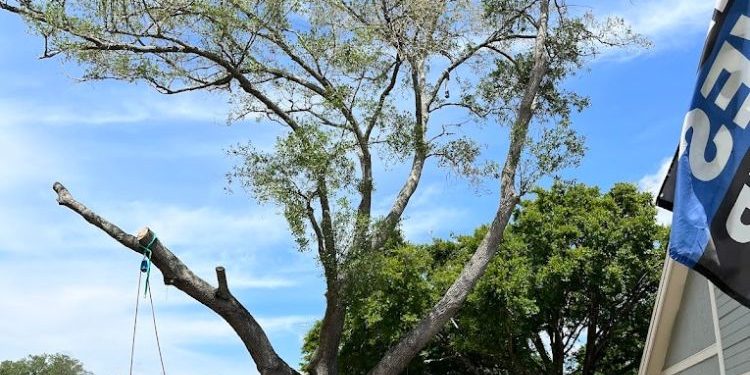
When a tree service trims with structure in mind, they typically evaluate the canopy from multiple angles. Then they choose cuts that support the tree’s natural form. That often includes:
- Targeting weak or failing connections so the canopy holds together more reliably.
- Removing dead or hazardous limbs to reduce the chance of breakage.
- Improving clearance around roofs, driveways, and walkways.
- Reducing crowding so branches are spaced for airflow and light penetration.
Tree trimming isn’t just cosmetic
Even when the goal is “make it look better,” trimming decisions can influence how the tree handles wind and seasonal growth.
Smaller, strategic cuts often win
Removing the right limbs supports long-term form. Over-trimming can trigger fast, uneven regrowth.
Context matters in Valrico
Properties here often include mature shade trees near homes, fences, and landscaped areas where clearance is a constant concern.
Why This Matters in Valrico, TX
In Valrico, TX, many yards have established trees that have grown close to roofs, sheds, and driveway edges. When branches thicken or shift over time, homeowners commonly notice problems that build slowly: lower limbs blocking walkways, canopy crowding, or dead tips that show up after seasonal changes.
Another local factor is the timing around storms. After heavy wind or debris events, you might see new hanging limbs or broken branch sections that were not obvious before. If you’re dealing with storm-related limb issues, you may also want to review storm damage options so the cleanup and trimming plan match what actually happened.
Get a branch-by-branch trimming plan for your property
Timber Kings Tree Service can help you sort out what needs trimming, what needs removal, and what can be left to support stronger tree structure in Valrico.
Call (813) 701-0498Common Mistakes to Avoid
Homeowners usually don’t make trimming mistakes on purpose. They happen because the “trim it all” approach looks quick, or because it’s hard to see which branches are truly responsible for the risk. Here are the most common issues we see when discussing tree trimming and related arborist services.
Watch for these patterns:
- Topping or “heading back” that leaves stubs and encourages weak, fast regrowth.
- Ignoring dead limbs because they look minor at first. Dead sections can become the first parts to fail.
- Trimming too aggressively to chase a specific look, which can reduce stability and increase stress.
- Overlooking clearance needs around rooflines, gutters, and walkways.
- Not matching the remedy to the situation, such as choosing trimming when the property actually needs tree removal planning.
Customer Checklist
Use this checklist before you schedule trimming. It helps your tree care team understand your priorities and it keeps the conversation focused on shape, strength, and safety.
- Identify the lowest branches and where they interfere with roofs, walkways, or driveways.
- Note any dead tips, brittle limbs, or branches that hang or appear disconnected.
- Watch for uneven canopy weight (heavier on one side or growing into one area).
- Make a list of trouble spots you see after windy days or storms.
- Decide what you want to improve: clearance, shape, or reducing hazardous limb risk.
- Ask whether thinning, crown reduction, or targeted tree pruning fits your goals.
- Clarify whether you also need related work such as stump grinding after trimming or removal.
- If the property needs broader cleanup, ask about lot land clearing so trimming fits the overall plan.
A representative (real-world) scenario
After a windy afternoon, a Valrico homeowner notices new debris in the yard and a few branches that look “loose” compared to the rest of the canopy. The tree still looks full, so it’s tempting to wait until it grows back. Instead, the homeowner schedules a trimming-focused assessment. The plan targets the dead and compromised limbs first, then adjusts the canopy to improve balance and clearance around the roof edge. The result is a cleaner outline with less strain on weak connections, while the tree’s remaining structure is kept intact for continued growth.
Frequently Asked Questions
How do I know whether my tree needs pruning or tree removal?
If you’re seeing dead limbs, broken branch sections, or parts that appear disconnected from the canopy, targeted pruning may be enough. Tree removal is more likely when there’s extensive hazard, severe structural failure, or the tree is no longer viable. A helpful first step is an on-site look so the work can be matched to the actual condition of the branches. In Valrico, homeowners often notice problems near roofs, fences, and driveways, so clearance and structural risk are key factors in the decision.
What does “crown thinning” do compared with “crown reduction”?
Crown thinning focuses on reducing density by selectively removing branches, which can improve airflow and reduce crowding within the canopy. Crown reduction typically aims to lessen the overall size or weight of the crown by removing portions of branches to bring the canopy down to a safer, more manageable form. Both approaches can be part of tree trimming for shape and strength, but the right choice depends on where the tree interferes with the property and how its structure is holding up.
Can trimming help after storm damage?
Often, yes. After a storm, trimming can remove compromised or hanging limbs and restore safe clearance around the home. The best plan depends on what broke and whether the tree’s remaining structure is stable. If your concern started after wind or debris impacted the canopy, it’s smart to review storm-related options first so the work is prioritized correctly. In many cases, the goal becomes “make it safe” and then “shape it back” with targeted pruning rather than a broad haircut.
Do I need stump grinding after tree trimming?
Not always. If trimming removes only branches, the stump usually remains unchanged. But if the work includes dead tree removal or tree removal that leaves behind a stump, stump grinding can be a practical next step. It helps address leftover stubs that can interfere with mowing, landscaping, and walking paths. If you’re planning multiple changes to your yard, stump grinding can also fit into the broader cleanup and replanting approach.
What should I ask when I call about tree trimming near me?
Ask what the plan targets: dead removal, clearance improvements, canopy balancing, and thinning or reduction choices. You can also ask how they decide which branches to cut, since “shape and strength” depends on structure, not just appearance. If your tree is near the home or a fence line in Valrico, mention those contact points and describe what you’ve noticed after windy days. If you suspect more than trimming is needed, ask whether your situation aligns with tree removal or related services.
Ready to improve shape and strength?
Timber Kings Tree Service helps homeowners in Valrico, TX plan tree trimming that supports healthier structure and safer clearance. Tell us what you’re seeing and we’ll guide you to the right next step.
Explore tree trimming