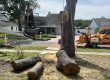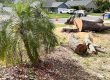
Storm Damage Tree Services for Backyard Safety Recovery
An afternoon thunderstorm in Valrico can go from light rain to 60+ mph wind gusts in minutes. Hillsborough County averages more than 80 thunderstorm days a year, and after every major system, calls spike for downed limbs, hanging branches, and trees leaning toward homes, pools, and power lines.
For homeowners, that “one bad storm” often exposes years of unnoticed tree issues—decay, weak branch unions, shallow roots—that suddenly become a safety emergency. Backyards that felt safe yesterday can turn into a maze of hazards overnight.
This guide is designed for Valrico and surrounding Tampa Bay homeowners who want to recover safely after storm damage and prevent the next big mess. You’ll learn how professionals assess storm-damaged trees, which hazards you can’t see from the ground, what safe recovery looks like step-by-step, and when to call for Emergency Tree Service instead of waiting.
Key Insight: Fast, expert storm response isn’t just about cleaning up; it’s about restoring safety, protecting property value, and strengthening your trees before the next storm rolls through.
Understanding Storm-Damaged Trees in a Florida Backyard
Florida trees live with almost constant wind stress. In Valrico, that means live oaks, laurel oaks, pines, and ornamental trees are regularly pushed to their limits. After a storm, the damage you see—broken branches, fallen limbs, uprooted trees—is only part of the story.
Visible vs. hidden storm damage
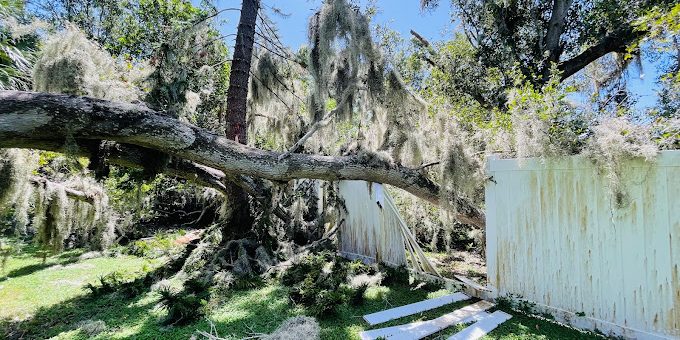
Visible storm damage often includes:
- Large broken limbs scattered across the yard
- Branches hanging or “hung up” in the canopy
- Trees leaning more than before
- Bark ripped or torn from trunks
- Roots exposed or soil heaved on one side of the tree
Hidden damage can be more serious:
- Cracks inside the trunk you can’t see from the ground
- Severely twisted branches that will fail later
- Compromised root plates that make a tree unstable
- Internal decay exposed by storm wounds
“Most of the real danger is above your line of sight or below the soil line.” — ISA Certified Arborist
A Valrico homeowner recently called Timber Kings Tree Service after a strong cell came through near State Road 60. Their oak “looked fine” from the patio, aside from some scattered limbs. Our crew’s aerial inspection found a major crack running down the main leader that would have failed in the next storm, likely onto the pool cage. That tree went from “looks okay” to urgent hazard in one visit.
Understanding this mix of visible and hidden damage is the first step. The next step is a structured safety-first assessment.
Safety-First Storm Assessment: What Professionals Look For
A storm-damage visit from a professional crew is very different from a casual walk-through. At Timber Kings, every storm response in Valrico starts with a structured safety assessment built around industry standards from the International Society of Arboriculture (ISA) and ANSI A300 guidelines.
Key elements of a storm damage assessment
A thorough assessment includes:
- Ground-level hazard survey
Checking for downed lines, gas smells, damaged fences, and structural damage before entering the work zone.
- Canopy and crown inspection
Looking for broken tops, split crotches, “widowmaker” branches, and hanging debris.
- Trunk and root evaluation
Identifying cracks, cavities, bark loss, root uplift, and signs of soil failure.
- Target analysis
Determining what each failing part could hit—home, pool, playset, neighbor’s property, or power lines.
For example, after a summer storm near Lithia Pinecrest Road, we responded to a home with a large pine leaning toward the neighbor’s roof. From the street, it looked like a simple lean. Up close, we found the root plate had shifted, and the soil mound indicated active uprooting. That tree was an immediate candidate for Hazardous Tree Removal.
When assessment becomes emergency response
Certain findings trigger instant action rather than “watch and wait”:
- Trees or large limbs resting on roofs or carports
- Trees leaning suddenly after a storm
- Branches entangled in service lines
- Cracks that run deep into the trunk or main limbs
“Any time gravity is winning and the tree is moving where it never has before, it’s not a wait-and-see situation.” — Timber Kings Lead Climber
Once the assessment clarifies what’s truly unsafe, the next question is: remove or restore?
Tree Removal vs. Recovery: Making the Right Call After a Storm
Not every storm-damaged tree needs to come down. In fact, with proper care, many can be safely restored and continue to shade your Valrico backyard for decades. The key is knowing when Tree Removal is the safest option, and when corrective pruning and structural support can do the job.
Factors that guide the decision
Certified arborists weigh several factors:
- Extent of structural damage
Deep trunk cracks, severe root damage, or loss of the main leader usually point to removal.
- Species and age
Some species, like laurel oaks, are more prone to decay and failure as they age. A younger live oak may recover better than an older, compromised laurel oak.
- Location and targets
A damaged tree overhanging a house, pool, or play area demands a higher safety margin than one at the back of a large lot.
- Health before the storm
A tree already weakened by disease, pests, or past poor pruning is less likely to recover safely.
Recently, a homeowner off Valrico Lake Road called about a large laurel oak that lost two major limbs in a storm, one over the driveway and one over the neighbor’s fence. Our assessment found advanced internal decay and fungus at the base. Even with pruning, the remaining structure would have been risky. We recommended full Dead Tree Removal, then helped plan new plantings better suited to the site.
Comparing removal vs. restoration
Here’s how removal and restorative care typically compare:
| Approach | Best For | Pros | Cons |
|---|---|---|---|
| Full Tree Removal | Severely damaged or decayed trees near structures | Eliminates hazard completely; one-time work | Loss of shade/privacy; requires stump handling |
| Corrective Pruning & Cabling | Moderately damaged, otherwise healthy trees | Preserves tree; often lower cost long-term | Requires monitoring and periodic maintenance |
“Tree saving isn’t sentimental; it’s practical when the structure is sound and the risk is manageable.” — ISA Certified Arborist
When recovery is viable, the next step is precise pruning and shaping.
Strategic Pruning, Trimming, and Shaping After Storms
Once immediate hazards are addressed, the focus shifts to restoring structure and balance. Corrective Tree Trimming and Tree Pruning after a storm are more than just cutting off what’s broken; they’re about shaping a safer, more resilient canopy.
What proper post-storm pruning looks like
Effective storm recovery pruning includes:
- Removing broken and hanging branches cleanly at proper branch collars
- Reducing overly long, heavy limbs that could fail in future winds
- Balancing the crown so the tree isn’t weighted toward one side
- Crown thinning where appropriate to reduce wind resistance
- Crown reduction in targeted areas near structures, while respecting species limits
For example, a Valrico homeowner near Bloomingdale Avenue had a mature live oak that lost several limbs on the south side. The tree was suddenly unbalanced and leaning slightly over the screened lanai. Our crew performed selective Crown Reduction and Crown Thinning on the opposite side, restoring symmetry and reducing wind load—without topping or over-pruning.
“Topping is never a safe or professional storm-recovery strategy. It creates weak sprouts and long-term hazards.” — Industry Best Practice (ANSI A300)
Why local expertise matters
Florida species each respond differently to storm stress and pruning:
- Live oaks tolerate reduction well when done correctly
- Laurel oaks are more prone to decay and require careful structural cuts
- Pines should not be heavily thinned; focus is on removing damaged sections
- Ornamentals (crape myrtle, bottlebrush, etc.) need species-specific shaping
With the canopy stabilized, attention turns to what’s left at ground level: stumps, roots, and debris.
Stumps, Roots, and Debris: Cleaning Up Safely and Completely
Storm damage rarely ends with the tree coming down. What’s left behind—stumps, exposed roots, and scattered brush—can create long-term headaches and hazards if not handled properly.
Why stumps and roots matter after a storm
A storm-felled tree often leaves:
- A high, jagged stump
- Uplifted roots creating trip hazards
- Exposed soil that can erode with heavy rain
- Dense piles of branches and logs that attract pests
Stumps are more than just ugly. They can:
- Harbor termites, ants, and fungi that may spread toward your home
- Interfere with mowing and landscaping
- Regrow unwanted sprouts (especially in some hardwood species)
That’s where Stump Grinding and Stump Removal come in.
Grinding vs. leaving stumps: a quick comparison
| Option | Short-Term Impact | Long-Term Impact | Typical Use in Valrico Backyards |
|---|---|---|---|
| Leave Stump | Lower immediate cost; visible stump remains | Trip hazard; pest risk; regrowth possible | Remote areas of large lots |
| Stump Grinding | Removes trip hazard; below-grade finish | Allows replanting, sod, or patio installation | Most residential lawns and pool-adjacent areas |
A Valrico family near Durant High School had a large water oak come down in a storm, right beside their kids’ playset. We performed Stump Grinding Near Me to 8–10 inches below grade, backfilled the area with mulch and soil, and they later sodded the space for safe play.
Proper cleanup also includes brush and debris management, sometimes extending into broader Brush Clearing and Land Clearing Services when the damage is extensive.
From Chaos to Clear: Lot and Land Clearing After Major Storms
Occasionally, a storm doesn’t just damage a tree or two—it transforms an entire backyard or vacant lot into a tangle of downed trees, brush, and debris. This is where professional Lot Land Clearing and forestry-style cleanup become essential.
What storm-focused land clearing involves
Storm-related clearing can include:
- Removing multiple fallen and compromised trees
- Chipping or hauling away large volumes of brush
- Leveling mounds where roots have lifted the soil
- Creating safe access paths for future maintenance
- Preparing areas for replanting, fencing, or new structures
“Good land clearing after a storm doesn’t just erase the mess—it sets up the property for safer, easier maintenance for years.”
In rural pockets around Valrico and nearby Plant City, we often see wind rows of trees knocked over like dominoes. On one 2-acre property, multiple pines and oaks had fallen across each other, blocking access to a barn. Our crew combined Tree Cutting, selective clearing, and on-site chipping. The homeowner chose to keep chipped material as mulch for future landscaping, saving disposal costs.
Traditional vs. modern clearing approaches
| Approach | Method | Pros | Cons |
|---|---|---|---|
| Traditional Clearing | Chainsaws, manual brush removal, hauling | Detailed control; good for small residential lots | Labor-intensive; slower; more hauling required |
| Modern/Forestry Mulching | Specialized equipment mulches brush/trees in place | Fast; fewer trips; leaves beneficial mulch layer | Not ideal in tight spaces or near structures |
For typical Valrico backyards, a blended approach works best—traditional methods near homes and fences, and more efficient machinery where space allows.
With the yard cleared and hazards addressed, the final—and ongoing—piece is prevention.
Preparing Your Backyard for the Next Storm Season
Storm recovery isn’t complete until you’ve reduced the odds of repeat damage. Proactive Tree Care Services and regular inspections from a Certified Arborist are the backbone of long-term safety in a storm-prone area like Valrico.
Building a storm-resilient tree plan
A strong prevention plan often includes:
- Annual or biannual Tree Health Assessment
Checking for decay, weak branch unions, root issues, and species-specific risks.
- Routine structural pruning
Light, regular pruning is far better than infrequent, heavy cuts. It guides growth and reduces wind load.
- Targeted Tree Shaping
Keeping limbs off roofs, away from screen enclosures, and clear of driveways.
- Disease and pest monitoring
Addressing issues before they weaken trees and make them more storm-vulnerable with Tree Disease Treatment and Tree Pest Control.
One Valrico HOA near Buckhorn Springs now schedules community-wide inspections each spring. During one visit, we identified several declining laurel oaks near playgrounds and parking areas. By planning phased Fallen Tree Removal and replacement before hurricane season, they avoided emergency calls and unexpected assessments for residents.
“Storm preparation is a year-round process, not a last-minute rush when a hurricane is in the forecast.”
Proactive care not only protects your family and property—it also preserves the shade, beauty, and value your trees add to your home.
What This Means for Homeowners in Valrico, FL
Valrico’s mix of mature oaks, pines, and ornamental trees, combined with frequent thunderstorms and tropical systems, creates a unique risk profile for backyards. Many neighborhoods were built decades ago, and trees that were small when homes went up are now towering over roofs, driveways, and power lines.
That means:
- A “minor” summer storm can cause major damage when trees are already stressed or overgrown.
- Aging laurel oaks and improperly pruned trees are particularly vulnerable to failure.
- Close lot lines and shared fences often turn one homeowner’s tree issue into a neighbor’s problem too.
Local experience matters. A provider who knows Valrico’s soils, common species, and neighborhood layouts can make better, safer recommendations. For example, they’ll understand how saturated summer soils make root systems more prone to uprooting, or how wind patterns funnel through certain subdivisions.
For homeowners, the practical takeaway is clear:
- Don’t wait until a named storm is on the radar to address risky trees.
- Treat each storm as an opportunity to reassess and strengthen your landscape.
- Partner with a local, credentialed team that understands both the technical and neighborhood realities of tree care in Valrico.
With the right plan and support, your backyard can be both beautiful and storm-resilient.
Frequently Asked Questions
Q: How do I know if a storm-damaged tree in my yard is an emergency?
A: Treat any tree or large limb that has shifted position, is leaning more than before, or is resting on a structure as an emergency. If branches are tangled in power lines, stay clear and call the utility company first. Trees that suddenly lean after a storm, show fresh cracks in the trunk, or have roots lifting from the ground can fail without warning. In these situations, call for Emergency Tree Service rather than waiting days. A professional assessment will determine whether immediate Tree Removal Near Me is needed or if the tree can be stabilized safely.
Q: Can a partially damaged tree be saved, or does it always need to be removed?
A: Many storm-damaged trees can be saved with proper Tree Pruning and structural care. If the main trunk is intact, roots are stable, and decay isn’t advanced, a certified arborist may recommend corrective pruning, selective Crown Thinning, or reduction cuts instead of full removal. In Valrico, we often preserve live oaks by carefully removing damaged limbs and rebalancing the canopy. However, if a tree has severe trunk cracks, major root loss, or extensive decay, Hazardous Tree Removal may be the safest choice.
Q: What’s the difference between storm cleanup and regular tree trimming?
A: Storm cleanup focuses on immediate safety: removing broken, hanging, or fallen limbs, clearing access, and preventing further damage. It’s reactive and often time-sensitive. Regular Tree Trimming Near Me is proactive, guided by long-term health and structure. It involves planned Tree Shaping, structural pruning, and gradual reduction of risk over time. Ideally, routine maintenance reduces the severity of storm damage. Many Valrico homeowners now schedule annual or biannual maintenance to avoid repeated emergency calls every summer.
Q: Why is stump grinding recommended after a storm? Can’t I just leave the stump?
A: You can leave a stump, but it often creates more problems than it solves. Stumps near lawns, patios, or play areas become trip hazards and obstacles for mowing and landscaping. In Florida’s climate, they can attract termites, ants, and fungi, which may migrate toward your home. Many species will also send up new sprouts, creating an ongoing maintenance issue. Stump Grinding removes the stump below grade, allowing you to re-sod, replant, or build over the area. For most residential yards in Valrico, Stump Grinding Near Me is the cleanest, safest long-term solution.
Q: How much does storm damage tree service typically cost in Valrico?
A: Costs vary widely based on tree size, location, and severity of damage. Factors include proximity to structures, need for cranes or special equipment, and whether cleanup, hauling, and Stump Removal are included. A small Fallen Tree Removal from an open yard is very different from removing a large, storm-split oak over a roof. The best way to get accurate pricing is a site visit. Reputable providers in Valrico offer clear, written estimates and can prioritize the most urgent safety work to fit your budget.
Q: How often should my trees be inspected to reduce storm damage risk?
A: For most residential properties in Valrico, a professional Tree Health Assessment every 1–2 years is a smart baseline. Properties with many mature or previously damaged trees may benefit from annual inspections, especially before hurricane season. During these visits, a certified arborist will look for decay, structural defects, pest issues, and signs of stress that increase storm vulnerability. They’ll also recommend targeted Tree Care Services such as structural pruning or selective reduction to improve storm resilience.
Q: Are there specific tree species in Valrico that are more likely to fail in storms?
A: Yes. Older laurel oaks, especially those that haven’t been maintained, are known for internal decay and limb failure in high winds. Shallow-rooted species or trees planted too close to structures can also be problematic. On the other hand, properly maintained live oaks tend to be more wind-resistant. A local Certified Arborist can help you identify high-risk species on your property and recommend phased removals, structural pruning, or replacements better suited to our climate and soils.
Ready to Get Started?
Every storm season in Valrico brings a new round of fallen limbs, cracked trunks, and urgent phone calls. The safest, most cost-effective approach is to combine fast, professional response when damage occurs with smart, ongoing care that reduces risk over time.
If you’re staring at storm damage right now—leaning trees, broken branches, or debris scattered across your yard—don’t wait for the next gust of wind to make things worse. Start with a professional assessment to understand which trees are immediate hazards, which can be restored, and what cleanup is needed to make your backyard safe again.
Timber Kings Tree Service offers full-spectrum support: Emergency Tree Service, Tree Removal, Tree Trimming, Stump Grinding, and Lot Land Clearing. Our local crews understand Valrico’s trees, soils, and neighborhoods, and we work with safety, transparency, and respect for your property.
Take the first step toward a safer, storm-ready backyard today by scheduling an on-site evaluation.
About Timber Kings Tree Service
Timber Kings Tree Service is a locally owned and operated tree care company serving Valrico, FL, and surrounding communities. Our team combines years of hands-on experience with industry best practices, offering residential and Commercial Tree Service from routine maintenance to complex storm recovery. We provide professional Arborist Services, focusing on safety, honest recommendations, and long-term tree health for every property we serve. Learn more about our services and local expertise on our website.