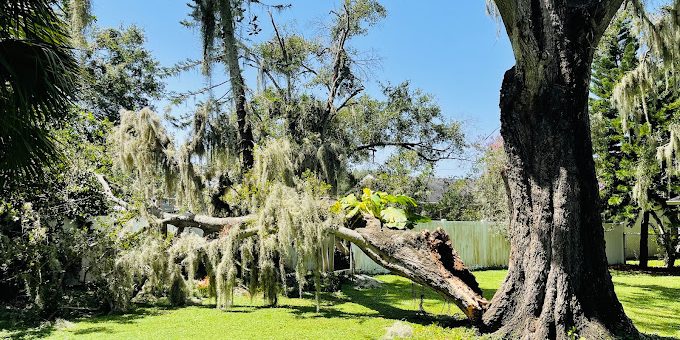
If a tree limb hits your home, blocks a driveway, or leaves a stump behind after a storm, you need a plan that prioritizes safety and protects your property. This guide explains what to check first, how to think through the right service for the damage, and what a professional assessment should include for Valrico, TX homeowners and property managers.
After a strong wind or heavy rain, a neighbor’s tree can look like it’s “fine” from the street, but the real damage shows up when you step outside. A hanging branch can land on a fence, a partially fallen limb can stress the structure, or a trunk that looks stable can shift with the next gust.
In Valrico, that situation often turns into a decision about tree cutting, removal, and cleanup while you also try to protect landscaping, walkways, and nearby utilities. This guide will help you understand what to check right away, what information to gather for the crew, and how to choose the right next step so the property is safe and usable again.
- Quick answer
- What to check first
- Main things customers should understand
- Why this matters in Valrico, TX
- Common mistakes to avoid
- Customer checklist
- Frequently asked questions
Quick Answer
If a tree or limb is damaged, the safest move is to keep people away from the area and prevent further movement or contact. Then focus on identifying what you need: fallen tree removal, hazardous branch cutting, or storm damage cleanup. For property safety, have a local team assess stability and risks before you clear debris. If the damage affects access, landscaping, or the remaining tree’s health, ask about the full scope: removal, trimming, stump removal, and follow-up tree care. For Valrico, TX, contact Timber Kings Tree Service so you can plan the next steps with confidence.
What to Check First
The first goal is simple: prevent injury and reduce the chance that the damage gets worse while you wait. Walk your property slowly from a safe distance and look for obvious hazards like hanging limbs, cracked trunks, and debris that has settled onto structures. If anything appears unstable or is touching power lines, treat the situation as high-risk and do not attempt DIY removal.

Professional observation: The most common “looks stable” problem we see after storms is a branch or trunk that can shift once weight is removed or when the wind picks up again. A quick on-site assessment helps determine whether the safest approach is full tree removal, targeted tree cutting, or staged cleanup.
Next, gather a few details that help the crew plan the work efficiently. Take note of whether the damage blocks a driveway, sits near a fence or roofline, or involves a stump that’s now exposed. If you’re dealing with brush clearing or land clearing around the same area, separate those tasks in your mind, because the equipment and sequencing can be different.
Main Things Customers Should Understand
Emergency tree service for property damage is not just “cut and haul.” It’s a safety and risk workflow: assess what’s unstable, plan access routes for equipment, protect surrounding structures, and then choose the service that matches the remaining tree condition. In practice, that means the right combination of tree removal, tree trimming, and stump grinding or stump removal depending on what the storm left behind.
When removal is usually the priority
Choose fallen tree removal or hazardous tree removal when a trunk is cracked, leaning, or partially uprooted. This also applies to dead tree removal when the tree’s structure suggests it can fail further under wind or weight.
When trimming is the safer path
Tree trimming and tree pruning are often the next step when the tree is alive but has storm-broken limbs. Crown reduction or crown thinning can reduce future risk by adjusting canopy weight in a controlled way.
When stumps need attention
Stump grinding is commonly used after tree cutting or removal to clear the root system area for mowing, landscaping, or future site use. If you’re dealing with tree care services that extend beyond the storm moment, stump removal helps prevent regrowth and trip hazards.
If you are trying to decide what to ask for, it helps to match the service to the exact problem. For example, if you have a damaged canopy that’s still attached, you may be looking at storm damage cleanup plus targeted tree trimming. If the issue is an exposed stump that complicates access, you may need stump grinding near me style service from a local crew.
Quick way to map your situation to a service: If you need to remove the tree, review tree removal. If the damage is mostly overhead and the tree is still standing, start with tree trimming. If a stump is slowing cleanup or future landscaping, explore stump grinding.
| Storm damage you’re seeing | What it usually points to | Why the sequence matters |
|---|---|---|
| Hanging limb above a roofline or fence | Hazardous branch cutting, followed by storm damage cleanup | Removing the unstable weight first reduces the chance of secondary damage. |
| Trunk leaning or partially uprooted | Fallen tree removal or hazardous tree removal | Stability determines whether staged removal is safer than immediate cutting. |
| Broken canopy with the tree still alive | Tree pruning and crown adjustment (as needed) | Corrective trimming can improve structure and reduce future hazard. |
| Stump left behind after cutting | Stump grinding for safe site use | Clearing roots helps prevent trip hazards and supports future landscaping. |
| Debris and growth around the lot line | Brush clearing and land clearing services | Clearing access first can make later tree work safer and faster. |
Why This Matters in Valrico, TX
Valrico properties often have mature shade trees near driveways, fencing, and home exteriors, so storm damage can quickly affect both safety and daily access. After wind events, it’s common for branches to break and for debris to land in ways that make it difficult to reach the root ball, trim points, or the full path of the fall.
From the field, one pattern stands out: customers tend to focus on what’s visible from the street, but the “real” hazard is frequently the part of the tree that shifted underneath. A tree health assessment can identify dead wood, weak structure, and areas that may need tree disease treatment or tree pest control follow-up so the same problem does not repeat.
Practical tip for Valrico: If debris is blocking a walkway or driveway, prioritize safe access before you start landscaping or repairs. Once the area is secure, you can plan the next steps like lot land clearing, stump removal, or crown shaping around the remaining tree.
Common Mistakes to Avoid
When property damage happens, it’s tempting to rush cleanup. The problem is that rushing often removes the wrong piece of the problem first, leaving the remaining tree in a more unstable state. Another issue is mixing tasks without a plan, such as clearing brush and cutting branches at the same time without thinking about where debris will fall.

- Trying DIY tree cutting without assessing stability, especially if the tree is leaning or cracked.
- Ignoring hanging limbs that look “mostly attached” but can drop with the next gust.
- Clearing debris too early before the crew determines what is still under stress.
- Leaving stumps untreated when they create trip hazards or interfere with mowing and landscaping.
- Overlooking follow-up tree care after storm breakage, such as tree pruning or crown thinning for structure.
Customer Checklist
Use this checklist to prepare for the first visit. It helps the crew understand the situation quickly and it keeps your property safe while you wait.
- Confirm the area is clear for foot traffic and equipment access.
- Note where the tree or limbs are resting: roofline, fence, driveway, or landscaping.
- Identify whether the problem is fallen tree removal, storm damage cleanup, or a standing tree with broken limbs.
- Take a few notes on what you want to protect (structure, walkways, garden beds, or other trees).
- Mark any areas that need lot land clearing or brush clearing so the scope is clear.
- If a stump remains, ask whether stump grinding or stump removal is the best next step for your site.
Get a clear, safety-first plan for your storm damage
If you’re dealing with hazardous branches, fallen tree removal, or storm damage cleanup around your Valrico, TX property, Timber Kings Tree Service can help you sort out the right scope so the area is safe and the work is coordinated.
Contact Timber Kings Tree ServiceRepresentative scenario: a limb, a driveway, and a decision
Imagine a Valrico homeowner who comes out after a heavy storm to find a large limb resting across the driveway, partially blocking access to the garage. The tree is still standing, but the broken section hangs low enough that a car door or a person walking outside could get hit. The homeowner also notices that the limb’s break point is higher than expected, suggesting internal stress rather than a clean snap.
In a case like this, the safest approach is usually to secure the area and plan removal in a way that prevents the remaining tree from shifting. After the unstable limb is handled, the next steps may include tree pruning to restore canopy structure and, if any cutting leaves a stump, stump grinding for safe site use.
Frequently Asked Questions
How do I know whether I should request tree removal or just trimming?
If the trunk is cracked, leaning, uprooted, or the tree is unstable, that typically points to tree removal or hazardous tree removal. If the tree is standing and alive but has broken limbs, tree trimming and tree pruning may be enough to reduce risk. A professional assessment considers how the damage affects the tree’s stability, not just what you can see from one angle. If you’re unsure, focus on describing what the storm left behind: fallen vs. standing, and where the damaged pieces are resting.
What should I do immediately after storm damage on my property?
First, keep people away from the damaged area and avoid walking underneath hanging limbs or near a leaning trunk. If debris is blocking a driveway or walkway, treat the area as unsafe until the hazards are assessed. Then gather basic details such as what’s involved (fallen tree removal, storm damage cleanup, or a standing tree with broken limbs) and what you want to protect. This preparation helps a local crew plan access and sequencing so the remaining tree and surrounding property are handled safely.
Is stump grinding necessary after tree cutting?
Often, yes, especially if the stump creates a trip hazard, interferes with mowing, or makes landscaping difficult. Stump grinding near me style service can clear the root area so the site becomes usable again. Whether you need stump grinding versus another cleanup approach depends on what’s left behind after removal. If you plan lot land clearing or brush clearing later, addressing the stump early can make the next stage easier and safer.
Can storm damage affect tree health after the cleanup?
Yes. Breakage can expose dead wood, create entry points for tree disease treatment needs, or change the structure of the canopy. After a storm, a tree health assessment can help identify dead tree removal needs and whether corrective pruning is appropriate. In some cases, follow-up tree care services may include tree pest control if conditions suggest stress-related issues. The goal is not only to remove what’s dangerous now, but to reduce the chance of repeating the same hazard later.
Do you also handle land clearing when storm debris covers the lot?
When storm cleanup reveals broader site issues, lot land clearing or brush clearing may be part of the overall plan. For example, debris can hide overgrowth near property lines, complicate access, or prevent safe mowing and maintenance. If your storm damage includes brush clearing or land clearing services beyond the tree work itself, share that during the first conversation so the scope can be coordinated. Timber Kings Tree Service can help you align the order of work so safety comes first.
Need help planning your next step in Valrico?
If you’re ready to restore safe access and protect your property, contact Timber Kings Tree Service. You can start with the service page that matches your situation, or call directly to discuss what you’re seeing.
(813) 701-0498
Timber Kings Tree Service
Timber Kings Tree Service provides tree care services across Valrico, TX and surrounding areas, including tree removal, tree trimming, stump grinding, storm damage cleanup, and emergency tree service for property damage. If a tree, limb, or stump is creating a safety risk or disrupting access, our goal is to help you make the next decision with a clear, practical plan.