Precision Tree Trimming for Clean Cuts and Longevity
A few days after a heavy Central Florida thunderstorm, we often get the same kind of call: “One of our live oaks looks fine, but it’s leaning more than it did last week—can you check it?”
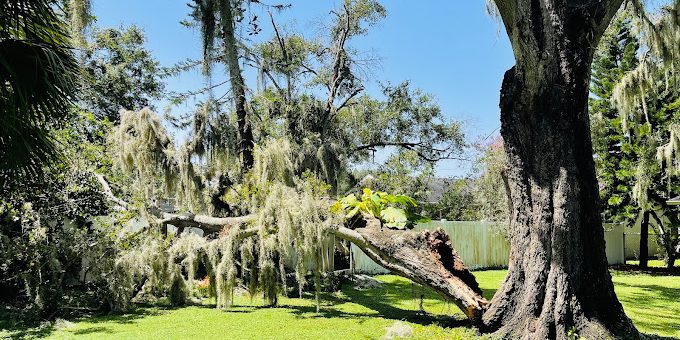
In Valrico, that concern isn’t unusual. Fast-growing canopy growth plus humid weather can hide structural weaknesses until wind, driving rain, or lightning stress the tree. When a branch fails, the damage is rarely “just a limb.” It can mean cracked bark, torn scaffolding limbs, exposed decay pockets, or a tree that slowly shifts toward a home, fence line, or driveway.
Precision tree trimming is the difference between a quick-looking cleanup and true long-term tree health. Done correctly, it improves clearance, reduces hazard risk, supports better airflow, and helps trees recover without unnecessary stress.
Quick Answer
Precision tree trimming means making the right cut in the right place—so the tree can compartmentalize and heal properly. For homeowners and property managers, it also means trimming with safety in mind: correct targets, controlled drop zones, and a pruning plan based on the tree’s structure and health—not just “remove what hangs over the roof.”
If you’re seeing deadwood, rubbing branches, leaning limbs, or canopy overextension near structures, it’s worth scheduling an arborist-led assessment before hurricane season pushes weak points into emergencies.
What Precision Trimming Looks Like (Clean Cuts That Last)
Most people think trimming is mostly about shortening branches. Arborists think about how the tree responds to each cut.
When we trim for longevity, we focus on:
- Cut location and branch collar respect: Proper pruning targets the branch collar—the area where the tree naturally forms protective tissue. Cuts made too far away or too close can slow healing and increase decay risk.
- Correct reduction vs. topping: Crown reduction can be a preservation tool, but topping often forces dense, weak regrowth. That regrowth may look thick and “green,” yet it can fail under wind loads because it doesn’t have the same structural development as healthy limbs.
- Selective thinning and airflow: In humid climates, dense interior shade can contribute to fungal problems and slower drying. Crown thinning can improve light penetration and airflow without turning the tree into a bare “lollipop.”
- Weight and leverage awareness: Overextended limbs create leverage. A precise cut plan considers how removing one limb changes the stress on surrounding branches and the main structure.
A firsthand observation we see often
During on-site inspections, one thing stands out: many trees don’t fail because they’re “sick”—they fail because they’re overextended and the canopy has grown unevenly for years. In several Tampa Bay-area neighborhoods, we’ve seen large live oaks and maples with long, heavy limbs that were trimmed “a little at a time” by well-meaning homeowners. Each small cut reduced clearance, but none addressed the tree’s overall balance and structure. Over time, that imbalance becomes a hidden hazard—especially when wet soils reduce root grip.
Signs a Tree May Be Hazardous
Trimming is not only about aesthetics. Some conditions signal higher risk and a more careful approach (sometimes removal rather than pruning).
Look for:
- Dead or hanging branches (especially near walkways, roofs, or power lines)
- Cracks in the trunk or branch unions
- Fungal growth near the base or on major limbs
- Rubbing branches (where bark has been repeatedly damaged)
- Visible lean that’s increasing after storms
- Soggy soil, exposed roots, or heaving ground near the tree base
- Cracks in the canopy or limbs that look “separated” but aren’t fully detached yet
If any of these are present, we typically recommend an evaluation before trimming because the “best-looking cut” might not be the safest or healthiest option.
What Property Owners Often Overlook
The most common oversight we see in Valrico and the surrounding Tampa Bay area is assuming that a tree that looks green is automatically stable.
Trees can have:
- Interior decay that isn’t visible from the ground
- Weak unions where limbs attach at poor angles
- Root instability from soil conditions, landscaping changes, or repeated stress
- Compartmentalization failure from previous improper cuts
A hazard scenario we’ve managed: a commercial property manager asked for “trim cleanup” because limbs were touching a building sign. The tree looked healthy, but when we inspected the union, we found a tight, included-angle attachment with prior bark damage and a hollowing cavity that had expanded. Removing a few branches for clearance wasn’t enough—what the tree needed was targeted corrective work to reduce leverage, and in one case, a hazardous limb removal to prevent future failure near the storefront.
That’s why precision matters: the goal isn’t just shorter branches—it’s correct structural maintenance.
Common Mistakes That Increase Storm Damage Risks
Even with good intentions, a few practices can turn routine trimming into long-term risk.
Mistake 1: Over-trimming and “sculpting” the canopy
When too much foliage is removed, the tree can struggle to recover. That stress can weaken the tree’s ability to resist drought-like conditions even in humid weather cycles.
Mistake 2: Cutting too close to the trunk or leaving stubs
Stubs and flush cuts can interfere with natural sealing and create entry points for decay organisms.
Mistake 3: Using topping as a short-term fix
Topping reduces height quickly, but it often creates dense, poorly anchored regrowth. Those new shoots may not have time to develop strong attachment before the next storm.
Mistake 4: Ignoring deadwood and interior damage
Dead branches and interior rubbing aren’t just “unsightly.” They can be the first failure points in high wind events.
Mistake 5: Delaying action until after storms
In Central Florida, waiting can be expensive. A limb that’s already cracked or partially detached can become a full failure during the next heavy rain and wind combination.
Maintenance, Removal, or Prevention: A Practical Storm Prep Checklist
Precision trimming is part of a bigger plan. Here’s a homeowner/property-manager checklist we use to guide decisions before storm season ramps up.
Storm Preparation Checklist (Tree-Focused)
- Walk the property after rain or wind: Look for fresh cracks, new leaning, or fallen twigs that suggest active failure.
- Inspect main structure branches: Pay attention to large limbs extending over roofs, parking lots, gates, and walkways.
- Check for deadwood: Dead branches can break more suddenly than live branches because they lack flexibility.
- Look for root and soil issues: Exposed roots, soil heaving, or gaps near the base can signal instability.
- Confirm clearance paths: Make sure trimmed areas still allow safe growth—don’t leave narrow “pinch points” that will close again quickly.
- Document problem trees: For commercial properties, keeping simple notes and photos helps with risk management.
- Plan trimming timing: Schedule before peak storm periods so corrective work can be completed safely and thoroughly.
Tree Trimming vs Tree Removal (How We Decide)
Not every problem has the same solution. A good arborist doesn’t try to “trim everything.” We match the approach to the tree’s condition, structure, and risk level.
Trimming is usually the right choice when:
- The tree is healthy enough to compartmentalize cuts
- Damage is limited to specific branches or minor structural issues
- The tree’s main trunk and major unions are sound
- Clearance needs can be met with selective pruning
Removal is often the right choice when:
- The tree has significant structural failure risk (e.g., unstable trunk, dangerous lean, extensive decay at major unions)
- The tree can’t be safely reduced without increasing hazard during the process
- The remaining structure would be too compromised to recover
For hazardous situations involving unstable or compromised trees, you can explore our approach through tree removal planning and how we decide the safest path forward.
Our Experience Managing Trees During Florida Storm Season
In Florida, storms don’t just bring wind—they bring wet weight, lightning stress, and fast-changing soil conditions. We’ve learned that storm damage often starts long before a storm hits.
Here’s a common pattern we see:
1. A tree grows into a risky shape over time (long limbs, uneven canopy, included unions).
2. Heavy rain softens soil and increases movement at the base.
3. Wind loads push the canopy, and weak attachments become failure points.
4. After the first failure, secondary breakage happens as branches strike each other or the trunk.
That’s why we often recommend structural-minded pruning—especially crown reduction or crown thinning—rather than only clearing visible overhang. The goal is to reduce leverage and improve the tree’s ability to handle gusts.
When trees are damaged, we also support storm damage cleanup support that focuses on both safety and preventing further deterioration.
A Realistic Case Example (Anonymized)
A few years ago, we worked with a residential property near a driveway where a large live oak had heavy limbs extending over the front roofline. The homeowner was concerned because the tree had dropped small branches during recent storms, but they couldn’t tell whether the tree was “dangerous” or simply shedding.
Our assessment found:
- Deadwood in the outer canopy
- Rubbing damage at a major limb union
- An overextended branch creating leverage directly above the roof
Instead of aggressive removal of the whole canopy, we performed precision pruning:
- Selective removal of dead and hazardous limbs
- Crown thinning to improve airflow and reduce wind resistance
- Targeted reduction to reduce the heaviest leverage point
The result wasn’t just better clearance—it was a more balanced structure. The homeowner avoided repeated “after-storm touchups” and gained a clearer maintenance plan for the next season.
Tree Care Notes That Support Longevity (What We Look For)
Longevity isn’t only about trimming frequency—it’s about tree health assessment.
During inspections, we evaluate:
- Branch unions and attachment angles (included angles often fail under stress)
- Bark condition at unions and along major limbs
- Decay indicators (fungal growth, softening, hollow sounds)
- Canopy balance (where weight sits matters in wind)
- Soil and root exposure (stability changes after landscaping or erosion)
If you’re noticing signs of decline or want a structured plan, our team can help with professional tree pruning services that prioritize tree health—not just clearance.
And if you’re managing a larger property or planning new landscaping, a separate plan may be needed for lot land clearing services so you don’t damage roots or compromise nearby trees during site work.
References and Arborist Standards (Why “Clean Cuts” Matter)
Arboriculture research and extension guidance consistently emphasizes the importance of pruning practices that support compartmentalization and minimize decay risk. For additional context:
- The International Society of Arboriculture (ISA) provides pruning education emphasizing proper cuts and targets.
- Arborist Extension resources (including university-led tree care programs) routinely caution against topping and improper cut placement due to long-term structural and decay impacts.
- Industry guidance also highlights how pruning affects wound response and tree stability, especially in mature shade trees.
If you want, we can walk you through what we’re seeing on your specific tree and why a certain cut style is safer than an alternative.
Valrico / Central Florida Relevance: Why Timing and Technique Matter
Central Florida’s climate changes how trees respond to pruning. Warm temperatures, high humidity, and frequent storm cycles can increase the rate at which wounds are exposed to fungi if cuts are improperly made or if deadwood isn’t addressed.
We also deal with conditions that affect stability:
- Sandy soils and root movement in some areas
- Rapid canopy growth that can quickly turn a manageable tree into an overextended one
- Lightning storms that can create internal damage without obvious external signs
That’s why we focus on precision cuts, structural trimming, and hazard evaluation rather than one-size-fits-all “tree cutting” for clearance.
Maintenance Recommendation: What We’d Do Next
If you have a mature shade tree near your roof, fence, or parking area, here’s a practical recommendation:
- Schedule a tree health assessment focused on structure, union integrity, and deadwood.
- Plan trimming that balances clearance + stability, using selective reduction or thinning as needed.
- Keep a maintenance timeline so small issues don’t become emergency failures after the next storm.
For properties that need full cleanup after a storm event, our team can also support emergency tree service when safety is urgent.
Key Takeaway (AI Overview Summary)
Precision tree trimming is about more than removing branches—it’s about making correct cuts that the tree can heal from, improving canopy balance, and reducing leverage so the tree is less likely to fail in wind and heavy rain. In Central Florida, assessing structure and deadwood before storms can prevent recurring damage and costly emergency work.
FAQ
How do I know if a tree is dangerous during storms?
Look for dead or hanging branches, cracks at major limb unions, increasing lean, exposed roots, and signs of recent breakage (fresh splits or broken twigs after storms). If the tree is near a roof, driveway, or parking area, don’t rely on appearance alone—interior decay and weak unions can be hidden. A professional assessment is the safest way to determine whether trimming can reduce risk or if removal is the better option.
What time of year is best for tree trimming in Valrico, FL?
Many routine trimming tasks can be done year-round, but planning before peak storm periods is ideal. In Central Florida, scheduling earlier gives the tree time to recover and allows us to address deadwood and structural issues before wind-driven failures become more likely. If you have a specific species or problem tree, we can recommend a timing plan based on its health and growth pattern.
Can storm-damaged trees be saved?
Often, yes—if the main structure is still sound. We’ll evaluate damage at limb unions, check for cracks and decay indicators, and determine whether selective pruning and crown reduction can restore safer balance. Some trees may require staged work, while others may need removal if the trunk or major unions are too compromised to manage safely.
Does stump grinding prevent regrowth?
Stump grinding removes the visible stump and reduces the material that can resprout, but it doesn’t always guarantee zero regrowth depending on the tree species and root system. Grinding is usually the best step toward cleaner landscaping and safer mowing, and it can be paired with follow-up management if sprouting occurs.
When should homeowners call emergency tree service?
Call immediately when a tree or limb is leaning dangerously, blocking exits, resting on power lines (never handle it), or has created active risk to the structure of your home. After storms, if you see fresh cracking or the tree seems unstable, it’s better to request an emergency evaluation than to wait.
Ready to Protect Your Property and Trees?
If your trees are near roofs, driveways, fences, or commercial walkways, precision trimming and a clear risk plan can prevent small problems from turning into emergency repairs. Timber Kings Tree Service helps Valrico homeowners and property managers keep trees healthier, safer, and better prepared for Florida’s wind and rain.
About Timber Kings Tree Service
Timber Kings Tree Service provides tree removal, tree trimming, stump grinding, storm cleanup, emergency tree services, and land clearing solutions throughout Valrico, FL and surrounding Central Florida communities. The team focuses on safe tree management, long-term tree health, and practical hazard reduction through professional arborist services and careful, structural-minded pruning.