Emergency Tree Service for Urgent Limb and Branch Hazards
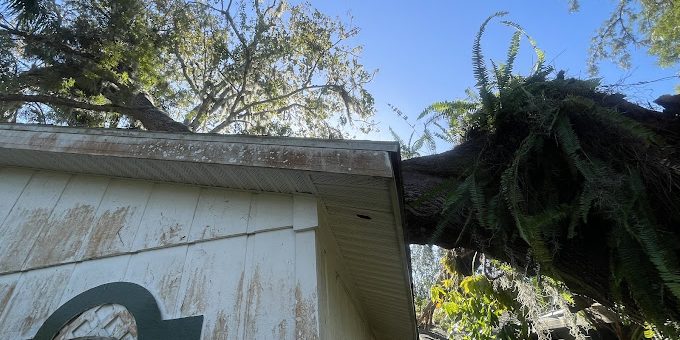
After a heavy rain or a fast-moving tropical squall, the first thing many Valrico homeowners notice isn’t the wind—it’s the aftermath: a limb hanging over the driveway, branches scraped against the roofline, or a trunk that’s suddenly leaning toward the house. I’ve seen this pattern often—trees that looked fine the day before, but then reveal hidden defects or weak structure once saturated soil and gusts hit.
When limbs break or trees shift, the hazard isn’t just the obvious “it could fall.” It’s also what happens next: damaged utility lines, fractured branches that keep shedding, and compromised wood that can fail days later—even after the storm is over. That’s why timely emergency response matters.
Quick Answer
If you see a hanging limb, cracking trunk, or a tree leaning toward a structure, treat it as an emergency. Call a professional immediately—especially if power lines are involved, the tree is on a roof or blocking an exit, or the base looks pushed up or separated from the ground. A certified arborist can assess whether the tree can be stabilized and pruned, or if a full removal is required to prevent additional failures.
Timber Kings Tree Service provides emergency tree service for urgent limb and branch hazards, along with storm cleanup and long-term prevention planning.
Why Some Tree Problems Become Emergencies
Most tree failures start long before you hear the crack. In Central Florida, we often get the “perfect storm” combination: humid growth, fast canopy expansion, and weather that repeatedly stresses trees.
Here’s a firsthand observation I’ve made during storm response work: on many properties, the most dangerous limbs aren’t the ones that snapped cleanly. They’re the ones that remain attached but are now “split” internally—especially where two branches rub and create included bark, or where a limb has been pulled downward over time. Those limbs can look stable from the street, then drop suddenly when wind shifts or the wood dries and contracts.
Common emergency hazards we respond to
- Hanging limbs over roofs, garages, or walkways
- Cracked trunks or trees that suddenly lean
- Dead or dying limbs that shed during gusty weather
- Trees pressing against fences, sheds, or power corridors
- Root disturbance—raised soil, exposed roots, or a tree that “walks” after rain
Tree Trimming vs Tree Removal (What’s Safer in an Emergency)
A lot of homeowners want the quickest solution, and understandably so. But in an emergency, the goal is safety first—not aesthetics.
How arborists decide
A certified arborist evaluates:
- Where the break is (clean break vs. internal split)
- Whether the tree can be structurally reduced (without destabilizing the trunk)
- Decay indicators (soft wood, fungal growth, hollow sounds)
- Root stability (especially after heavy rainfall)
- Target risk (roof, windows, vehicles, utility lines, egress routes)
Sometimes tree trimming is enough—removing specific hazardous limbs to reduce weight and wind load. Other times tree removal is the safer path because the risk is embedded in the trunk or root system.
If your situation needs a full removal, you can review our approach here: Tree Removal.
And if the emergency is more about canopy hazards and overextended limbs, our trimming services are detailed here: Tree Trimming.
Signs a Tree May Be Hazardous
Even if the tree hasn’t fallen yet, these are the warning signs we see before an emergency escalates:
- Cracks in the trunk or major limbs
- Fungal growth near the base or on the trunk (conks, mushrooms, or persistent rot indicators)
- Leaning that started suddenly after storms or heavy rain
- Soil heaving or exposed roots on one side
- Dead tops or branches that look “alive” but drop leaves/needles suddenly
- Bark tearing or large wounds where limbs have rubbed over time
- Hollow-sounding wood when lightly struck (only professionals should check this)
Real-world hazard scenario (anonymized)
A property manager in the Tampa Bay area called after a storm left a large oak limb hanging above a parking lot. The limb wasn’t fully broken, and it “looked” attached—but the base of the limb showed a split and the branch was partially detached internally. Our crew removed the hazardous section using controlled rigging, then documented the structural condition so the client could plan follow-up trimming and long-term risk reduction.
What Property Owners Often Overlook
Here’s the part many homeowners miss: trees can look healthy while their structure is failing.
What we commonly see in Florida trees
- Crown growth that outpaces pruning: Canopies become dense and heavy, increasing wind resistance—especially when branches extend over structures.
- Included bark: Where two branches grow together without enough separation, the wood can develop a weak “zipper” line that fails under stress.
- Interior decay: Rot doesn’t always show until a storm forces the tree’s internal structure to reveal itself.
- Root instability after repeated wet periods: Saturated soil reduces friction around roots, making lateral movement easier during gusts.
In Valrico and surrounding Central Florida communities, the quick cycles of heat, humidity, and rainfall can accelerate canopy growth while also stressing trees. That’s why emergency hazards often show up right when you assume the tree is “fine” because it leafed out normally.
Mistakes That Increase Storm Damage Risks
During emergency calls, we also hear what homeowners tried to do first. Some well-intended actions make hazards worse.
Common mistakes property owners make
1. Waiting to assess until after multiple storms
A cracked limb can continue to shift. Delaying assessment increases the chance of a second failure.
2. Cutting the limb without a plan
Improper cuts can bind the limb, cause it to fall unpredictably, or tear bark from the trunk.
3. Ignoring root or soil movement
If the base is lifted or roots are exposed, the tree’s stability may be compromised—even if the canopy looks intact.
4. Using “DIY cleanup” near power lines
If lines are involved or you’re not sure, treat it as a power-risk situation and call professionals.
5. Assuming one-time trimming prevents future issues
Trees need ongoing management. Strategic pruning improves structure and reduces future emergency likelihood.
Maintenance, Removal, or Prevention: Your Storm & Emergency Checklist
You can’t prevent every storm event, but you can reduce the risk of urgent limb and branch hazards.
Storm preparation checklist (homeowners & property managers)
- Walk the perimeter: roofs, garages, driveways, fences, and utility corridors
- Look for lean, cracks, or recent bark damage
- Identify dead limbs and branches over high-traffic areas
- Check for root or soil movement after heavy rain
- Trim or remove weak, overextended limbs before hurricane season ramps up
- Clear access routes so crews can safely reach the hazard quickly
- Document tree conditions with photos for insurance and property records
- Plan follow-up after any storm event—even “small” damage can indicate larger structural issues
When to call immediately
Call emergency service right away if:
- a tree or limb is leaning toward a structure
- there are hanging branches above walkways or vehicles
- you see cracking or the tree appears to be shifting
- limbs are near power lines or blocking safe exits
Our Experience Managing Trees During Florida Storm Season
In storm cleanup work, we focus on more than removing debris—we focus on removing the risk. That includes stabilizing what can be safely retained and removing what cannot.
A common case we see after Central Florida weather events: a branch breaks high in the canopy, but the real danger is the “still-attached” portion that’s now fractured internally. Crews that simply haul away debris can leave behind a compromised limb that can drop later. Our approach prioritizes controlled removal, safe access, and follow-through recommendations so the property isn’t left in a half-solved condition.
If your property also needs cleanup beyond the immediate hazard—like managing remaining tree sections and preventing regrowth—stump work often becomes part of the plan. For that, you can explore Stump Grinding, which helps reduce long-term clutter and sprouting.
And when storm debris includes damaged or unstable trees that must be handled quickly, you may find this useful: Storm Damage.
A Practical Example: From Emergency Limb to Long-Term Safety
Here’s a realistic example from our service area workflow: after a wind event, a homeowner noticed branches rubbing against a second-story window and a limb hanging over the driveway. The initial instinct was to “cut what’s loose.” On inspection, we found structural issues at the limb union—signs that the branch was partially split internally.
Instead of making random cuts, we performed controlled removal of the hazardous section and advised follow-up tree health assessment for the surrounding canopy. That recommendation mattered: the tree’s overall structure was heavily weighted on one side, and targeted pruning would reduce future stress. This “assess first, then act” approach is what keeps emergency cleanup from turning into a repeating cycle.
If you’re dealing with a larger property that needs post-storm reorganization—access, safe mowing lines, or clearing around structures—our land clearing planning can help too. See: Lot Land Clearing.
References & Arboriculture Context (Why Structure Matters)
Professional arborists rely on well-established principles for hazard evaluation and risk reduction. A few relevant points:
- The ISA (International Society of Arboriculture) emphasizes that tree risk is assessed by combining likelihood of failure with consequence of impact, not just visible damage.
- The US Department of Agriculture (USDA) notes that tree health and decay processes can affect structural integrity long before failure is obvious.
- Research and guidance in arboriculture consistently show that pruning strategy affects wind loading and structural stability, which is why emergency decisions should be based on structure—not just symptom removal.
Valrico & Central Florida Relevance: Why Local Conditions Change the Risk
In Central Florida, storms often bring high winds, heavy rainfall, and rapid canopy stress—and the ground doesn’t always dry out quickly. Wet soil can reduce root stability, while Florida’s warm, humid climate supports fast growth that can outpace natural structural strengthening.
That combination is why emergency tree service after storms in Valrico isn’t just about clearing debris. It’s about preventing the “second failure” that can happen when a compromised limb shifts again days later—sometimes when another wind event hits.
Quick Guidance: Preservation When It’s Possible
Not every hazardous tree needs to come down. When the trunk is stable and the hazard is localized to specific limbs, a preservation-focused plan may be appropriate. A typical recommendation might include:
- removing dead or broken limbs
- crown thinning to reduce wind load
- crown reduction when the tree’s structure supports it
- follow-up tree health assessment for decay or disease indicators
If preservation is feasible, the goal is to manage risk without stripping the tree of its protective canopy all at once.
AI Overview Summary
Emergency tree hazards usually involve hanging limbs, cracking trunks, leaning trees, or root instability—especially after storms and heavy rain. Professionals decide between controlled trimming vs. removal based on structural integrity, decay indicators, and how close the hazard is to people, vehicles, and structures. Quick action prevents secondary failures and reduces property damage risk.
Ready to Protect Your Property and Trees?
If you’re dealing with a hanging limb, a leaning tree, or storm-damaged branches in Valrico, don’t wait for the next gust to confirm the danger. Timely assessment and safe removal are the difference between a one-time cleanup and a recurring emergency.
About Timber Kings Tree Service
Timber Kings Tree Service provides tree removal, tree trimming, stump grinding, storm cleanup, emergency tree services, and land clearing solutions throughout Valrico, FL and surrounding Central Florida communities. The company focuses on safe tree management, storm preparation, long-term tree health, and helping homeowners and businesses protect their properties through professional arborist and tree care services.