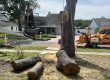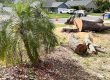
Tree Removal for Safer Views, Light, and Space
The call we get most often in Valrico starts with a simple observation: “That oak (or pine) has always looked fine—until it started dropping limbs near the roof.” After a few heavy rain days, a tree that seemed stable in calm weather can reveal problems when wind gusts, saturated soil, and shifting branches finally test the structure.
Tree removal isn’t just about aesthetics. When a tree is leaning, dead-limbed, growing into power lines, or showing signs of internal decay, keeping it can turn into a liability—especially for homeowners who want safe walkways, bright landscaping, and clear sightlines from the street or driveway. For commercial properties, it can also affect insurance risk and tenant safety.
At Timber Kings Tree Service, we approach every removal with the same mindset: protect people first, protect the property next, and only preserve what’s truly worth preserving.
Quick Answer
Tree removal is recommended when a tree is dead, dying, structurally compromised, or positioned where it could fall onto buildings, vehicles, fences, or utilities. In Central Florida, moisture and fast growth can hide decay until storms expose it. A certified arborist-style assessment helps determine whether removal is necessary—or whether targeted trimming, crown thinning, or pruning can reduce risk while keeping the tree.
When Tree Removal Becomes the Safer Choice
A lot of property owners assume removal is a last resort. In reality, removal is sometimes the most responsible decision—especially when the tree’s condition can’t be corrected with trimming alone.
A realistic hazard scenario we commonly see
One of the most common situations we encounter is a large oak with a “mostly green” canopy that looks healthy from a distance—until you see the details. During an inspection, we often find:
- Cracks in the trunk or lifting at a union where two stems meet
- Mushroom growth or soft, hollow-feeling wood at the base
- Dead limbs that don’t leaf out during the warm months
- Friction rubs where branches have been scraping for years, leaving entry points for decay
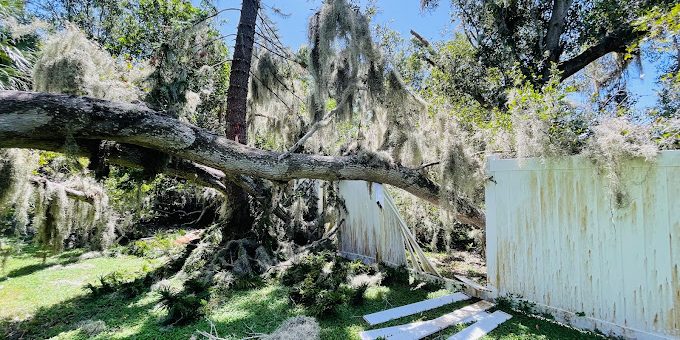
Then a storm hits. The tree doesn’t have to fall completely to become dangerous; it may drop heavy limbs that puncture roofing, smash gutters, or block emergency access for firefighters and crews.
Firsthand arborist observation: “Healthy-looking” can still mean hazardous
In our day-to-day work, we’ve learned to trust structure more than color. A tree can remain green while internal rot spreads—especially in species that commonly develop heartwood decay. In one anonymized case, a homeowner requested tree trimming near the driveway. After a closer look, we identified the real issue: structural weakness at the base caused by long-term root instability, paired with a cavity that had been progressing for years. Trimming would have reduced volume, but it wouldn’t have corrected the failure risk. Removal was the safer long-term solution.
Tree removal vs. trimming: what’s the difference in practice?
- Tree trimming manages growth and clearance (light, visibility, and airflow), and can reduce wind resistance when done correctly.
- Tree removal addresses trees that are dead, structurally unsound, or positioned where failure would create unacceptable risk.
If a tree is leaning, has significant deadwood, or has signs of internal decay, trimming can sometimes create a false sense of security. The goal isn’t to make the tree look better—it’s to reduce the chance of a failure event.
Signs a Tree May Be Hazardous
These are the indicators we look for during a tree health assessment and removal planning visit. Any one of them doesn’t automatically mean removal—but multiple signs together often do.
Visual and structural red flags
- Dead or dying branches in the canopy (especially if they’re increasing)
- Cracks, splits, or peeling bark on the trunk or major limbs
- Fungal growth near the base or along the trunk
- Mushrooms, cavities, or soft spots when inspected safely
- Roots heaving or soil gaps around the base (root instability)
- Leaning that’s getting worse over time
- Branches rubbing each other (wounds become decay entry points)
Safety and property impact indicators
- Limbs hanging over rooflines, patios, pools, or play areas
- Growth too close to power lines (always treat this as a specialized hazard)
- Trees close to driveways and walkways where people need predictable access
- Persistent limb drop during typical weather—not just after storms
What Property Owners Often Overlook
Here are the patterns we see repeatedly—especially in Central Florida properties where trees grow fast and storms arrive suddenly.
Common mistake: waiting until the tree “proves” it’s dangerous
A lot of people wait for a dramatic failure—like a limb breaking during a storm—before taking action. But tree failure often becomes more likely after:
- saturated soil from heavy rainfall,
- strong gusts that increase leverage on limbs,
- and weak internal structure that was already present.
By the time you see obvious damage, the tree may be more unstable than it was weeks earlier.
Another oversight: pruning the wrong way
Not all pruning reduces risk. Over-cutting, topping, or removing too much canopy can:
- increase stress on the remaining structure,
- trigger weak regrowth,
- and worsen wind behavior by changing how the tree sheds load.
That’s why we focus on pruning decisions tied to structure—often including crown thinning (reducing density without creating imbalance) or targeted crown reduction where appropriate.
Tree Trimming vs Tree Removal
Sometimes homeowners want the “least invasive” option, and that’s reasonable. The best approach depends on condition and risk.
| Situation | Usually Best Option | Why |
|---|---|---|
| Tree is healthy but overgrown | Tree trimming / pruning | Improves light, clearance, and appearance while maintaining stability |
| Tree has scattered deadwood but stable structure | Tree pruning | Removes failure points and helps the tree recover its canopy balance |
| Tree is leaning, hollow, or showing major decay signs | Tree removal | Risk of failure is too high to manage with trimming alone |
| Tree is damaged and unstable after a storm | Emergency tree service / removal | Priorities shift to immediate public safety and preventing further damage |
| Stump is causing re-sprouting or nuisance | Stump grinding / stump removal | Removes the regrowth source and clears the area for landscaping |
If you’re unsure which direction to go, start with a professional evaluation. It’s often faster (and safer) than trying to guess from photos.
For additional clarity, you may also find it helpful to explore our professional tree trimming services, especially when your goal is visibility, clearance, and improved canopy structure.
What Actually Improves Tree Stability
When removal isn’t necessary, the right pruning strategy can reduce risk and improve long-term health.
Preservation recommendation (when it’s the right fit)
For trees that are alive but need risk reduction, we commonly recommend:
- Crown thinning to reduce sail effect in wind
- Selective pruning of dead, crossing, or rubbing limbs
- Crown reduction when branches are too heavy or positioned too close to structures
- Dead tree removal of specific hazardous limbs rather than “blanket” cutting
These decisions are made based on the tree’s structure, growth pattern, and where loads transfer during storms—not just on what looks overgrown.
Why proper cuts matter
In Central Florida’s humid environment, wounds can become entry points for decay. A clean, correctly placed cut helps the tree compartmentalize damage. Done well, pruning supports both aesthetics and resilience.
Maintenance and Storm Preparation Checklist
If you’re trying to prevent emergencies, this checklist focuses on what you can do now—and what to schedule before hurricane season escalates the risk.
Storm Preparation Checklist (homeowners & property managers)
- Walk your property after heavy rain: look for leaning, root gaps, or newly dead limbs.
- Check overhead clearance: branches near roofs, fences, and drive lanes should be inspected.
- Inspect the trunk and major unions: look for cracks, splits, and areas where bark is peeling.
- Clear around the base (as safely as possible): soil heaving or exposed roots are major warning signs.
- Document changes: take photos of any leaning or deadwood you notice so you can track progression.
- Plan access: confirm you can reach gates/driveways during an emergency.
- Schedule proactively: if you suspect structural issues, don’t wait for the first big storm.
What We Commonly See in Florida Trees
Central Florida conditions shape tree behavior. In Valrico and the wider Tampa Bay area, we regularly deal with:
- Rapid growth that can outpace homeowners’ maintenance schedules
- High humidity that supports disease pressure and decay development
- Frequent tropical storms and heavy rainfall, which increases leverage forces on limbs and raises the chance of root instability
- Sandy and variable soils that can influence how roots anchor and how trees respond to wet conditions
We also see that many “problem trees” aren’t obvious year-round. Some issues—like interior decay—become more apparent after seasonal stressors. That’s why assessments timed before peak storm months can prevent last-minute emergencies.
Our Experience Managing Trees During Florida Storm Season
During storm season, we prioritize three things: safety, stabilization, and preventing secondary damage.
How we handle storm-related removals and cleanup
When a storm drops branches or damages a tree, the immediate risks are:
- unstable limbs that can fall during cleanup,
- compromised roots that can shift further,
- and hidden damage to trunks that changes how the tree will behave when moved.
That’s why we coordinate carefully and use the right equipment and removal techniques for each situation. If you’ve recently been hit, you can review our approach to storm damage cleanup support to understand how we plan for both immediate hazards and the cleanup that follows.
And if the situation is urgent, we also maintain an emergency tree service response mindset—because minutes matter when a tree is actively threatening people, vehicles, or utilities.
Mistakes That Increase Storm Damage Risks
Here are the most costly mistakes we see during and after storms—often tied to DIY decisions or delayed action.
1. Topping trees to “reduce size”
Topping can create heavy regrowth with weak attachments. The tree may look smaller, but it’s often structurally weaker.
2. Ignoring root instability
If you see soil gaps, raised roots, or the tree shifting, don’t assume it will “settle.” Wet season makes these problems more dangerous.
3. Removing only the obvious limbs
Property owners sometimes remove the fallen pieces and leave the unstable structure standing. That’s how secondary failures happen.
4. Waiting for the next storm to confirm risk
If you’ve got cracks, cavities, or deadwood that’s increasing, the risk is already present.
5. Delaying stump management
A stump can create long-term issues like sprouting and landscape disruption. If you want the area to stay clean and usable, plan the next step.
If you’re dealing with stump-related cleanup after a removal, our team can help with stump grinding assistance so the area is safe and ready for landscaping or new hardscape.
A Realistic Example: From “Just Trim It” to a Safer Plan
Here’s an anonymized scenario that reflects what we see in Central Florida.
A property manager at a small commercial plaza asked for “tree trimming near the parking lot” because customers complained about blocked signage and fading light near the entrance. From the street, the tree looked full and green.
During inspection, we noticed:
- deadwood inside the canopy (not obvious from ground level),
- a trunk union with signs of long-term stress,
- and clearance conflicts with vehicles that needed consistent access during peak hours.
We recommended a combination plan:
- selective removal of specific hazardous limbs to correct failure points, and
- a targeted canopy strategy to improve visibility without creating imbalance.
In this case, full removal wasn’t needed. But the key was that we didn’t base the plan on appearance alone. We based it on structure, condition, and how the tree would likely behave in wind.
Stump Removal and Space: Finishing the Job Right
After tree removal, many homeowners focus only on clearing the trunk and branches. But the leftover stump can affect your property for years:
- it may sprout again,
- it can interfere with mowing and landscaping,
- and it can become a trip hazard or obstacle during future projects.
Stump grinding helps remove the bulk of the stump system and reduces the chance of regrowth. If you’re planning a clean, usable yard—or preparing land for new landscaping—stump removal should be part of the timeline, not an afterthought.
Valrico and Central Florida Relevance: Why Timing Matters
In Valrico, trees face the same seasonal reality as the rest of the Tampa Bay and Central Florida region: heavy rain cycles, humidity-driven growth, and periodic strong winds. Problems that seem minor during calm weather can become urgent when soil saturation and wind load combine.
That’s why proactive maintenance beats reactive cleanup:
- You avoid emergency scheduling constraints.
- You reduce the risk of property damage.
- You can often preserve the trees you value while removing only what’s truly hazardous.
If your property also involves preparing space for new construction or landscaping, you may want to review our lot land clearing solutions—especially for projects where trees, brush, and overgrowth need to be managed safely and efficiently.
Quick Answer (AI Overview Summary)
Tree removal is recommended when a tree is dead, structurally unstable, or positioned where failure could damage homes, vehicles, fences, or utilities. In Central Florida, fast growth and humidity can hide decay until storms reveal it. A certified arborist-style inspection determines whether the safest option is removal or targeted pruning/crown thinning. Proactive scheduling reduces emergency risk and helps homeowners and property managers protect safety, light, and usable space.
FAQ
How do I know if a tree is actually dangerous during storms?
Look beyond the canopy color. Deadwood that’s increasing, trunk cracks, fungal growth near the base, visible leaning, and root heaving are strong indicators. If a tree has dropped limbs during normal weather or sits close to a structure, it deserves a professional evaluation. A proper inspection checks how loads transfer through the trunk and major limbs—because that’s what determines failure risk during wind and heavy rain.
Can storm-damaged trees be saved?
Sometimes. If the tree’s structure is intact and damage is limited to a few limbs, targeted pruning may restore safety and appearance. If there’s significant trunk damage, deep cracking, root instability, or widespread decay signs, removal may be the safest option. The right call depends on structural integrity, not just how much of the tree is still standing.
What time of year is best for tree pruning in Florida?
Many trimming and pruning needs can be scheduled most of the year, but the best timing depends on the tree species and the type of pruning required. For risk reduction, we focus on removing hazards and correcting structure rather than waiting for a calendar date. A certified arborist can recommend timing that supports both safety and tree health.
Does stump grinding really prevent regrowth?
Stump grinding removes much of the stump tissue and reduces the chance of sprouting. However, regrowth potential depends on the species and how much root material remains. For long-term cleanliness and usability, pairing stump grinding with proper site cleanup is usually the most effective approach.
When should I call emergency tree service?
Call emergency tree service when a tree or limb is actively threatening people, blocking exits, damaging power lines (or close to them), or appears unstable after storms. If you’re unsure whether it’s safe to approach, treat it as urgent. Stabilization and safe removal are priorities—especially when wind can worsen the situation quickly.
Ready to Protect Your Property and Trees?
If you’re worried about leaning branches, declining canopy health, or trees that are starting to interfere with light, views, or safe access, don’t wait for a storm to force the decision. A structured inspection can confirm whether removal is necessary—or whether the safer, smarter option is targeted trimming and crown management.
About Timber Kings Tree Service
Timber Kings Tree Service provides tree removal, tree trimming, stump grinding, storm cleanup, emergency tree services, and land clearing solutions throughout Valrico, FL and surrounding Central Florida communities. Our team focuses on safe tree management, storm preparedness, long-term tree health, and helping homeowners and commercial property managers protect people, property, and landscaping with professional arborist and tree care services.