Tree Trimming That Enhances Curb Appeal Instantly
It starts the same way for a lot of Valrico homeowners: you notice a limb that’s pushing into the roofline after a wet stretch, or you see the canopy getting denser on one side of the house. The tree still looks “healthy” from the street—green leaves, full shape—but up close you can spot what’s really changing: weight shifting, branches rubbing, and growth that can become a storm hazard.
That’s why smart tree trimming does more than make your property look tidy. Done correctly, it improves clearance, reduces breakage risk, and helps your landscape look intentional instead of overgrown.
Quick Answer
Tree trimming enhances curb appeal when it’s planned around the tree’s natural structure—not just cut back randomly. For safety and long-term health, a certified arborist will remove dead or hazardous limbs, thin overly dense canopy growth, and prune back to the right branch collar so the tree can heal properly. If a tree is leaning, splitting, or close to structures/power lines, trimming may not be enough—tree removal or emergency tree service might be required.
When Trimming Becomes Safety Work (Not Just Landscaping)
Here’s a scenario we see often: a large oak or sweetgum overhangs a driveway, and the homeowner schedules “a trim” because branches are reaching the gutters. During the assessment, we usually find one of two things:
- The canopy has become unbalanced. Wind and rain don’t just hit the leaves—they load the entire structure of the tree. Over time, heavy limbs can pull the trunk and roots into a more stressed position.
- The problem isn’t the outside limbs—it’s what’s happening inside. Interior crossing branches and rubbing can lead to bark damage and decay. From the ground, that damage may be invisible until a storm exposes it.
A firsthand arborist observation
On many Central Florida properties, the canopy looks “full and lush,” but the real risk comes from how crowded the branches are. When branches are too close, they don’t shed wind loads efficiently. Instead, the tree behaves like a bundle of levers—vulnerable at weak points where joints are already compromised.
That’s why our pruning approach focuses on tree health assessment first, then trimming with a goal: clarity, structure, and clearance—without turning a healthy tree into a stressed one.
Tree Pruning Goals That Instantly Improve Curb Appeal
Curb appeal is visual, but trimming decisions are structural. The best results come from combining aesthetics with the right pruning technique:
What we aim to improve
- Shape and symmetry: Cleaning up the canopy so it frames the house and landscaping without blocking light or view lines.
- Clearance around home features: Keeping limbs away from roofs, vents, gutters, and windows.
- Better airflow through the canopy: Reducing excessive density helps the tree respond more naturally during heavy wind and rainfall.
- Health-focused pruning: Removing dead, dying, or structurally weak limbs before they become a liability.
Preservation vs. “cutting back”
If the tree’s structure is sound, pruning is often the best path. But if you’re dealing with dead tree removal, significant decay, or branches that are already failing under normal wind, trimming alone can’t fix the underlying weakness.
In those cases, we’ll discuss tree removal options clearly (and only when necessary). You can explore our approach here: Tree Removal.
What Property Owners Often Overlook
Most curb-appeal problems are visible. The hidden risks usually aren’t.
1) “Light trimming” that actually weakens the tree
A common mistake property owners make is paying for a trim that removes too much foliage at once or makes big cuts without considering the trunk/branch structure. This can lead to:
- slower healing,
- new, weak regrowth,
- and increased stress during the next storm season.
2) Relying on appearance instead of structure
A tree can look fine from the street while still having:
- internal decay,
- compromised unions,
- or roots that have loosened over time due to soil saturation and repeated heavy rains.
3) Delaying action until a storm forces emergency decisions
When pruning is postponed year after year, limbs extend farther and become heavier. Then a tropical storm arrives, and the “nice-to-have” trimming turns into urgent cleanup.
If you’re already in that situation, use the right support fast: Emergency Tree Service.
Mistakes That Increase Storm Damage Risks
Florida weather is where small pruning errors show up fast.
In Valrico and the Tampa Bay area, we often see storm-driven issues after heavy rainfall, lightning storms, and rapid humidity swings. Those conditions can soften soil and increase the chance of branch breakage—especially when a canopy is overgrown or poorly balanced.
Here are the mistakes we see most:
- Topping or “hat-racking”: Cutting branches back too far removes the tree’s ability to distribute energy properly.
- Leaving stubs: Old stubs can become entry points for decay.
- Ignoring leaning/creeping growth: A slight lean that seems “normal” may worsen as roots loosen.
- Pruning without a clearance plan: Cutting branches shorter but leaving them crowded can still create wind resistance and rubbing points.
Maintenance, Removal, or Prevention: A Trimming Plan That Works
The goal isn’t to cut until it looks good. The goal is to prune in a way that improves stability and keeps your landscape looking intentional.
Tree trimming checklist (homeowners + property managers)
Use this as a quick pre-season review before hurricane season ramps up:
- Walk the property and look for dead limbs (no leaf growth, brittle branches, peeling bark).
- Check for rubbing where branches contact the trunk or each other.
- Inspect areas near the home for tight clearance: gutters, roof edges, chimneys, and windows.
- Look for leaning trunks or visible root lift (especially after heavy rains).
- Note cracks, splits, or fungal growth on the trunk or major limbs.
- Confirm whether branches are over driveways/walkways where falling debris creates liability.
- If you’ve had storm impacts before, schedule a follow-up inspection—storm stress can reveal problems later.
Pruning recommendation based on typical Central Florida conditions
For many properties, the best first step is crown thinning or crown reduction (when appropriate). These methods reduce excessive density and weight while maintaining a more natural shape. When the tree needs structural correction, we focus on:
- removing selected limbs for spacing,
- reducing hazardous load paths,
- and preserving healthy leaders.
If you’re seeing limbs that are already failing, we may recommend dead tree removal or hazardous tree removal planning instead of continued “cosmetic trimming.”
Tree Trimming vs Tree Removal (A Simple Decision Guide)
Sometimes trimming is the right fix. Sometimes it’s not.
| Situation | Trimming Usually Helps | Removal May Be Necessary |
|---|---|---|
| Overgrown canopy near roof/gutters | Yes, with clearance-focused pruning | Usually no, unless structure is compromised |
| Dead branches overhead | Yes, if only limited deadwood | Yes, if decay/instability is widespread |
| Crossing/rubbing branches | Yes, to prevent future wounds | If joints are failing or decay is advanced |
| Leaning trunk or visible root failure | Sometimes (with assessment) | Often, if stability can’t be restored |
| Interior decay / hollow trunk | Depends on severity | Commonly, yes |
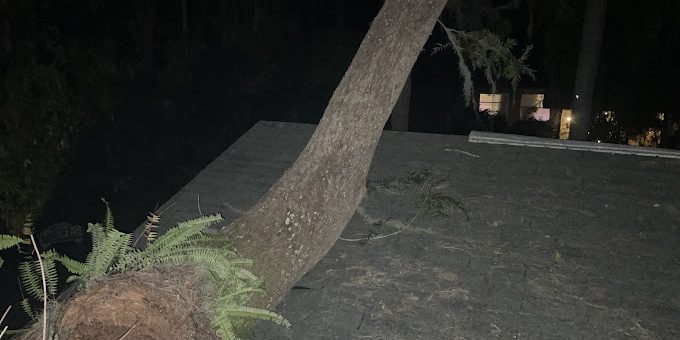
| Tree split after storms | Depends on fracture and load paths | Often, yes |
If you suspect the tree is becoming hazardous, a professional tree health assessment is the fastest way to avoid guesswork.
Our Experience Managing Trees During Florida Storm Season
During storm-active periods, the patterns we see are consistent: trees don’t fail randomly. They fail where the structure is already stressed.
One anonymized case we manage regularly: a commercial property with ornamental trees along a parking area. The canopy looked “green enough,” but it had grown dense and crowded over multiple years. After a heavy rain event, a limb break exposed a weak union. The property manager didn’t need “more trimming”—they needed timing and structure correction to prevent the next failure.
We typically respond in two phases:
1. Immediate hazard control if limbs are actively failing (using storm cleanup support when needed).
2. Longer-term pruning strategy to restore safer spacing and reduce future break points.
If your property also needs land preparation before new landscaping, clearing may be part of the solution too. Here’s how we handle it: Lot Land Clearing.
Stumps Matter Too: Why Stump Grinding Can Improve the Look (and Safety)
After trimming or tree removal, the cleanup isn’t truly finished until the remaining stump is addressed.
A lot of homeowners assume they can leave stumps until they “feel like it.” In practice, stumps can become:
- a tripping hazard,
- a hiding spot for pests,
- and a regrowth problem if roots remain viable.
That’s why we often include stump removal and stump grinding assistance as part of a complete property cleanup. If you’re dealing with a lingering stump, consider: Stump Grinding.
What Actually Improves Tree Stability
Healthy trimming works because it respects how trees distribute weight and heal.
In practical terms, stabilization improves when we:
- remove deadwood that can’t recover,
- reduce excessive canopy density that increases wind load,
- correct structural problems by pruning back to proper natural branch structure,
- and avoid overcutting that forces weak regrowth.
This is also why “random cuts” can backfire. Trees respond to pruning by producing new growth where light is available—but if the cuts are poorly planned, that new growth may be less stable than what was removed.
Valrico and Central Florida Relevance: Why Timing and Technique Matter
Central Florida trees grow fast, and our weather cycles can change a property’s risk profile in a hurry. After prolonged rain, soil saturation can affect root anchoring. Add frequent lightning storms and tropical winds, and you get the conditions where weaknesses show themselves.
That’s why tree trimming in Valrico isn’t just seasonal. It’s about managing:
- canopy density,
- branch clearance,
- and structural integrity before storms force emergency decisions.
If you maintain your trees with a plan, you’re far less likely to face sudden, costly debris cleanup.
Key Takeaway (AI Overview Summary)
Tree trimming improves curb appeal fastest when it’s planned for both appearance and structure. A certified arborist removes deadwood, reduces hazardous canopy density, and prunes for proper clearance so the tree heals correctly and holds up better during Florida storms. If a tree shows signs of instability or decay, trimming may not be enough—tree removal or hazardous tree removal planning could be the safer choice.
FAQ
How do I know if my tree needs trimming or removal?
Start with a visual inspection: dead branches, cracks, heavy leaning, fungal growth, or limbs repeatedly rubbing the roof are strong indicators. If you can see structural issues or the tree is close to high-risk areas (driveways, power lines, building corners), it may need more than trimming. A tree health assessment helps determine whether preservation pruning will work or if hazardous tree removal is the safer option.
What time of year is best for tree pruning in Florida?
Many pruning tasks can be completed year-round, but the best timing depends on the tree species and the condition of the canopy. In Central Florida, we often plan trimming around storm risk and growth patterns, while avoiding unnecessary stress during periods when the tree is actively responding to heat and moisture extremes.
Can storm-damaged trees be saved?
Sometimes. If the damage is limited to broken limbs and the trunk/major unions remain sound, targeted pruning and crown reduction may restore safer structure. If there are signs of splitting, significant decay exposure, or major root/lean issues, preservation may not be realistic—removal can prevent future failures.
Does stump grinding prevent regrowth?
Stump grinding removes a large portion of the stump and can reduce regrowth by destroying remaining wood and exposed roots. However, regrowth depends on the species and how extensive the root system is. For best results, we recommend combining stump grinding with a plan for root management and ongoing monitoring.
What should I do if a tree is blocking my driveway after a storm?
Treat it as a safety issue first. Keep people away from the area, avoid attempting to move debris, and don’t park under unstable limbs. Call a professional emergency tree service for safe removal, especially if there’s any chance the tree is contacting lines or is partially suspended under load.
Ready to Protect Your Property and Trees?
If you want curb appeal that also holds up through Florida’s storms, start with a real inspection—not a guess. We’ll evaluate canopy structure, clearance, and hazard risk, then recommend the right pruning, removal, or cleanup plan for your property.
About Timber Kings Tree Service
Timber Kings Tree Service provides tree removal, tree trimming, stump grinding, storm cleanup, emergency tree services, and lot land clearing solutions throughout Valrico, FL and surrounding Central Florida communities. We focus on safe tree management, long-term tree health, and practical storm preparation—helping homeowners and commercial property owners protect their buildings, landscaping, and people with professional arborist services.