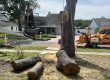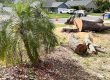
Emergency Tree Service: Rapid Response for Fallen Trees
After a heavy Central Florida thunderstorm, you can go from “everything looks fine” to hearing a crack outside—followed by a fallen oak limb across the driveway or a whole tree leaning toward the roof. In Valrico, this happens more often than people expect because our weather brings intense wind bursts, saturated soils, and fast-growing tree canopies that can shift quickly during storms.
When a tree falls (or hangs up in a dangerous position), the risk isn’t just the obvious mess. Unstable trees can shift without warning, limbs can drop later, and the wrong cleanup approach can damage power lines, fences, drainage systems, or the tree itself in ways that create long-term hazards.
At Timber Kings Tree Service, we handle storm-related emergencies with a safety-first process—because in fallen tree situations, speed matters, but so does doing it right.
Quick Answer
If a tree is down or actively leaning, treat it like a hazard:
- Keep people away and avoid cutting or pulling it yourself.
- Call an emergency tree service if there’s any chance of power lines, blocked exits, or the tree is touching structures.
- A certified arborist will assess stability, identify the safest removal route, and coordinate cleanup to reduce risk of secondary damage.
If you’re dealing with a fallen tree, you can request emergency tree service support for rapid response in Valrico and nearby areas.
Why Some Tree Problems Become Emergencies
Most storm emergencies don’t start as “bad trees.” They start as small weaknesses that build up over time—then storms expose them.
Here’s what we often see during storm aftermath:
Hidden failure points
- Root instability after repeated wet weather. Saturated sandy or loamy soils can reduce anchoring, especially for larger trees.
- Compromised unions and included bark (common in certain canopy shapes). The tree may look healthy until wind torque increases.
- Interior decay. A trunk can look solid from the outside while rot softens structural wood deeper in.
Storm physics that matter in Central Florida
Tropical downpours don’t just add wind—they add weight, sway, and ground saturation. Long, heavy branches (especially on mature oaks) create leverage. Once limbs start to move, the rest of the tree often follows, even if the initial “crack” seems small.
Signs a Tree May Be Hazardous
Not every emergency begins with a fallen tree. Many properties have warning signs that get ignored until storm season turns them into a liability.
Look for:
- Cracks at the base, soil heaving, or a tree that’s suddenly leaning more than before
- Dead branches or lots of dieback in the canopy
- Fungus growth, cavities, or peeling bark around major limbs
- Strange movement when wind gusts hit (watch from a safe distance)
- Roots lifting pavement/landscaping or gaps forming around the trunk
Firsthand arborist observation (what we notice on site)
One of the most telling things I’ve seen during storm cleanup is the “two-phase failure.” The outer canopy may look intact during the first wind gust, but once the limb shifts, you can see stress concentrate at specific points—often near heavy limb attachments. That’s why our crew evaluates not just what’s down, but what’s likely to shift next.
What Property Owners Often Overlook
Scenario: the tree that “barely missed” the roof
A homeowner calls after a storm because a large limb fell onto a backyard shed and narrowly avoided the house. The tree still stands—so the homeowner assumes it’s resolved. But when we inspect the remaining structure, we frequently find:
- the limb attachment was already compromised before the storm,
- the trunk has micro-cracks from the initial impact,
- and the canopy is now off-balance after the loss of weight.
In that situation, leaving the remaining structure “for later” often turns a manageable cleanup into a bigger hazard during the next strong wind event.
Common mistake property owners make
People try to “test it” or start cutting without a plan.
Pulling a limb off a roof, sawing at the wrong point, or using equipment that doesn’t account for tension/compression can trigger sudden movement. Even experienced DIYers can misjudge how the tree is loaded once limbs break.
Another frequent mistake: ignoring the stump and root zone after removal. If roots remain unstable, a future storm can cause additional shifting, cracking, or new falls.
Tree Trimming vs Tree Removal
Not every emergency requires full removal. Sometimes the safest solution is targeted pruning to reduce wind load and eliminate compromised sections.
Pruning (tree trimming / tree pruning) helps when:
- the tree is healthy enough to keep,
- only certain limbs are dangerous,
- and the structure can be corrected (crown thinning, deadwood removal, crown reduction where appropriate).
Removal is usually the safer call when:
- the trunk has significant decay or structural failure,
- the tree is leaning with unstable roots,
- it’s within the fall radius of a home, road, or utility corridor,
- or it’s already partially failed (hanging or cracked at the base).
If you’re deciding what’s needed, our team can guide the best option after a stability assessment. For long-term risk reduction, you can also review our approach to tree trimming and how we handle canopy weight and hazard limbs.
Maintenance, Removal, or Prevention: A Storm Checklist You Can Use
Whether you’re a homeowner or managing a commercial property, this checklist helps you reduce risk before the next storm—and gives you a clear plan if something goes wrong.
Storm & Hazard Checklist (Valrico / Tampa Bay area friendly)
Before a storm:
- Walk the perimeter: look for dead limbs, leaning trees, and branches over roofs or power lines.
- Check root flare and soil movement at the base of large trees.
- Identify “impact zones”: where a falling limb would land (driveways, doors, parking lots).
- Clear access routes so crews can reach the problem quickly after winds pass.
- If you’ve had repeated limb breakage, schedule an inspection—not just “cleanup.”
After a storm:
- Keep everyone away from downed trees and hanging limbs.
- Photograph damage for documentation (if safe) before moving anything.
- If there’s any chance of power lines, stay clear and wait for utility support.
- Call a professional for removal and evaluation of what remains standing.
Our Experience Managing Trees During Florida Storm Season
Storm response isn’t only about cutting. It’s about controlling the situation so the cleanup doesn’t create a second hazard.
Here’s what our crew prioritizes when we arrive at fallen tree scenes:
1. Scene safety first: we establish a working perimeter and look for secondary risks (shift points, unstable branches, concealed lines).
2. Stability assessment: we determine where the tree is under tension/compression and how it will move if disturbed.
3. Safe removal planning: we use equipment and rigging methods designed for the actual load—not what “seems easier.”
4. Cleanup that protects the property: we avoid unnecessary damage to lawns, fences, and drainage areas.
5. Follow-up recommendations: if the remaining tree is structurally compromised, we’ll recommend pruning or removal to prevent the next failure.
A realistic (anonymized) service case
After a tropical storm, a commercial property manager in the Tampa Bay area reported a large oak limb down across a service access path. The initial cleanup looked straightforward, but once the limb was removed, we found the remaining canopy was still overloading from a previously weakened attachment point. We performed precision tree work to address hazard limbs and reduce wind load, so the property wouldn’t face repeat problems on the next weather cycle. The client avoided additional emergency downtime because we evaluated more than what was visible on the ground.
What Actually Improves Tree Stability
When you preserve trees, the goal is not “make them look nicer.” It’s to reduce risk by correcting structure and removing weak, failure-prone sections.
Recommended strategies we commonly use (depending on the species and condition):
- Crown thinning to reduce sail area and improve wind passage
- Dead tree removal where decay or deadwood creates unpredictable failure
- Crown reduction when height reduction is needed for safety (not topping)
- Hazardous limb removal from included bark or mechanically weak attachments
If your property has trees that need long-term structure correction, professional pruning and hazard assessment can be a better first step than waiting for another storm. For properties with ongoing storm exposure, it can make a major difference.
References & What the Research Says (In Plain English)
Tree failure is complex, but several widely accepted arboriculture concepts help guide safer decisions:
- The International Society of Arboriculture (ISA) emphasizes that tree risk assessment should be based on likelihood of failure and potential target impact, not just appearance.
- The USDA Forest Service and related extension research show that soil saturation and root disturbance can significantly increase windthrow risk during extreme rainfall events.
- University extension publications on hurricane and wind damage consistently recommend reducing sail effects (through appropriate pruning) and addressing deadwood to lower the probability of branch failure.
These principles align with what we see in the field: the “look” of a tree doesn’t always match its internal stability.
Optional Comparison: When You Need Cleanup vs Full Tree Management
| Situation | What it usually requires | Why |
|---|---|---|
| Tree completely down on the ground | Removal + debris cleanup | Full clearance often needed for safety and access |
| Tree partially down / hanging in limbs | Emergency removal + stability evaluation | Hanging trees can drop later without warning |
| Tree still standing but canopy has deadwood | Trimming/pruning + hazard assessment | Deadwood and weak attachments can fail next storm |
| Roots show lifting/soil cracks | Further evaluation; sometimes removal | Root instability can persist after initial damage |
Valrico or Central Florida Relevance: Why Timing and Triage Matter
In Valrico and the broader Tampa Bay area, storm cleanup demand is intense. After a big weather event, you’ll see lots of “quick cut” offers—but the risk is that hurried removal can leave hazardous structure behind.
We recommend:
- Triage immediately after storms (what’s unstable right now?)
- Evaluate what remains standing (what will fail next?)
- Plan follow-up work (pruning, removal, and stump management) before the next system arrives
Also, because Florida trees grow quickly in our humidity and warmth, storm-related pruning gaps can widen fast. A limb that’s manageable today may become a hazard again if the canopy continues to extend without structural correction.
If you also need broader site work after storm damage, you may want to explore storm damage cleanup planning and how debris handling can affect drainage and property recovery.
Ready to Protect Your Property and Trees?
If you have a fallen tree, hanging limbs, or a tree that looks like it’s leaning after a storm, don’t wait for the next gust to find out what’s unstable. A fast emergency response plus an honest structural evaluation is the safest way to protect people, buildings, and landscaping.
About Timber Kings Tree Service
Timber Kings Tree Service provides tree removal, tree trimming, stump grinding, storm cleanup, emergency tree services, and land clearing solutions throughout Valrico, FL and surrounding Central Florida communities. Our focus is safe tree management, storm preparedness, long-term tree health, and helping homeowners and property managers reduce hazard risk with professional arborist services and careful, job-site-specific planning.
FAQs
How do I know if a fallen tree is actually unsafe to approach?
If any part of the tree is hanging, pressing against a structure, or resting in a way that could shift (including leaning trees), treat it as unsafe. Also avoid approaching if you see cracked trunk sections, soil heaving near the base, or branches that look “stuck under tension.” If there’s any chance of power lines or the tree is near utilities, stay back and contact the appropriate utility and a qualified emergency tree service.
Can storm-damaged trees be saved?
Sometimes. A tree can survive a storm and still be worth preserving if the structure is sound and the damage is limited to limbs or minor crown sections. But if there’s significant trunk damage, deep decay, a compromised root plate, or a persistent lean, preservation may not be practical. A certified arborist assessment helps determine whether pruning can reduce risk—or whether removal is the safer long-term choice.
What should I do after a storm if the trunk is still standing?
Start with safety: keep people away from the drip line and any area where limbs could fall. Then schedule an inspection rather than assuming the problem is over. We often recommend follow-up trimming or removal based on what the tree’s structure looks like after the storm load changes. Stump management may also be important to reduce lingering instability.
What’s the best time to handle storm cleanup and stump work?
Cleanup should happen as soon as it’s safe to access the site—especially if you need the area cleared for entrances, vehicles, or walkways. Stump work can sometimes be planned shortly after removal, but the timing depends on equipment access, soil conditions, and the extent of root disturbance. Delaying can leave hazards or make access harder later.
Does stump grinding help prevent future problems?
It helps with aesthetics and reduces regrowth potential, but it doesn’t fully “guarantee” no issues if roots remain structurally problematic. In many storm scenarios, stabilizing the remaining root zone and removing hazardous material is part of the long-term plan. If you need stump removal and follow-up site management, you can also consider stump grinding as part of your recovery.