Storm Damage Tree Services: From Debris To Beautiful Recovery
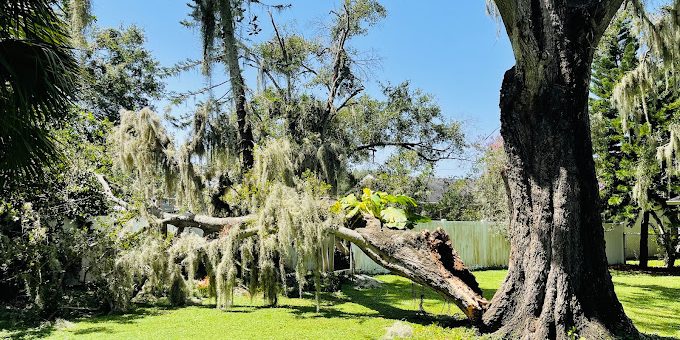
After a heavy Central Florida storm, it’s common to look out the window and spot the obvious—branches on the driveway, a leaning limb near the roofline, or a tree that looks “almost” stable. But the danger usually isn’t only what’s fallen. It’s what’s stressed beneath the surface.
In Valrico, we see storms expose weaknesses that slow-growing landscapes can hide for years: weakened root systems in sandy soil, interior decay in large oaks, and canopies that were never thinned before high winds tested them. When you’re dealing with storm damage, the goal isn’t just cleanup—it’s restoring safety, protecting structures, and helping surviving trees recover instead of declining silently.
Quick Answer
Storm-damaged tree work usually falls into three phases: (1) emergency hazard control, (2) debris and tree removal or stabilization, and (3) long-term recovery with trimming, pruning, stump management, and—when needed—land clearing. If a tree is leaning, cracking, or blocking access, treat it as a safety issue and consider an emergency tree service response rather than attempting DIY cleanup.
What Storm Damage Often Really Looks Like (Beyond the Obvious)
A fallen limb is attention-grabbing. Structural problems are subtler.
Hazard scenario we commonly see
On one Valrico property, a homeowner reported “just some limbs down” after a tropical storm. During our walk-through, we noticed the main trunk had shifted slightly—enough to pinch the bark at the base and create a stress crack on the opposite side. The tree looked upright from the street, but the root plate had moved. That kind of instability can hold for a day or two and then give way during the next wind event, especially as the soil stays saturated.
This is why storm cleanup should include a quick structural assessment, not only limb removal.
Firsthand arborist observation
One pattern I’ve seen repeatedly: after storms, people focus on what’s on the ground, while the canopy above becomes the next problem. Overextended limbs and dense foliage increase wind load. If a storm snaps one branch, the rest of the canopy may still be “over-working” the same weak attachment points—meaning the tree can continue shedding limbs even after the first cleanup day.
Quick Answer: Tree Trimming vs Tree Removal After a Storm
Storm damage doesn’t always mean a full removal. The decision is based on structure, stability, and future risk.
| Situation | Trimming/Pruning May Be Appropriate | Removal Is Likely Needed |
|---|---|---|
| Broken limb with clean separation, no trunk cracks | Yes (with proper pruning cuts) | No |
| Tree leaning, exposed roots, or soil heaving | Sometimes (limited) | Usually |
| Trunk damage with visible splitting/decay | Limited | Often |
| Crown is intact, but limbs are rubbing or crossing | Yes (crown thinning/spacing) | No |
| Tree is unstable near structures or power lines | Limited, if safe access exists | Usually |
When preservation is feasible, we’ll recommend targeted pruning—like crown thinning or selective crown reduction—to restore clearance and reduce stress on remaining attachments. If the tree is hazardous, our priority is removal that reduces liability and clears the path safely.
For homeowners planning cleanup and long-term recovery, it helps to understand that trimming is not “cosmetic” after storms. It’s risk management. If you need help with shaping and clearance, our tree trimming services are designed to address storm-exposed canopy issues rather than simply cutting back.
Why Some Tree Problems Become Emergencies
Storm damage turns “manageable” problems into emergencies when three things happen at once: wind pressure, weight shifts, and wet soil.
The Central Florida factor
After heavy rainfall, saturated ground reduces friction around roots. Trees that were stable in dry weather can tip when the soil softens. Add wind gusts and the canopy becomes a lever—especially on larger oaks and older growth that has developed internal defects over time.
Common internal failures we look for
- Interior decay that weakens the trunk from the inside out
- Cracks at unions where storm limbs pulled against weak attachment areas
- Root plate movement that doesn’t always show until you inspect the base and surrounding soil
- Deadwood accumulation that breaks off during the first strong gust, then spreads damage
What Property Owners Often Overlook
Most people don’t ignore trees—they just don’t see what makes them unsafe during the next round of storms.
Overlook #1: Assuming “it’s standing” means it’s safe
A tree can remain upright while its root system is compromised. If a trunk has shifted, the next gust can finish the job.
Overlook #2: Cutting limbs without correct pruning practices
Improper cuts can leave tissue exposed to decay fungi and pests. Over time, those “healed” wounds can become entry points—turning a storm event into a long-term health problem.
Overlook #3: Leaving stumps and buried debris in place
After cleanup, some properties still have buried wood, tangled roots, or partially cut stumps. This creates future hazards and complicates maintenance and landscaping.
If stump management is part of your recovery plan, we handle stump grinding with an eye toward safety, aesthetics, and preventing regrowth issues that can lead to repeat visits.
Mistakes That Increase Storm Damage Risks
Here are the patterns we see most often from homeowners and commercial property managers—mistakes that raise the odds of repeat damage.
1. Waiting to trim until after the storm
Once branches are damaged, you’re reacting to risk rather than reducing it.
2. “Top cutting” instead of proper pruning
Removing large portions of the canopy can trigger weak, fast-growing regrowth (often called water sprouts or weak shoots) that isn’t structurally sound.
3. Ignoring deadwood and crossing limbs
In a storm, crossed branches act like sandpaper and create abrasion points that lead to faster breakage.
4. Relying on DIY equipment
Chainsaws and ladders are only part of the risk. The real danger is unpredictable tree movement—especially when a tree is already stressed.
5. Not planning for access
After storms, equipment, emergency responders, and crews need clear routes. If debris blocks driveways or walkways, you’re increasing risk while you wait.
What Actually Improves Tree Stability (Before the Next Storm)
Storm recovery is helpful, but the best results come from prevention—done correctly.
Key stability improvements we recommend
- Crown thinning to reduce wind resistance without stripping the tree’s structure
- Dead tree removal when decay or deadwood becomes a predictable hazard
- Crown reduction when clearance is needed, but the goal is to keep the tree’s natural form
- Tree health assessment for signs of disease, stress, or pest activity that weaken structure over time
- Tree pruning that targets problem limbs and improves clearance near roofs, fences, and power lines
A good rule of thumb: pruning should reduce load and improve structure, not just “make it look shorter.”
Pruning vs preservation recommendation
When a tree has minor limb damage but the trunk shows no cracking and the root area looks stable, preservation can be the smarter long-term choice. We’ll often recommend selective pruning to remove broken or rubbing limbs and reduce stress on remaining branches. If we see trunk instability or significant failure risk, we’ll recommend removal rather than “hoping it survives” the next storm.
Our Experience Managing Trees During Florida Storm Season
Storm work is not just about cutting. It’s about sequencing, safety, and property protection.
A realistic service case (anonymized)
After a tropical storm, a small commercial property in the Tampa Bay area had multiple limbs down along a parking edge and one mature tree leaning toward a fence line. The owner needed the area safe for tenants quickly.
Our approach:
- First: secure the hazard zone and assess structural movement potential
- Second: remove compromised limbs and address the leaning risk
- Third: trim remaining canopy for clearance and reduce future breakage points
- Fourth: manage debris properly and coordinate stump work where needed
The result wasn’t just a clear parking area—it was a safer property and a tree plan designed to reduce future storm losses.
Storm Damage Tree Services Timeline: From Debris To Beautiful Recovery
Every property’s timeline is a little different, but this sequence is common and helps prevent “half-fixed” problems:
1. Day 0–1: Emergency hazard control
Stabilize risk and remove immediate threats to people, structures, and access routes.
2. Day 1–3: Debris removal and structural decisions
Decide what’s salvageable versus what must be removed for safety and long-term health.
3. Week 1–6: Recovery pruning and canopy management
Perform corrective trimming on trees that remain healthy and structurally sound.
4. Ongoing: Stump and site management
Grind stumps where appropriate and prepare the ground for future landscaping.
If access or future development is part of your recovery, it may also include broader site work. For properties that need more than tree cleanup, we support planning and execution for lot land clearing with storm debris considerations in mind.
Maintenance and Storm Preparation Checklist (Use This Before Weather Hits)
Use this checklist in the weeks leading up to hurricane season in Central Florida.
Tree and property checklist
- Inspect trees for dead limbs, cracks, and leaning trunks
- Look for mushroom growth, peeling bark, or fungal activity near the base
- Check for crossing/rubbing branches that can fail under wind pressure
- Confirm there’s clearance from roofs, gutters, and power corridors
- After heavy rain, watch for soil heaving or exposed roots
- Ensure walkways and driveways remain clear so emergency response isn’t delayed
- For multiple trees, prioritize those closest to structures and high-traffic areas
Valrico and Central Florida Relevance: Why Storm Work Here Is Different
Valrico sits in a region where storms can bring heavy rainfall, fast wind shifts, and saturated ground. Trees respond quickly to that combination. You may notice:
- Root instability becomes more pronounced after prolonged rain
- Oak and mixed hardwoods can show decay-related failures during wind events
- Dense canopies can act like sails, increasing stress on limb attachments
- High humidity and stress can speed up tree disease progression, especially when wounds aren’t properly pruned after damage
Storm damage isn’t a one-time event—it’s often a “chain reaction” that starts with the first failure and continues until the tree structure is addressed.
References (Trustworthy Arboriculture Context)
- The International Society of Arboriculture (ISA) emphasizes that proper pruning practices and hazard assessments are critical to tree safety and long-term health (ISA resources on pruning and tree risk management).
- The U.S. Forest Service notes that root and soil conditions influence windthrow and tree stability, especially under wet soil conditions.
- Research summarized by arboriculture and forestry organizations consistently shows that wind damage risk rises when canopies are dense and when trees have structural defects or compromised root systems.
(These are general arboriculture principles we use to inform how we assess and manage storm-related hazards.)
Quick Answer: Signs a Tree May Be Hazardous
If you notice any of the following after a storm—or even during calm weather—treat it as a hazard and schedule an inspection:
- The tree is leaning more than it used to
- Cracks or splitting appear in the trunk or major limbs
- You see exposed roots or soil heaving near the base
- There’s hanging deadwood that looks loose or recently broken
- The canopy is so dense that limbs appear to “fight” wind load
- The tree is near structures and has persistent clearance issues
Ready to Protect Your Property and Trees?
Storm damage recovery should leave you safer—not just cleaner. If you’re dealing with fallen limbs, leaning trunks, or trees that “might be okay,” a professional assessment can prevent repeat failures and help preserve healthy trees when it makes sense.
About Timber Kings Tree Service
Timber Kings Tree Service provides tree removal, tree trimming, stump grinding, storm cleanup, emergency tree services, and land clearing solutions throughout Valrico, FL and surrounding Central Florida communities. We focus on safe tree management, storm preparedness, long-term tree health, and helping homeowners and commercial property owners protect structures and restore their landscapes with professional arborist-driven care.