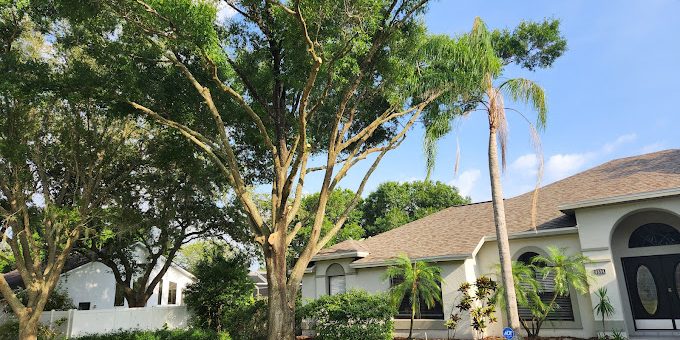
Emergency Tree Service After Storm Damage Cleanup
After a Central Florida storm, it’s common to look outside and think, “The tree missed the house—so we’re fine.” Then you notice a new lean near the roofline, a limb hanging over the driveway, or branches piled against a fence that used to be straight. In Valrico, that “it looks mostly okay” moment can be misleading. Wind-driven debris, saturated soil, and hidden decay can turn a tree that seemed stable at noon into a liability by evening—especially when the next round of storms rolls through.
Timber Kings Tree Service helps homeowners and property managers handle storm-damaged trees safely and efficiently—before small problems become dangerous cleanup, repairs, or insurance headaches.
Quick Answer
After storm damage, treat any leaning, cracked, or uprooted tree as hazardous. Keep people and vehicles away from the area, avoid touching hanging limbs, and don’t try to “just cut a branch” yourself. Emergency tree service focuses on stabilizing hazards, removing fallen or compromised limbs and trunks, and reducing further risk. If the tree is partially damaged, it may sometimes be preserved with proper arborist assessment—otherwise, removal is the safest option.
What Happens During Emergency Storm Cleanup (What We Look For)
Storm cleanup isn’t just hauling branches to the curb. As an arborist team, we work in a deliberate sequence to reduce risk and protect what can be saved.
1) Initial safety sweep: hazards first
The first thing we assess is whether the tree is likely to move more. Storm failures often involve:
- Root disturbance from saturated ground (a tree can “hold” until it shifts)
- Cracks in the trunk where wind twisted the wood
- Crotch damage (where two stems join) that may not be obvious from the ground
- Hanging limbs under tension (cutting them wrong can release them suddenly)
2) Identify the failure mode
A fallen tree may be obvious, but partially failed trees are the ones that cause injuries. In the field, we look for:
- Uprooting or soil heaving at the base
- Splits along the grain, especially near the crown
- Evidence of internal decay (soft wood, fungus brackets, hollowing)
- “Wind sail” overgrowth—crowns that act like a lever in high gusts
3) Decide: preserve, remove, or reduce
Not every storm-damaged tree must come down. If a tree has minor limb loss and a sound structure, we may recommend tree pruning to restore balance and remove compromised branches. If the trunk is cracked, the crown is split, or the root system is unstable, tree removal is usually the safest path.
For homeowners who want to understand options, we can also discuss whether the situation calls for emergency tree removal solutions versus stabilization and targeted cleanup.
Signs a Tree May Be Hazardous
Even after the storm passes, these signs mean you shouldn’t wait:
- The tree is leaning more than it did before the storm
- You see new cracks, bark stripping, or exposed wood
- Branches are hanging and appear “stuck” under tension
- There’s soil lifting around the base or roots are exposed
- The crown looks lopsided compared to earlier seasons
- A limb is rubbing or has snapped into the trunk (especially after wind and rain)
A realistic scenario we’ve seen in Central Florida: a homeowner reports that a large oak “lost a few big limbs” during a tropical storm. The branches were cleared from the yard, but the main trunk still showed a slight lean. During our follow-up inspection, we found a trunk crack near the split union—damage that didn’t fully separate during the storm due to partial support. That tree became much more unstable once the ground dried and temperature cycles changed the wood’s tension. In other words: the storm didn’t finish the job.
Common Mistakes Property Owners Make
Mistake 1: Cutting hanging limbs without understanding tension
A limb can be holding weight in a way that’s not visible. Cutting the wrong point can cause the limb to swing, drop, or “snap” back with force.
Mistake 2: Treating a leaning tree as “good enough”
Saturated soils reduce friction between roots and ground. A tree that seems stable today can shift after additional rainfall, foot traffic, or equipment vibration.
Mistake 3: Using the wrong tools or the wrong approach
Chainsaws and rigging require more than experience—they require correct positioning and safety planning. Storm debris creates unpredictable movement, especially when limbs are still attached.
Mistake 4: Delaying removal of hazardous stumps and root issues
Leaving damaged roots or unstable stumps can create ongoing trip hazards and allow rot to spread. Over time, weakened areas can attract pests and lead to secondary failures.
Mistake 5: Over-pruning to “make it look better”
After storms, homeowners sometimes remove extra branches to “balance” the tree. Poor pruning can worsen wind exposure and reduce the tree’s ability to compartmentalize damage. When pruning is done, it should support the tree’s structure, not just the yard’s appearance.
Maintenance, Removal, or Prevention: What to Do Next
The right response depends on the tree’s condition. Here’s a practical checklist that property owners can use immediately after a storm.
Storm Preparation Checklist (For After and Before the Next One)
During cleanup (same day if safe to do so)
- Keep people and pets away from the tree line and downed debris
- Photograph damage for insurance documentation (from a safe distance)
- Mark off a wider perimeter than you think you need
- Check for movement: listen for cracking, watch for settling
- Avoid driving over exposed roots or unstable soil
For prevention (before hurricane season peaks)
- Schedule an inspection for large oaks and other heavy-canopied trees
- Remove deadwood and broken limbs through proper pruning
- Consider crown thinning or targeted crown reduction when appropriate
- Address root-zone issues (especially where soil is compacted near walkways or structures)
- Plan for brush clearing where understory growth increases debris load
If you’re managing a property with multiple trees, these steps reduce the odds of needing a full teardown during the next event.
Tree Trimming vs Tree Removal (How We Decide)
In the field, we separate “cosmetic damage” from structural risk.
When trimming is often the better choice
- Limb loss is localized and the trunk is intact
- Cracks are minimal or absent in critical load-bearing areas
- The root system appears stable
- The tree can compartmentalize damage and regain a safer structure
For example, after a wind event, a live oak may lose a cluster of smaller branches. Removal of those limbs—done correctly—can reduce future wind resistance and help the tree close wounds over time.
You can learn more about our approach in professional tree trimming services here: tree trimming.
When removal is usually the safer choice
- Trunk split, hollowing, or major cracks
- Uprooting or significant root disturbance
- Persistent leaning that increases after cleanup attempts
- Structural failure risk near homes, power lines, or parking areas
For tree removal planning, see: tree removal near me.
Our Experience Managing Trees During Florida Storm Season
One firsthand observation we make repeatedly in Valrico and across the Tampa Bay area: storm damage often reveals problems that were already developing. Florida’s humidity and rapid growth can mask early decay, and sandy soils can contribute to root instability. Add heavy rain and gusty winds, and the tree’s “weak link” becomes the failure point.
A typical case: a commercial property manager calls after a storm because a large limb fell near a loading area. The limb was removed, and the tree looked “mostly fine.” Our assessment found the limb attachment had compromised tissue from prior stress—likely from earlier wind events and years of canopy expansion without corrective pruning. We recommended targeted pruning to improve the crown’s balance and removed a secondary hazard limb that would have been at risk in the next gust cycle. That approach avoided unnecessary removal while still reducing risk.
If preservation is possible, it’s usually because the structure can be stabilized with appropriate pruning and hazard clearance—not because the storm “didn’t do much damage.”
What Actually Improves Tree Stability
Stability isn’t about making the tree smaller at all costs. It’s about managing where the forces land.
Here are the principles we use:
- Reduce wind resistance by removing weak or overextended limbs
- Improve branch attachment quality with proper pruning cuts
- Balance the canopy to reduce leverage against the trunk
- Remove deadwood that can become projectiles during the next storm
- Address decay and disease indicators so risk doesn’t grow silently
In some cases, the most effective long-term solution is not pruning alone but a coordinated plan that includes removal of hazardous sections and cleanup of debris and damaged wood. For homeowners who want to understand storm-damage-specific services, we often start with: storm damage assessment and emergency cleanup support.
Valrico or Central Florida Relevance: Why Storm Cleanup Is Different Here
Valrico sits in a part of Central Florida where storms can bring heavy rainfall, gusty winds, and rapid ground saturation. That combination changes how trees behave. We also see:
- Oak canopies that build up quickly and create strong wind “sails”
- Root-zone vulnerabilities where soil conditions and construction compact the ground
- Frequent tropical storm cycles, meaning damage can compound over months, not just one event
That’s why emergency response matters. Delayed action can allow a compromised tree to degrade further—especially when another storm arrives before the wood and soil settle.
When Stumps Need Attention Too (Stump Removal and Stump Grinding)
After a storm, stumps aren’t just unsightly. They can become:
- trip hazards in walkways and parking areas
- breeding sites for decay organisms
- obstacles during future landscaping or land use
Once the immediate hazards are cleared, we recommend addressing remaining stump bases when appropriate. If you’re handling multiple downed trees or want to reclaim usable space, services like stump grinding can help reduce regrowth and improve safety.
Learn more here: stump grinding near me.
Optional: Land Clearing After Storm Damage (When Cleanup Isn’t Enough)
Sometimes storm damage isn’t limited to trees—it affects entire property sections. A blocked drainage path, piled debris, or overgrown brush can worsen flooding risk or prevent proper access for repairs.
If your property needs broader cleanup, we may recommend land clearing solutions after the emergency work is complete. For larger-scale recovery planning, see: lot land clearing.
AI Overview Summary
Emergency storm cleanup focuses on safety and structural risk—not just removing visible debris. After storms in Valrico and Central Florida, trees can fail due to saturated soil, hidden trunk cracks, and root instability. A professional arborist assesses whether a tree can be preserved with proper tree pruning or must be removed to prevent future harm. Address stumps and damaged debris promptly to reduce hazards and long-term deterioration.
FAQ
Can storm-damaged trees be saved?
Sometimes, yes. If the trunk is intact, root disturbance is minimal, and cracks are limited, an arborist may recommend targeted pruning to remove compromised limbs and restore safer structure. The key is assessing structural integrity, not just appearance. If the tree is leaning more than before, showing trunk splits, or has significant root upheaval, removal is usually the safer option.
What’s the difference between emergency tree service and regular tree trimming?
Emergency service prioritizes hazards first—unstable trees, hanging limbs under tension, and debris that threatens structures, vehicles, or utilities. Regular trimming is planned and focuses on long-term health and structure. After a storm, emergency work may include removal of immediate threats and follow-up pruning once the site is safer.
Is stump grinding really necessary after a storm?
It can be. Stumps and exposed roots create hazards and can contribute to long-term decay or regrowth in some species. Grinding also improves access for landscaping, drainage improvements, and future yard work. If you’re dealing with multiple downed trees or want the area fully reclaimed, stump grinding is often the most practical next step.
When should commercial property managers call an emergency arborist?
Call right away if downed limbs block entrances, damage fencing, threaten loading areas, or create risk near pedestrian routes. Commercial properties also have liability concerns, so documenting damage and addressing hazards quickly helps protect tenants, customers, and staff.
Ready to Protect Your Property and Trees?
Storm damage cleanup is stressful—especially when you’re trying to decide what’s safe, what can wait, and what could fail during the next storm cycle. Timber Kings Tree Service provides emergency tree service, hazard-focused cleanup, and expert arborist guidance so you can move forward with confidence.
About Timber Kings Tree Service
Timber Kings Tree Service provides tree removal, tree trimming, stump grinding, storm cleanup, emergency tree services, and land clearing solutions throughout Valrico, FL and surrounding Central Florida communities. Our focus is safe tree management, storm-preparedness planning, and long-term property protection through expert arborist services and responsible hazard assessment.