Tree Trimming That Enhances Shade Without Blocking Growth
A homeowner in Valrico recently called after noticing that one of their live oaks looked “fine”—until the rainy season hit and the canopy started acting like a sail. A few limbs had been trimmed over the years, but the crown grew denser toward the house side. During heavy wind and saturated soil, those long, overextended branches began flexing more than the trunk could comfortably handle. The result wasn’t an immediate failure—but it was the kind of leaning, limb-stressing movement that often turns into storm damage later.
That’s why shade-focused trimming matters. Done the right way, tree trimming can keep your property cooler, protect structures and walkways, and encourage healthy growth. Done poorly, it can reduce stability, slow new growth, and create hazards that only show up when Central Florida storms roll in.
Quick Answer
Tree trimming for shade should focus on selective pruning—removing dead, crossing, or structurally weak limbs while maintaining a balanced crown. The goal is to reduce risk and improve light/air flow without “blanketing” the tree or cutting it back so aggressively that it weakens over time. For the best outcome, ask for trimming designed to support the tree’s structure and long-term health, not just a quick height reduction.
Why “More Trimming” Can Actually Block Growth
From an arborist’s perspective, the main issue isn’t that trees grow too much—it’s that the wrong parts get removed.
When trimming becomes a routine of topping, heavy crown reduction, or uniform “shearing” (like shaping hedges), a tree often responds by producing dense, weak regrowth. That regrowth can look healthy at first, but it’s frequently attached with less mature wood and can be more prone to breakage during wind events.
Here’s what we often observe on Central Florida properties:
- Overgrown canopies increase wind resistance. A fuller canopy isn’t always bad—what matters is how the canopy is built and supported.
- Interior thinning is usually better than outer thinning when the objective is shade with safer structure. Interior light and airflow help the tree maintain healthier inner growth.
- Large cuts create stress. A good trimming plan minimizes large wounds, spaces cuts properly, and avoids removing too much leaf area at once.
What Property Owners Often Overlook
1) Shade isn’t just about height—it’s about crown balance
Property owners usually want shade over a driveway, patio, or walkway. But the safest shade comes from a balanced crown that spreads naturally rather than forcing growth in one direction.
2) Deadwood hides inside
In humid climates, dead branches can linger inside a dense canopy, especially where limbs cross or rub. Homeowners may only notice the dead ends after a storm reveals them.
3) Roots and trunk stability can be affected long before failure
Many people focus on the canopy, but stability is also tied to root anchoring, soil saturation, and trunk condition. After repeated heavy rainfall, even a “healthy-looking” tree can become more vulnerable if its structure is already compromised.
A realistic hazard scenario we commonly see
At commercial properties—strip malls and schools especially—we often find a row of ornamental trees or older shade trees along parking lots. After a period of drought stress followed by heavy rain, one tree develops a subtle lean. The owner may delay action because there’s no obvious crack. Then a storm hits with gusts and lightning, and the tree drops a limb that damages a vehicle or knocks out a power line. The real problem wasn’t sudden—it was structural stress that built up.
Common Mistakes That Increase Storm Damage Risks
Mistake 1: “Trimming it all the same way” (shearing)
Shearing removes too much of the outer canopy and encourages dense, fast regrowth. That regrowth may not have the same structural strength as the original limbs.
Mistake 2: Cutting back toward the trunk too aggressively
When limbs are reduced in a way that leaves stubs or improperly placed cuts, the tree struggles to compartmentalize wounds. Over time, that can lead to decay inside the trunk or at major branch unions.
Mistake 3: Waiting until after a storm
Post-storm trimming is sometimes necessary, but delaying inspections until damage shows up can make the eventual repair more expensive and riskier. If a tree already has compromised limbs, the next storm may be the one that breaks them.
Mistake 4: Ignoring clearance needs around structures
Shade is great—until branches start contacting roofs, gutters, or power-adjacent areas. Contact can lead to bark damage and create entry points for pests and disease.
Quick Decision Guide: Pruning vs Removal
Sometimes trimming is the right solution. Other times, removal is the safer long-term move.
Tree Trimming vs Tree Removal (simple comparison)
| Situation | Trimming is usually appropriate | Removal is often recommended |
|---|---|---|
| Large decay or hollow in trunk | Usually not | Often, especially if target zones are involved |
If you’re dealing with a tree that’s already leaning, cracking, or showing signs of internal decay, it may be a hazardous tree situation rather than a routine trimming job. For guidance on that full scope of risk, you can explore tree removal options and how we evaluate whether preservation is still possible.
Maintenance, Removal, or Prevention: A Shade-Smart Checklist
A good trimming plan doesn’t just “make it look better”—it supports tree health and reduces hazard. Here’s a practical checklist you can use before and after a trimming visit.
Shade-Smart Tree Maintenance Checklist
- Measure clearance: confirm branches aren’t contacting roofs, gutters, or high-traffic pathways.
- Look for deadwood: check for brittle limbs, peeling bark, and branches that don’t leaf out normally.
- Inspect for crossing/rubbing: rubbing can scar bark and weaken limb unions.
- Check for cracks and splits: especially at major branch attachments.
- Confirm crown balance: the tree should not be “pulled” heavily toward one side without support.
- Plan trimming timing: schedule pruning when it supports the tree’s growth cycle and reduces stress.
- Avoid overcutting: a light, targeted plan is safer than removing too much canopy at once.
Our Experience Managing Trees During Florida Storm Season
Central Florida weather creates a unique combination of stressors: rapid growth, humidity-driven disease pressure, and intense wind and rainfall during tropical systems. We’ve seen how trees respond when those factors stack up.
One firsthand observation from the field: on several older oaks and large shade trees, we’ve found that problems often start at branch unions—the places where limbs split or attach at awkward angles. If earlier trimming removed supporting limbs without rebalancing the crown, those unions became the weak points. During heavy rainfall, the canopy loads the branches while saturated soil reduces stability, and the tree’s “margin for error” shrinks.
That’s why shade-focused trimming should be structural, not cosmetic.
A realistic anonymized service case
A property manager at a multi-building community in the Tampa Bay area asked for tree trimming “to keep the shade but stop the mess.” The trees were dropping heavy limbs and leaves near sidewalks. Our evaluation showed:
- multiple crossing branches rubbing and weakening over time,
- deadwood hanging in the interior canopy,
- and an imbalanced crown that increased swing during gusts.
Instead of shearing or aggressive height cuts, we performed selective pruning: removed dead and hazardous limbs, thinned strategically to improve airflow, and trimmed to restore structural clearance while preserving the overall shade pattern. The result was a safer canopy with less debris impact and more predictable growth.
If you’re looking for trimming that’s designed around long-term structure, it’s also worth reviewing our approach to professional tree trimming so you know what to expect during the inspection and pruning process.
What Actually Improves Tree Stability (and Keeps Shade)
If you want shade that lasts through storms, focus on the pruning goals that strengthen the tree:
- Crown thinning: reduces weight and wind resistance while maintaining leaf area.
- Crown reduction with intention: lowers risk without stripping the tree’s structure.
- Dead limb removal: removes “failure points” that break first in gusts.
- Structural pruning: improves the long-term framework of the crown.
- Targeted clearance pruning: keeps branches away from roofs, gutters, and walking routes.
These recommendations align with standard arboriculture principles—trees compartmentalize wounds best when cuts are placed correctly and the canopy isn’t reduced more than necessary. For homeowners, the practical takeaway is simple: trimming should support the tree’s natural form, not fight it.
References worth knowing
- The International Society of Arboriculture (ISA) emphasizes proper pruning practices and the importance of assessing structure and risk before cutting.
- The U.S. Forest Service notes that pruning and cutting practices affect tree health and decay development—wound management matters.
- Research and extension guidance on urban tree management consistently show that canopy thinning and structural pruning can reduce storm-related risk when done correctly.
(If you’d like, we can share the specific guidance we use during evaluations—our goal is clarity, not mystery.)
Valrico and Central Florida Relevance: Why Timing and Method Matter Here
Valrico sits in Central Florida’s high-growth, high-humidity environment. That means trees can look “fine” for months and then change quickly as conditions shift—especially during heavy rains and tropical weather.
In this region, we commonly see:
- faster canopy regrowth after heavy cuts,
- increased fungal and decay pressure from persistent moisture,
- and more frequent storm cleanup demands when trees are not maintained before peak seasons.
That’s also why we encourage planning trimming ahead of storm risk windows. If you’re preparing for hurricane season, you’ll likely need more than a quick visual check—you’ll want a structural look at branches, unions, and clearance.
When You Need Emergency Service Instead of Trimming
Sometimes the situation isn’t “trim and refine.” It’s “remove and secure.”
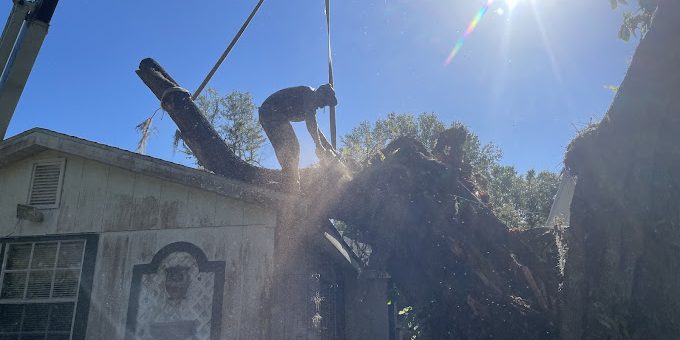
If a tree is down, hanging over a roof, blocking access, or threatening power lines, don’t wait for cleanup to “schedule itself.” For urgent situations, use emergency tree service so the area can be secured and the right removal plan can be executed safely.
And if the problem involves ongoing storm aftermath—debris, broken limbs, and unsafe sections near structures—our storm damage support is designed for the cleanup and hazard reduction homeowners need right away.
FAQ
How do I know if my tree needs trimming for safety, not just appearance?
Look for crossing limbs, deadwood, branches rubbing against each other, and any limbs that lean or flex unusually in wind. If branches are contacting the roof, gutters, fences, or walkways, that’s also a safety signal. In Central Florida humidity, deadwood can hide inside a dense canopy—so a quick surface check often isn’t enough.
What time of year is best for tree trimming in Valrico?
Many homeowners schedule trimming based on aesthetics, but the best timing supports the tree’s growth cycle and reduces stress. In Central Florida, we often prioritize planned trimming before peak storm pressure. If a tree shows deadwood or hazards, trimming may be needed regardless of season.
Can trimming actually improve shade instead of reducing it?
Yes—when done correctly. Selective thinning and structural pruning can maintain overall canopy coverage while removing risky branches and improving airflow. The key is avoiding overcutting or shearing, which can trigger weak regrowth and destabilize the crown.
Should I worry about stumps if I’m trimming the canopy only?
If the tree is staying, stump management isn’t usually part of trimming. But if you’re removing hazardous sections or the entire tree later, stump removal can prevent lingering decay problems and reduce regrowth risk. For that scope, see stump grinding and stump removal planning for what works best in your yard.
What’s the difference between tree pruning and tree cutting?
Pruning is a targeted, health-and-structure-focused approach—removing specific limbs to achieve clearance, safety, and growth goals. Tree cutting is often used more broadly and may include more aggressive reductions. For shade with stability, pruning is usually the right direction.
Ready to Protect Your Property and Trees?
If you want shade that looks great and holds up through Central Florida storms, start with a structural trimming plan—not a “trim everything” approach. A certified arborist evaluation helps us balance the crown, remove hazards, and keep growth moving the right way.
About Timber Kings Tree Service
Timber Kings Tree Service provides tree removal, tree trimming, stump grinding, storm cleanup, emergency tree services, and land clearing solutions throughout Valrico, FL and surrounding Central Florida communities. Our focus is safe tree management, long-term tree health, and helping homeowners and commercial property managers protect structures, people, and landscape investments through careful arborist evaluations and responsible pruning.