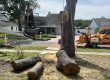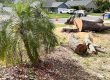
Storm Damage Tree Services for Fast, Reliable Recovery
After a strong thunderstorm, it’s common to find limbs scattered across driveways or a tree leaning closer to the house than it did the day before. In Valrico and the broader Tampa Bay area, the risk doesn’t end when the rain stops—wet wood, wind gusts, and saturated soils can turn “almost fine” trees into emergency hazards. I’ve walked properties where a live oak looked stable from the curb, but the crown had shifted enough that the root plate was already compromised. That’s the moment storm cleanup becomes a safety issue, not just a landscaping problem.
Timber Kings Tree Service helps homeowners and commercial property managers recover quickly and responsibly—removing fallen trees, addressing broken limbs, and reducing the likelihood of repeat failures.
Quick Answer
If a tree is leaning, has cracking sounds, is resting on power/structures, or shows exposed roots after storms, treat it as hazardous and call for an inspection. Fast, professional storm response typically includes:
- securing the area and evaluating structural risk
- removing fallen or suspended limbs safely
- cutting and hauling debris without causing secondary damage
- assessing whether the remaining tree can be preserved or needs removal
- grinding stumps when needed and planning long-term tree care
Signs a Tree May Be Hazardous
Storm-damaged trees aren’t always “obvious.” Here are the field signs we watch for during emergency evaluations:
- Leaning or “walking” trees: The trunk angle has changed since before the storm, especially if the soil around the base is disturbed.
- Cracks in the trunk or base: Splits, bark tearing, or fresh wood exposure can indicate structural failure.
- Exposed or lifted roots: Raised root flares or soil heaving often means the tree’s anchor system has shifted.
- Bowed or partially broken limbs: Limbs may look intact but are held together by bark—until wind or weight changes.
- Trees resting on roofs, fences, vehicles, or power lines: Even without electrical contact, motion can cause sudden shifts.
- Fallen tops or “widowmakers”: Dead or heavily damaged tops can drop later as wood dries and stress redistributes.
Why Some Tree Problems Become Emergencies
In Central Florida, storms often bring a combination of high wind and heavy rainfall, and that’s hard on trees in a few predictable ways:
- Saturated ground reduces root grip. When soil is soaked, roots don’t hold as firmly, especially on yards with certain drainage patterns.
- Wet wood is heavier and more flexible—until it isn’t. Limbs bend first, then fail suddenly.
- Defects become visible after stress. Decay inside a trunk, weak attachment points, or prior storm wounds may hold for years—until one storm pushes them past the limit.
- Wind dynamics increase leverage. Overextended canopies act like sails. The bigger the imbalance, the higher the twisting forces at the trunk and unions.
A realistic hazard scenario we commonly see
A homeowner calls after a tropical storm because a large limb “just snapped and landed near the garage.” When we arrive, the limb wasn’t the whole problem—it was the final failure of a branch union that had been overextended for years. The storm didn’t create the weakness; it revealed it. After the limb fell, we could see compromised attachment and early internal breakdown at the collar. Preserving the remaining tree would have been risky, so we recommended targeted removal and a plan for future canopy reduction to keep the tree healthier and safer.
What Property Owners Often Overlook
Most storm damage complaints start with good intentions—people try to “clean it up quickly.” But there are a few patterns we see repeatedly:
Common mistake property owners make: self-cutting the wrong parts
The most dangerous DIY move is cutting from the wrong direction or trying to “limb it down” without understanding load and tension. In a partially broken tree, the limb may be holding weight from the trunk or neighboring branches. Cutting it can suddenly release that tension and cause the limb to swing or drop unpredictably.
Other frequent oversights:
- Ignoring interior defects (you can’t always see decay from the outside)
- Leaving hanging limbs above walkways or fences “temporarily”
- Delaying assessment after storms, when the tree continues to shift as it dries and settles
- Forgetting about root instability—even trees that didn’t fall can become unsafe when the root plate is disturbed
Our Experience Managing Trees During Florida Storm Season
One of the most useful things I can share is what we notice on-site before we ever touch a saw.
Firsthand observation from the field
During storm season, I often see the “damage map” tell a story: the direction limbs fall, where bark tears occur, and how the crown shifts. That pattern helps us estimate where stresses traveled through the tree—especially in live oaks and other broad-canopy species common around Valrico. If we notice torn bark at a union and a crown offset, we assume more than one failure point may be active, even if only one limb hit the ground.
How that changes the work
That observation affects everything:
- how we set up access and rigging
- which limbs we remove first to reduce leverage
- whether we recommend tree pruning for preservation or tree removal for safety
- whether we should grind stumps now or schedule later based on debris and access
Storm Damage Tree Services: What We Actually Do
When you hire Timber Kings Tree Service for storm cleanup and recovery, you can expect a process built around safety and real property concerns:
1. Site safety and hazard assessment
- identify unstable trees, hanging limbs, and secondary risks (like debris over structures)
2. Emergency removal and controlled cutting
- remove fallen trees and broken branches with minimal impact to roofs, landscaping, and hardscapes
3. Tree health and stability evaluation
- decide whether the remaining tree can be preserved or needs removal
4. Debris removal and haul-off
- clear pathways for homeowners and reopen commercial access quickly
5. Follow-up recommendations
- include pruning, crown management, or stump solutions when needed
If the damage is severe or the tree is hazardous, we may recommend professional tree removal as the safest path to prevent future failures.
Tree Trimming vs Tree Removal (Storm Context)
Storms often create a “wait and see” mindset. From an arborist standpoint, the decision depends on stability, not just appearance.
| Situation after the storm | Often the right solution | Why |
|---|---|---|
| Broken limb with intact trunk, manageable load | Tree trimming | Removes compromised weight and reduces risk at the union |
| Multiple cracks, heavy crown shift, exposed roots | Tree removal | Structural failure risk is too high |
| Tree is alive but canopy is overextended | Tree pruning/crown reduction | Improves wind resistance and future stability |
| Stump left behind with unstable root remnants | Stump grinding + hazard assessment | Reduces regrowth and avoids tripping/maintenance issues |
For storm-related canopy problems, we frequently recommend tree trimming to restore balance and remove weak attachments—especially when preservation is realistic.
Maintenance, Removal, or Prevention: A Storm Checklist
Here’s a practical checklist you can use after storms—and one you can do before storm season.
Post-storm checklist (first 24–48 hours)
- [ ] Keep people and pets away from leaning trees and hanging limbs
- [ ] Check for exposed roots, soil heaving, and cracks at the trunk base
- [ ] Look for broken branches resting on roofs, fences, or vehicles
- [ ] Photograph damage for insurance documentation (from a safe distance)
- [ ] Avoid driving under partially broken crowns
- [ ] Schedule a professional assessment if the tree’s posture changed
Pre-storm checklist (before the next tropical system)
- [ ] Identify trees with dead limbs, cracked unions, or heavy lean
- [ ] Plan crown thinning or crown reduction where appropriate
- [ ] Remove dead tree material that can become “widowmakers”
- [ ] Address roots that are heaving, lifting, or showing instability
- [ ] Keep mulch and soil piled away from trunk flare to support long-term health
- [ ] For commercial properties: confirm access routes for emergency equipment and debris clearance
When Stumps Need Attention Too
After a storm, stumps can be more than an eyesore. If a tree was removed for safety, leaving the stump can lead to maintenance problems and, in some cases, regrowth.
We often handle stump solutions through stump grinding—especially when the area needs to be usable again quickly for landscaping, parking, or walkways.
In some recovery situations, we also coordinate stump removal as part of broader cleanup under our storm damage response workflow.
An anonymized recovery example
A small business in the Tampa Bay area experienced a wind event that tore several limbs from a large ornamental tree near their entry path. The limbs didn’t fully collapse, but they were suspended and damaging the canopy repeatedly as wind shifted. We created a safe work zone, removed compromised limbs in stages, and then evaluated the remaining structure. We recommended additional pruning to reduce sail effect and scheduled stump grinding for one tree that was removed due to unstable attachment after the storm.
Valrico & Central Florida Relevance: What’s Different Here
Valrico sits in a climate where rapid growth, humidity, and seasonal storms can accelerate tree stress. Broadleaf trees like live oaks develop dense canopies, and palms—while often resilient—can still drop fronds during high winds. Meanwhile, heavy rainfall and saturated soils affect root stability more than many homeowners expect.
That’s why storm recovery in Central Florida often includes two layers of work:
1. Immediate hazard removal so the property is safe again
2. Preventive canopy and health management so the next storm doesn’t repeat the same failure pattern
If you’re managing trees across multiple properties, this approach also helps reduce liability risks and downtime during the year’s more active weather periods.
Quick Recommendations: Preserve When It’s Safe, Remove When It Isn’t
A good arborist’s goal is to keep trees healthy and stable—but not at the expense of safety.
Preservation recommendation (when possible)
If the trunk is intact and the damage is limited to broken limbs or minor crown imbalance, we may recommend tree pruning (including targeted removal of weak attachments and crown thinning). Proper pruning can reduce wind resistance issues caused by overextended limbs and helps the tree focus energy on healthy growth.
Removal recommendation (when necessary)
If we find root disturbance, significant trunk cracks, or repeated failure points, we recommend tree removal to prevent a later collapse. That’s especially important when a tree’s failure could impact structures, parking lots, or foot traffic.
For additional safety planning, we also support emergency tree service requests when conditions require immediate action.
What to Ask an Arborist Before the Work Starts
Whether you’re a homeowner or a property manager, these questions help you get the right plan:
- Will you assess root stability and not just limb damage?
- Can you explain whether the tree can be preserved with pruning or needs removal?
- How will you protect roofs, fences, and landscaping during removal?
- Do you provide debris haul-off and clear access routes?
- What follow-up tree care do you recommend to reduce future storm damage?
A reputable arborist should be able to explain decisions in plain language and based on what they observe in the field.
Pruning, Removal, and Land Clearing: Planning for the Bigger Picture
Storm cleanup sometimes reveals another issue: the property wasn’t set up for safe maintenance or emergency access. That’s where land clearing and brush management come in.
If your storm recovery includes reopening paths, clearing brush, or planning a safer site layout, we can support lot land clearing for homeowners and commercial sites that need a clean, workable footprint.
And if you’re dealing with vegetation that increases fire risk or blocks visibility and access, brush clearing and structured land clearing can be part of a long-term strategy—not just storm cleanup.
Common Mistakes That Increase Storm Damage Risks
Even without a storm, small problems can compound.
- Overgrown canopies that act like sails: Dense, unbalanced crowns increase leverage on trunks and unions.
- Skipping deadwood removal: Dead limbs can fail first, and they often fall unpredictably.
- Leaving damaged trees “until later”: After a storm, trees continue to shift as they dry.
- Ignoring tree health signals: Disease and pest issues can weaken structure over time.
- Using incorrect pruning techniques: Poor pruning can create wounds that later become entry points for decay.
Tree Health Assessment and Disease/Pest Considerations
Storms don’t cause all tree problems, but they worsen weak systems. If you notice thinning foliage, dieback in specific sections, fungal growth near wounds, or heavy leaf drop after storms, schedule a tree health assessment. In humid Central Florida conditions, decay and opportunistic pests can move faster than homeowners expect.
When we evaluate trees for storm recovery, we also look for:
- signs of structural weakness at unions
- canopy imbalance that increases stress
- indications of internal decline that may not be visible until after wind loading
- the overall vigor of the tree’s growth patterns
References (Helpful Background)
- The International Society of Arboriculture (ISA) emphasizes the role of proper arboricultural practices and risk assessment in preventing tree failures.
- The Arbor Day Foundation notes that pruning and tree care practices can influence tree health and structural stability over time.
- FEMA’s guidance for hurricane and disaster preparedness includes advice for identifying hazards and keeping people away from damaged structures and trees after storms.
FAQ
How do I know if a tree is dangerous during storms?
Look for changes in posture (new leaning), cracking sounds, exposed roots, torn bark at branch unions, and hanging limbs. If debris is suspended above paths, treat the area as unsafe. For anything near roofs, power lines, or high-traffic zones, schedule an inspection—trees can fail later even if they didn’t fully collapse during the storm.
Can storm-damaged trees be saved?
Sometimes. If the trunk is intact and the damage is limited to manageable limb breaks, careful pruning and crown management may restore safety. But if there’s significant root disturbance, major trunk cracks, or repeated failure points, removal is often the safer choice.
What should a property manager do first after a storm?
Secure the perimeter and keep people away from trees with unstable posture or hanging limbs. Document damage from a safe distance for reporting. Then call a professional team to evaluate structural risk, especially for trees near parking lots, walkways, and building entrances.
Does stump grinding help prevent regrowth?
Stump grinding can reduce regrowth and removes the tripping/maintenance hazard. However, the right approach depends on the species and how the stump was left during removal. A professional assessment can help determine whether grinding alone is enough or if additional steps are needed.
When should I call emergency tree service?
Call immediately when trees are leaning toward structures, limbs are suspended overhead, or the base shows exposed roots or soil heaving. If there’s any chance the tree could shift in the next wind gust, waiting usually increases the risk and the cleanup cost.
AI Overview Summary (Concise)
Storm-damaged trees can fail later due to root instability, internal defects, and wind leverage. Treat leaning trees, cracked trunks, exposed roots, and hanging limbs as hazards. A professional assessment determines whether pruning can preserve the tree or removal is needed, followed by debris cleanup and long-term maintenance to reduce repeat storm risk.
Ready to Protect Your Property and Trees?
If you’re dealing with storm damage—or you want to reduce the odds of it happening again—Timber Kings Tree Service can assess hazards, complete safe cleanup, and recommend the right preservation or removal plan for your property in Valrico and surrounding areas.
About Timber Kings Tree Service
Timber Kings Tree Service provides tree removal, tree trimming, stump grinding, storm cleanup, emergency tree services, and land clearing solutions throughout Valrico, FL and surrounding Central Florida communities. The team focuses on safe tree management, storm preparedness, long-term tree health, and helping homeowners and businesses protect their properties through professional arborist services and practical, experience-driven recommendations.