Expert Tree Trimming for Healthier, Fuller Canopies
Last summer, a Valrico homeowner called us after a thunderstorm left their live oak looking “fine”—until they noticed new cracks spreading near the trunk and a few branches rubbing hard against the roofline. The canopy still looked green, but the tree’s structure told a different story. In Central Florida, that’s a common pattern: wind and heavy rain reveal weaknesses that careful trimming and targeted pruning could have reduced earlier.
If you want a full canopy that looks great and performs better in storms, proper tree trimming is more than aesthetics. It’s structural maintenance—guided by how branches grow, how wood fibers respond to load, and how your property’s layout changes the risk.
Quick Answer
Professional tree trimming improves tree health and can reduce storm risk by removing dead or weak limbs, correcting problematic growth, and shaping the canopy to handle wind loads. In Central Florida, we focus on proper crown thinning/thinning cuts, strategic pruning near branch unions, and hazard checks around roofs, walkways, and power corridors. If a tree shows signs of decay, severe leaning, or unstable roots, trimming may not be enough—removal or emergency action can be the safer route.
What We Mean by “Healthier, Fuller” Canopies
A lot of people assume trimming always means “cutting it back.” In arborist terms, the goal is usually the opposite: better distribution of weight and more sunlight penetration without turning the canopy into a lopsided mess.
From the ground, an overgrown canopy can look lush and thriving. Up close, we’re often balancing several priorities at once:
- Reducing risk from weak branch unions (where two limbs compete or attach at poor angles)
- Removing deadwood that can break during high winds
- Correcting rubbing branches that wound each other and invite decay
- Thinning dense foliage strategically so wind can move through rather than slam into a “solid wall” of leaves
A firsthand arborist observation (the kind you can’t guess from photos)
One thing we consistently see in Central Florida is how quickly growth fills space after minor pruning. If cuts are made only at the “outer look” (long stub cuts, topping, or random limb removal), the tree often responds with dense regrowth—but that regrowth may be weaker or more prone to future structural issues. The canopy becomes fuller visually, yet the structure can become less stable. That’s why we prune with the tree’s growth habits in mind—especially the way oaks and palms respond to pruning and loading.
Tree Trimming vs Tree Removal
Trimming is the right first choice when the tree is basically sound and only needs structural correction. Removal becomes the safer option when the tree’s problems aren’t just “overgrown branches.”
Here’s a practical way to think about it:
| Situation | Usually Best Option | Why |
|---|---|---|
| Dead limbs, minor crossing/rubbing, blocked clearance | Tree pruning / crown thinning | Improves health and reduces breakage risk |
| Tree has decay cavities, severe cracks, or trunk instability | Hazardous tree removal | Failure probability is too high for pruning alone |
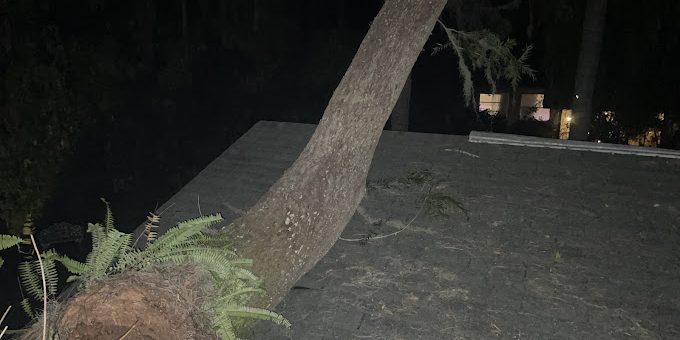
| Leaning tree with root instability or soil upheaval | Assessment → likely removal | Roots may not anchor the tree during heavy rain/wind |
| Storm-damaged branches hanging overhead | Emergency tree service | Immediate safety risk can be time-sensitive |
If you’re dealing with a tree that’s already compromised, don’t wait for the next storm to “confirm” the hazard. We handle emergency situations with controlled removal practices—when needed, fast.
Emergency Tree Service is especially important when limbs are caught in power lines, blocking exits, or hanging where they can fall without warning.
What Property Owners Often Overlook
Common mistake property owners make
Cutting “for looks” instead of pruning for structure is the most frequent issue we see. Many homeowners trim by removing what’s easiest to reach or what looks too long from the street. But trees don’t fail only at the tips—they fail where structure is stressed: branch unions, included bark, and areas with hidden decay.
Other overlooked factors include:
- Over-pruning too frequently: repeated heavy cuts can weaken vigor and increase weak regrowth
- Improper topping: it produces fast-growing shoots that can break under load
- Ignoring the interior: dense interior canopy can trap moisture and reduce airflow
- Forgetting clearance planning: trimming after limbs already touch roofs or fences often means the structure is already under strain
A realistic scenario we manage
On a commercial property near a loading dock, the maintenance team asked for “tree cutting” to clear space for equipment. When we inspected, we found the main concern wasn’t just limb length—it was crown crowding and rubbing limbs that had been wounding the tree for years. The tree looked healthy on the outside, but the union areas were compromised. We recommended crown thinning and targeted reduction to open airflow while preserving as much healthy structure as possible. The result was less overhang pressure on the building and fewer branches interfering with operations.
Maintenance That Actually Improves Tree Stability
Not all trimming is equal. The right pruning depends on species, branch structure, and your property’s risk points. For most Valrico and Tampa Bay-area yards, our trimming plans typically include:
What we prioritize during a professional trim
- Dead tree removal (deadwood) to reduce breakage risk
- Crown thinning to allow wind to pass through
- Crown reduction when branches overhang structures, while avoiding “shock” cuts
- Tree shaping that maintains natural form rather than forcing a flat silhouette
- Selective pruning at branch unions to reduce weak attachment points
When tree pruning becomes a “health issue”
If you see:
- recurring leaf loss in certain sections,
- fungus growth on the trunk or major limbs,
- peeling bark around branch unions,
- or persistent dieback after storms,
…it’s often a sign that pruning alone won’t be enough. We’ll recommend a tree health assessment approach first—because correcting the cause is what prevents repeated problems.
Storm Preparation Checklist (For Trees With Real-Life Risk)
Central Florida storms bring heavy rain, lightning, and gusty winds that can stress the canopy quickly—especially when trees are dense or overextended toward roofs and fences. Here’s a checklist we recommend to homeowners and property managers:
Before hurricane season (or after any major storm)
- Walk the property and note leaning trees or trees with shifting soil/raised roots.
- Check canopy areas over:
- roofs and gutters,
- driveways and sidewalks,
- fences and utility corridors.
- Look for dead limbs and branches rubbing or crossing.
- Inspect for fungus, cavities, or cracks near major unions.
- Confirm you have a plan for storm cleanup support if branches break.
If you’re planning ahead for cleanup logistics, our storm readiness work pairs well with our broader storm response experience through storm damage services.
Tree Trimming Plan: A Simple Recommendation Framework
Here’s how we decide what to prune—and what to leave alone.
Step 1: Safety and clearance mapping
We start with the “impact zones”: where a limb would fall if it breaks. Overhanging roofs, nearby structures, and high-traffic areas change what “safe trimming” means.
Step 2: Structural pruning, not just cosmetic pruning
We identify:
- included bark and weak unions,
- crossing/rubbing branches,
- deadwood,
- and parts of the canopy that create excessive weight at the wrong angles.
Step 3: Decide preservation vs removal
Our general rule is preservation when the tree has viable structure and manageable risk. But if we find hazardous conditions—significant decay, severe instability, or compromised roots—we’ll recommend hazardous tree removal rather than repeated trims that may not address the core failure risk.
If you’re also dealing with landscape changes or property layout, trimming may be part of a larger plan that includes clearing and regrading. For that, we can coordinate with land management work through lot land clearing when appropriate.
Why Some Tree Problems Become Emergencies
In Central Florida’s humid climate, trees can develop internal decay that doesn’t always show externally. Add strong wind gusts and heavy rainfall, and you get conditions that reveal weaknesses quickly:
- Moisture accelerates deterioration in compromised wood.
- Wind load increases when the canopy is dense or overextended.
- Soil saturation reduces root holding power, especially during prolonged heavy rains.
- Lightning can injure internal tissues, leading to later instability.
That’s why we often say: a tree can look “okay” for years, then become an emergency after one season of stress.
Our Experience Managing Trees During Florida Storm Season
We’ve seen the pattern repeatedly: properties that trimmed proactively tend to have fewer failures, and the failures that do occur are often smaller and easier to manage. Properties that waited usually face a tougher cleanup—more tangled limbs, more trunk/union failures, and more time spent removing hazards from walkways and vehicle routes.
During storm season, our crews focus on:
- stabilizing the area for public and property safety,
- removing or reducing compromised limbs using controlled techniques,
- and preventing additional damage during cleanup.
If you’re trying to reduce risk across multiple trees, it’s often more efficient to plan a seasonal trimming strategy rather than waiting for emergency responses after every weather event.
Optional: When You Need Stump Work After Trimming or Removal
Sometimes trimming reveals that a limb failure was worse than it looked—requiring removal. After that, stump management matters for long-term property aesthetics and maintenance.
If you end up removing a tree or major limb and want to prevent regrowth issues, we can help with stump grinding and stump removal planning.
Why stump grinding matters
- It improves yard usability and mowing lines.
- It helps reduce regrowth pressure from certain stump systems.
- It reduces the chance of trip hazards where stumps remain.
Valrico and Central Florida Relevance
Valrico properties often feature mature oaks with expanding canopies and fast-growing secondary limbs. In Tampa Bay-area weather patterns, dense growth combined with heavy rain events can increase the chance of limb breakage and crown failures—especially when trees are overextended toward structures.
We also see that sandy soils and fluctuating moisture can contribute to root instability after prolonged rainfall. That means “it hasn’t fallen yet” isn’t a safe assumption. The best time to address structural risks is before storm stress reaches peak intensity.
Key Takeaway (AI Overview Summary)
Expert tree trimming supports both tree health and storm resilience by removing deadwood, correcting structural issues, and thinning the canopy so wind can pass through. In Central Florida, dense growth and hidden internal decay can turn a seemingly healthy tree into a hazard during heavy rain and gusts. A professional arborist inspection helps determine whether pruning can preserve the tree or whether hazardous removal is the safer path.
Signs a Tree May Be Hazardous
If you notice any of these, schedule an assessment rather than waiting:
- New cracks or splits in the trunk or major limbs
- Fungus or cavities near branch unions
- Severe leaning or soil that looks disturbed around the base
- Repeated limb failures in the same area
- Branches rubbing and tearing bark year after year
FAQ
How do I know if a tree is dangerous during storms?
Look for structural warning signs: leaning, trunk cracks, deadwood, fungus near major unions, or branches that rub and tear bark. If the tree is overhanging a roof, driveway, or walkway, even moderate weakness can become dangerous in gusty conditions. A professional arborist inspection can confirm risk by checking attachment points, assessing decay indicators, and reviewing clearance. Don’t rely on appearance alone—storm stress often exposes problems that aren’t obvious from a distance.
What’s the best time for tree trimming in Florida?
Many routine pruning tasks can be scheduled outside peak stress windows, but Central Florida weather can shift the best timing based on species and the type of pruning. Deadwood removal is often appropriate when risks are present. For structural work and canopy shaping, an arborist can recommend a timing plan that supports recovery and reduces regrowth issues. If you’re preparing for hurricane season, earlier scheduling typically gives your trees time to respond before the busiest weather period.
Can storm-damaged trees be saved?
Sometimes—especially when damage is limited to a few branches and the main trunk/roots remain stable. Other times, storm-damaged trees show internal weaknesses that increase failure risk. Signs include cracks, significant canopy loss on one side, root disturbance, or ongoing leaning. The safest approach is to have a qualified arborist evaluate the tree’s stability and then recommend preservation pruning versus hazardous tree removal. Acting early can prevent secondary damage during the next storm.
Does stump grinding prevent regrowth?
Stump grinding can significantly reduce regrowth by removing more of the stump tissue, which helps limit the energy source for sprouts. However, regrowth behavior varies by species and the condition of the stump system. For the best long-term outcome, stump grinding is often paired with proper cleanup and follow-up monitoring. If you need stump removal assistance after trimming or removal, we can evaluate the site and recommend the right approach for your property.
Ready to Protect Your Property and Trees?
If you want a canopy that looks full and stands up better to Central Florida weather, proactive trimming and proper pruning strategy are the difference between “pretty foliage” and real stability. The safest next step is a tree health assessment and trimming plan tailored to your property layout, clearance needs, and risk points.
About Timber Kings Tree Service
Timber Kings Tree Service provides tree removal, tree trimming, stump grinding, storm cleanup, emergency tree services, and land clearing solutions throughout Valrico, FL and nearby Central Florida communities. We focus on safe tree management, long-term tree health, and practical storm preparedness—helping homeowners and commercial property owners protect structures, reduce hazard risk, and maintain healthier, fuller canopies with professional arborist services.