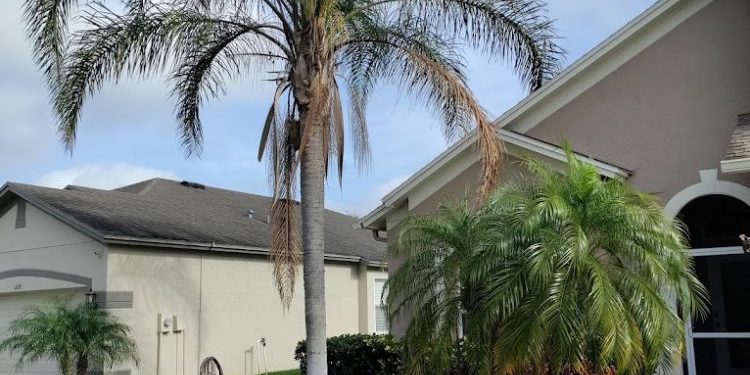
Emergency Tree Service for Nighttime Storm Emergencies
It’s usually the sound that wakes people up first—branches snapping, a low crack that turns into a thud, then silence. In Valrico and across Tampa Bay, nighttime storms can bring sudden wind gusts and heavy rain that make “looks fine in the daylight” trees fail in minutes. A tree may be leaning toward a roofline, a limb may be rubbing against power equipment, or a trunk might look healthy while the roots are already compromised. When that changes after dark, the safest move is not cleanup—it’s getting hazards under control.
Timber Kings Tree Service handles emergency situations where speed, safety, and correct tree assessment matter just as much as the cleanup.
Quick Answer
If a tree is down, hanging, sparking, or blocking an exit—treat it like an emergency. Call utility services first if power lines are involved, and keep people away from the area. For storm-damaged trees that are not on power lines, the safest next step is a professional inspection before you touch anything. Emergency tree service crews can determine whether a tree should be removed immediately, stabilized, or cut in sections to reduce secondary damage.
What We Do in Nighttime Storm Emergencies (and Why It’s Different)
Night emergencies aren’t just “tree cutting after hours.” We’re managing active hazards while visibility is poor, roads are slick, and the tree may be shifting under load.
Here’s what we focus on during storm response:
- Immediate hazard control: We identify what’s actively moving (or likely to move) as wind and rain keep stressing the structure.
- Risk-based cutting: Instead of “pulling” or quick hacks, we plan cuts that reduce the chance of a second failure.
- Structural assessment under stress: A tree can appear intact while its canopy is overextended or its root system has lost stability. Storm loads reveal those weaknesses quickly.
- Property protection: We plan around roofs, fences, vehicles, and landscaping beds to prevent additional damage during removal.
A real-world scenario we commonly see
After a fast-moving evening thunderstorm, a homeowner in a Central Florida neighborhood calls because an oak canopy “looks fine” but a large limb is now hanging low near the driveway. Up close, the limb is cracked and under tension; in daylight you might try to prop it, but at night that tension can snap suddenly. In cases like this, we typically remove the limb in controlled sections and inspect the trunk for additional internal stress before deciding whether the rest of the tree can be preserved or should be taken down safely.
Signs a Tree May Be Hazardous (Even If It’s Not Fully Down Yet)
Storm damage doesn’t always mean a tree is on the ground. Many emergencies start with early warning signs that people miss until the next gust hits.
Look for these red flags:
- Leaning trunk that wasn’t there before, especially after heavy rain
- Cracks in the trunk or unions (where major branches attach)
- Bark peeling or exposed wood at branch collars
- Hanging limbs that look “stuck” but may be suspended under tension
- Mushrooming soil or a lifted root plate near the base
- Falling needles/leaves or sudden canopy dieback after wet weather (possible root stress)
- Sparking or contact with utility lines (treat as an immediate life-safety issue)
Common mistake property owners make
A lot of people assume that if a tree is still standing, it’s safe to wait until morning. In Central Florida, storms often bring rapid soil saturation and strong gusts. A tree with compromised roots can shift gradually—then fail when another wind cycle hits. Waiting can turn a manageable cut into a larger removal, or worse, a situation involving falling debris onto people or vehicles.
Storm Damage: What Actually Changes During Nighttime Weather
When rain saturates the soil, a tree’s stability can drop quickly. Then wind pushes the canopy like a lever. The most common storm-related failures we see are:
- Root instability: Roots lose grip in wet soil, especially where the ground has been disturbed or compacted.
- Overextended structure: Trees with thin, crowded pruning or long, heavy limbs develop higher wind resistance loads.
- Interior decay hidden from view: Decay doesn’t always show until a branch fails or a trunk splits under stress.
- Crown imbalance: When one side of the canopy is heavier, wind can twist the tree and increase the chance of trunk movement.
Emergency Tree Service vs. Regular Service: When to Call
If the situation is urgent, call emergency help. Here’s a straightforward rule of thumb:
Call emergency tree service immediately if:
- The tree is on or near power lines
- A tree is blocking a roadway, driveway, or emergency exit
- Parts are hanging overhead or showing active movement
- You see trunk cracking or a clear lean after storm impact
- There’s risk to structures (rooflines, porches, outbuildings)
If it’s minor debris removal only, you may still benefit from a quick assessment—because “just a branch” can expose a larger structural issue.
Maintenance, Removal, or Preservation: What We Recommend After an Emergency
A big question property owners ask is, “Can the tree be saved?” Sometimes yes—and sometimes the safest choice is removal.
Pruning vs. removal: how we decide
After storm damage, we evaluate:
- Where the break occurred (clean break vs. torn/fibrous separation)
- How much of the load path is compromised (branch only vs. trunk/union)
- Whether the tree’s remaining structure can be reduced safely
- Root or soil disturbance indicating instability
In many cases, we recommend tree trimming or crown reduction when:
- The damage is limited to a manageable limb section
- The trunk and unions are sound
- The tree can be reshaped to reduce future wind loading
In other cases, we recommend tree removal when:
- The trunk is cracked or compromised
- The tree shows root plate lift or persistent lean
- The remaining structure would be unsafe under the next storm cycle
If you’re dealing with storm aftermath and want to understand the options, you may also find helpful context in storm damage cleanup support.
Our firsthand arborist observation
One of the most telling signs we look for is the fibrous tearing pattern at the break. Clean breaks often indicate less internal compromise than “ragged” separations that suggest the load path has shifted. That detail helps guide whether we can preserve the tree with targeted pruning or whether removal is the safer route.
What Property Owners Should Do Tonight (Before Help Arrives)
If a storm hits after hours and you’re waiting for assistance:
- Stay away from the area. Don’t approach a hanging limb or a tree that’s still settling.
- Keep everyone inside if debris could fall.
- Avoid touching anything near power lines. Even “downed” lines can energize surrounding debris.
- Document from a safe distance (photos/videos) if you can do so safely—helpful for insurance and planning.
- Don’t try to cut or pull limbs yourself. Tension changes as wood shifts, and chainsaws in wet conditions are a major risk.
Maintenance & Storm Preparation Checklist (So Emergencies Are Less Likely)
Even in Central Florida’s fast-growing conditions, you can reduce risk with consistent care. Use this quick checklist:
Tree and yard prep checklist
- Inspect after storms: Check for new leaning, cracks, or hanging limbs.
- Look under the canopy: Watch for dead branches, excessive twig drop, or bark damage.
- Assess the base: Soil heaving, root plate lift, or exposed roots after rain are warning signs.
- Clear clearance paths: Trim limbs away from roofs, gutters, and fences so wind doesn’t load them.
- Plan crown shaping: Reduce heavy, one-sided canopy weight before hurricane season.
- Keep brush managed: Overgrowth increases wind resistance and blocks access for maintenance.
- Schedule professional evaluation: A certified arborist can catch problems that aren’t obvious from the curb.
For ongoing risk reduction, many homeowners schedule professional tree trimming services ahead of storm season rather than after damage occurs.
What We Commonly See in Florida Trees (and How It Impacts Storm Risk)
Central Florida’s climate supports rapid growth, but it also creates conditions where structural issues can build quickly:
- Dense canopies in oaks and ornamental trees can increase wind load if not thinned strategically.
- Humidity and wet conditions can stress trees and worsen certain decline patterns.
- Sandy soil and variable root anchorage mean some trees are more prone to movement after heavy rainfall.
- Ligament failure at branch unions becomes more likely when limbs are allowed to grow too long without corrective pruning.
This is why we don’t treat trimming as purely cosmetic. Done correctly, pruning can improve stability by managing weight distribution and reducing hazardous overreach.
If you’re dealing with a tree health concern that may be linked to decline or decay, a tree health assessment is often the right starting point—especially when something looks “off” but not fully broken yet.
A Simple Comparison: When Trimming Helps vs. When Removal Is the Safer Call
| Situation after a storm | Likely best action | Why |
|---|---|---|
| Broken limb with intact trunk and stable base | Targeted pruning/crown reduction | Reduces future wind loading without removing the whole tree |
| Cracked union or torn attachment at a major branch | Partial removal or removal | Structural compromise can’t be “trimmed away” safely |
| Persistent lean or lifted root plate | Tree removal | Root instability can lead to sudden failure |
| Tree blocking access or damaging structures | Emergency tree removal | Safety and property protection come first |
If the cleanup involves more than just cutting and you’re preparing for long-term site safety, we also offer tree removal solutions when removal is the responsible option.
Valrico and Central Florida Relevance: Why Timing and Technique Matter Here
In Valrico, storms don’t always arrive as “big hurricanes.” We often see the smaller, faster systems—tropical storms, heavy thunderstorms, and lightning-driven weather—that still bring damaging winds and sudden downpours. Trees respond quickly to these load changes, and nighttime visibility makes it harder for homeowners to judge what’s actually under tension.
We also see frequent roofline impacts and driveway blockages, especially where landscaping was allowed to grow close to structures. After dark, those branches can fall onto cars, garages, and fences—turning a cleanup job into a liability issue for homeowners and property managers.
That’s why our emergency response focuses on safe access, controlled cutting, and correct hazard assessment, not just clearing space.
Example Case (Anonymized): When Preservation Was Possible
After a late-evening storm, a small business property manager called because a live oak had a large limb down onto a parking area. The trunk remained upright, but the limb showed signs of tension cracking at the attachment point. We performed a section-by-section removal of the damaged limb and then evaluated the structural integrity of the remaining crown.
Instead of removing the entire tree, we recommended a crown reduction plan to rebalance weight and reduce future wind loading. We also flagged minor deadwood for removal during the next scheduled trim cycle. This approach restored safe access quickly while keeping the tree’s long-term value.
Ready to Protect Your Property and Trees?
Nighttime storm emergencies are stressful, and the instinct to “take care of it fast” is understandable. But safety comes first—especially when trees may be under tension, roots may be saturated, and power lines may be involved.
If you need emergency tree service in Valrico or the Tampa Bay area, Timber Kings Tree Service can assess damage quickly and help you make safe, practical decisions—whether that’s emergency removal, storm cleanup, or a preservation-based trimming plan.
About Timber Kings Tree Service
Timber Kings Tree Service provides tree removal, tree trimming, stump grinding, storm cleanup, emergency tree services, and land clearing solutions throughout Valrico, FL and nearby Central Florida communities. Our focus is safe tree management, storm preparedness, long-term tree health, and helping homeowners and commercial property owners protect people, structures, and landscape investment through responsible arborist services.
FAQ
How do I know if a tree is dangerous during storms?
If you notice new leaning, cracking sounds, hanging limbs, root plate lift, or debris that looks “stuck” under tension, treat it as hazardous. In Central Florida’s wet conditions, stability can change rapidly. When in doubt—especially at night—keep people away and call a professional to assess structural risk before anyone attempts cleanup.
Can storm-damaged trees be saved?
Sometimes. If the trunk and major unions are intact and the damage is limited to a limb or a manageable portion of the crown, a certified arborist may recommend pruning, crown reduction, or targeted removal of failed sections. If the tree shows root instability, trunk splitting, or compromised load paths, removal is often the safer long-term choice.
What should property managers do if a tree falls on a commercial site?
Document the scene from a safe distance, keep traffic and employees away, and coordinate with utilities if power lines are involved. Then schedule an inspection so the site can be cleared safely without creating additional risk. Emergency response often includes controlled cutting and debris management to restore access quickly.
Does stump grinding prevent regrowth?
Stump grinding helps eliminate the stump portion that can harbor regrowth and decay. It can reduce the likelihood of new sprouts, though regrowth depends on the species and the remaining root system. For full site restoration, we often pair grinding with the right follow-up plan for the surrounding landscape. You can explore options like stump grinding assistance when removal is complete.
When should I call for emergency tree service?
Call immediately if a tree is down, hanging overhead, blocking access, leaning toward structures, or interacting with power lines. Even if the damage seems “small,” nighttime storms can create tension that changes minute to minute. Getting help early reduces the chance of secondary failures and additional property damage.
Quick Note on References (for homeowners who want the science)
Tree failures during storms are strongly influenced by root anchorage, soil moisture, and wind load on the canopy—concepts widely discussed in arboriculture and urban forestry research. For general storm and hazard guidance, homeowners often reference materials from organizations such as the International Society of Arboriculture (ISA) and USDA Forest Service resources on tree risk and urban forestry practices.