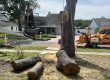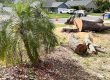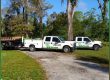
Storm Damage Tree Services: Debris Removal and Haul Away
After a heavy Central Florida storm, the first thing many homeowners notice isn’t the mess—it’s the lean. A live oak that looked upright yesterday may now be angled toward a roofline, and the branches that “just scraped the fence” can turn into a bigger structural problem once the ground stays saturated.
In Valrico, where thunderstorms and tropical systems can bring high winds and days of soaking rain, storm-damaged trees often fail in ways people don’t expect. Sometimes it’s a limb that breaks and lands where you can see it. Other times it’s the root plate shifting, creating a hazard that looks “mostly fine” until the next gust.
Timber Kings Tree Service helps property owners handle storm fallout safely—starting with hazard evaluation, then debris removal and haul away so your property can recover without creating new risks.
Quick Answer
If a tree is leaning, cracking, hanging in a way that suggests it could fall, or blocking access/utility lines, treat it as hazardous and contact an emergency-ready arborist. Professional storm cleanup typically includes: on-site risk assessment, safe tree cutting/removal if needed, limb and trunk debris hauling, and follow-up recommendations (like pruning, crown thinning, or stump grinding) to reduce future problems.
Signs a Tree May Be Hazardous
Not every storm-damaged tree needs removal—but most should be assessed. Common hazard indicators we look for include:
- Visible cracks in the trunk or at the base (especially near soil line)
- Leaning that started after the storm or sudden change in angle
- Rope-like tension in branches (limbs pulling against each other under stress)
- Root plate disturbance: soil heaving, exposed roots, or a “lifted” base
- “Hollow-sounding” wood or dead limb clusters within a live canopy
- Debris hanging overhead that could drop during cleanup or the next weather event
- Trees contacting power lines (never attempt DIY—this is an emergency)
What We Commonly See in Florida Trees
From an arborist’s perspective, Central Florida storms expose predictable weaknesses:
Overextended canopies create bigger wind “sail area”
Many oaks and other broad-canopied trees grow quickly here, and homeowners often wait too long between pruning cycles. A thicker, fuller crown can catch wind and increase the force on limbs and joints—especially when the tree’s internal structure has decay or weak branch unions.
Saturated soil reduces anchoring
After days of heavy rain, the root-soil matrix becomes less stable. When that happens, trees can fail not only because they’re “weak,” but because the ground can’t hold them the way it could during dry months.
Storms reveal hidden defects
Lightning strikes, interior decay, and deadwood are sometimes invisible until high winds or limb loading exposes them. A tree may look alive and green while still having compromised structure.
Palms and mixed landscapes add complexity
Some properties include palms, multiple trunks, and ornamental plantings near structures. Cleanup often requires careful staging so crews can remove debris without damaging landscaping beds, driveways, or nearby fencing.
Why Some Tree Problems Become Emergencies
Here’s a real-world scenario we’ve encountered in the Tampa Bay area (anonymized for privacy):
A commercial property manager called after a storm because a large limb had fallen near an entrance walkway. At first, the tree looked stable from the sidewalk, and the team considered waiting. But when we evaluated from ground level, we found the limb had shifted internal tension—meaning other branches above it were now loaded differently. During removal of the fallen section, additional cracks appeared in the trunk—confirming the tree was unstable beyond what was visible at first glance.
That’s the pattern: storm damage isn’t always isolated to the piece that hit the ground. The loading changes, the balance shifts, and what seemed manageable becomes a liability.
Firsthand arborist observation
During assessments after storms, one of the most telling checks is how the tree behaves when we examine the base and crown together. If the crown shows abnormal movement or the base shows soil separation, you’re often dealing with root plate displacement or a structural failure that’s already in progress—even if the tree hasn’t fully fallen yet.
Tree Trimming vs Tree Removal
Some property owners want the simplest answer—“Can it be trimmed?”—but storm damage determines the correct option.
When trimming can help
Trimming (and targeted pruning) may be appropriate when:
- limbs are broken but the trunk and base remain stable
- the tree has minor storm wounds with no major structural shift
- dead or hanging branches pose a risk, but the overall structure is sound
When removal is safer
Removal is often the safer choice when:
- the tree is leaning or showing base/root instability
- cracks run through the trunk
- there’s significant crown imbalance after a failure
- the tree is too close to structures, vehicles, or access routes and cannot be reduced safely
In many cases, our recommendation combines both: remove the hazardous portion now, then perform follow-up pruning on remaining structure to improve long-term stability.
For additional guidance on tree health and safety decisions, see our storm-focused service approach here: storm damage services.
Common Mistakes That Increase Storm Damage Risks
Storm cleanup is only half the story. The other half is what property owners do (or don’t do) before the next storm.
Mistake: “It looks fine, so it must be stable”
Many failures begin at the base or within the trunk. If you only check from the street or from ground-level sightlines, you may miss early indicators like cracks, soil separation, or deadwood.
Mistake: Delaying cleanup because you’re waiting for “the right time”
After storms, debris can block drainage paths and create additional hazards. Also, hanging limbs can drop during cleanup attempts or later weather.
Mistake: DIY cutting without planning
Cutting a limb without proper rigging can worsen the damage, pinch the saw, or cause additional splits. It can also create liability if debris strikes a structure or person.
Mistake: Ignoring stump and root issues
Even if you remove the visible trunk, remaining stumps and disturbed roots can create long-term instability, trip hazards, and regrowth. Proper follow-through matters.
Maintenance, Removal, or Prevention Checklist
Use this checklist during recovery and before the next storm cycle.
Storm cleanup checklist (property owners & managers)
- Clear access routes first (driveways, sidewalks, emergency exits)
- Do not move unstable debris near leaning trees—mark the area instead
- Check the base: look for heaving soil, exposed roots, or new gaps at the foundation line
- Inspect the crown for hanging limbs, deadwood clusters, and cracks
- Document hazards for insurance records if appropriate (photos from safe distances)
- Address hanging debris overhead before it breaks again
- Plan haul away so debris doesn’t sit and reintroduce risk
Prevention checklist (what reduces future storm risk)
- Schedule periodic tree pruning and thinning to reduce wind load
- Remove dead tree limbs and hazardous growth during safe weather windows
- Keep mulch and soil from piling against trunks (helps reduce decay risk)
- Consider stump grinding after removal so you reduce regrowth and eliminate trip hazards
- For larger properties, plan for consistent canopy management rather than “emergency-only” responses
If your goal is long-term canopy control, our pruning services are designed around structure and safety: professional tree trimming services.
Our Experience Managing Trees During Florida Storm Season
Storm work is different from routine maintenance. It requires a workflow that prioritizes safety for homeowners, crews, and the property itself.
At Timber Kings Tree Service, our process typically looks like this:
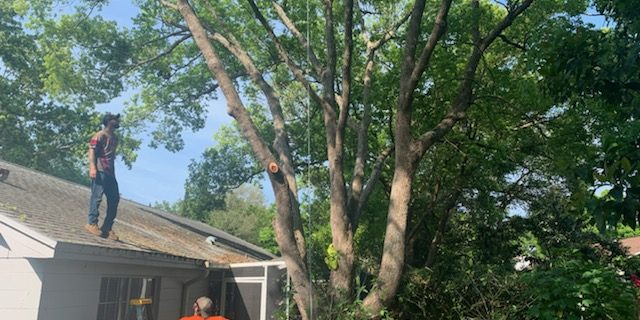
1. On-site assessment and hazard zoning
We identify what can be approached safely and what requires distance, staging, or utility coordination.
2. Structural evaluation (base + crown)
We look for root plate movement indicators, trunk cracks, and how the crown has shifted after wind or impact.
3. Debris strategy and haul away planning
Cleanup isn’t just “cut and drag.” We stage debris for efficient removal, minimize landscape damage, and keep your property accessible.
4. Follow-up recommendations
When appropriate, we suggest preservation steps—like crown reduction, crown thinning, or targeted pruning—so you’re not repeating the same cleanup cycle every season.
A Simple Example: When Debris Removal Isn’t the Whole Job
After a tropical storm, one residential property in the Tampa Bay region had multiple limbs down in the backyard. The homeowners were able to clear some branches themselves, but the main issue was a partially split limb still attached higher in the canopy.
We removed the hazardous section with proper rigging, then recommended follow-up pruning to reduce crown imbalance. Finally, we addressed the remaining stump hazard with grinding to improve safety and prevent regrowth in that zone.
The result wasn’t just a cleaner yard—it was fewer “surprise” risks during the next period of windy weather.
If you’re dealing with a stump left behind from storm cutting or previous removal, you may want to review stump grinding assistance for a safer, smoother landscape.
What Property Owners Often Overlook
Many homeowners focus on the tree that fell. But the bigger liability can be the tree that didn’t, yet.
Common oversight: root instability that isn’t obvious
Root plate displacement often shows up as subtle soil changes—like a new slope near the base, slight separation around the trunk, or roots exposed after runoff. These signs can be easy to miss until wind loads increase again.
Common oversight: “healthy leaves” doesn’t equal “healthy structure”
A tree can leaf out and still have internal defects, weak unions, or decay pockets. Storms force those weaknesses to show themselves, sometimes quickly.
Common oversight: debris can create new hazards
Branches can block drainage, damage fences, or become trip hazards. Even small debris can be a problem if it sits in walkways or underfoot.
Tree Health Assessment and Preservation Recommendation
When storm damage is localized, preservation may be possible. A good assessment looks at:
- how the tree responds after the storm (stability indicators)
- the location and size of structural wounds
- the distribution of deadwood and weak limb unions
- whether selective pruning can restore balance and reduce wind loading
A typical preservation recommendation we make in Central Florida is crown thinning or crown reduction rather than “heavy cutting.” The goal is to reduce stress and improve airflow while maintaining enough structure for the tree’s long-term health. That balance matters for both aesthetics and safety.
Valrico and Central Florida Relevance: Why Timing and Technique Matter
In Valrico, storm season isn’t a once-a-year event—storms and heavy rain cycles can repeat. If cleanup is delayed, saturated ground and ongoing wind can turn a borderline hazard into a full failure.
Also, Central Florida’s fast-growing tree canopy means that pruning intervals matter. A tree that’s overdue for structure-based trimming may survive minor storms but become vulnerable when winds increase and the soil stays wet.
Our approach is built for that reality: assess, stabilize where possible, remove hazards safely, and recommend follow-up care so you’re not starting over after every weather event.
References (for homeowners who want the science behind the safety)
- The International Society of Arboriculture (ISA) explains how proper arboricultural practices support tree stability and risk management.
- FEMA provides general guidance on disaster debris management and safety considerations after storms.
- Research and guidance from arboriculture organizations emphasize that tree failure risk often relates to structural defects, root stability, and improper pruning practices—not just visible deadwood.
Ready to Protect Your Property and Trees?
If you’ve got storm debris, a leaning tree, or branches hanging after high winds, don’t guess. A quick, professional assessment can prevent secondary failures, reduce property damage, and speed up your recovery.
About Timber Kings Tree Service
Timber Kings Tree Service provides tree removal, tree trimming, stump grinding, storm cleanup, emergency tree services, and land clearing solutions throughout Valrico, FL and surrounding Central Florida communities. We focus on safe tree management, storm preparation, long-term tree health, and helping homeowners and businesses protect their property through professional arborist services and practical, risk-based recommendations.