When to Call Emergency Tree Service for Limb Hazards
A storm hits, a neighbor’s branch cracks, or you notice a tree limb that looks “off.” This guide helps you recognize limb hazards, decide what you can do right now, and know when it is time to call a professional tree team in Valrico, TX and surrounding areas.
Your front yard can look normal right up until the moment a limb shifts, starts rubbing against a roofline, or you see fresh cracks after wind. In Valrico, TX, that can happen fast during storm season, especially with mature trees near driveways, fences, and overhead lines.
If a limb is hanging, leaning, or covered in stress marks, the real concern is not just the tree. It is the risk to people, vehicles, and structures. This guide will help you understand what limb hazards look like, how to do a quick safety check from the ground, and when to request emergency tree service from Timber Kings Tree Service.
- Quick answer
- What to check first
- Main things customers should understand
- Why this matters in Valrico, TX
- Common mistakes to avoid
- Customer checklist
- Frequently asked questions

Quick Answer
If a limb is cracked, hanging, rubbing, or has shifted after wind or storms, treat it as a hazard and call emergency tree service. In general, you should seek help sooner when the limb is over a house, garage, driveway, walkway, fence line, or any place people walk or park. Also call right away if you notice signs of severe instability like a trunk that is leaning more than usual, bark splitting, or branches that are visibly separated. For safety, keep people away and avoid attempting to cut it yourself.
What to Check First
Start with a calm, ground-level safety scan. Walk the perimeter at a distance and look for obvious instability without going underneath the limb. If you can see fresh breakage, a branch is suspended, or the limb is contacting a structure, you already have enough information to escalate the situation.
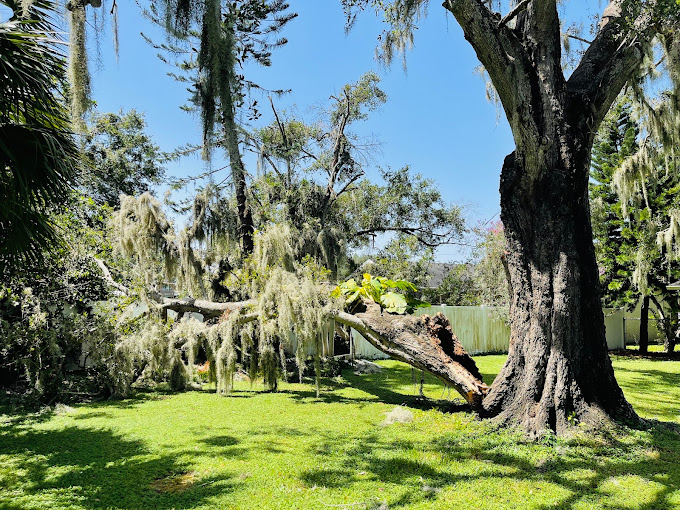
Professional observation: Limb hazards often “look small” from the yard, but the danger is in what you cannot see from the ground, like internal rot, weakened attachment points, and stress fractures after wind load.
Here are practical things to check first, without putting yourself under the hazard:
- Position changes: Compare what you saw before. A new lean or a limb that is hanging lower than yesterday is a red flag.
- Cracks and separation: Look for bark splitting, exposed wood, or gaps where the branch meets the trunk.
- Contact points: If the limb is touching the roof, power equipment, gutters, or fencing, it can fail further as it shifts.
- Movement: If you see sway in wind, hear cracking, or notice fresh debris, it may be actively unstable.
- Under-area risk: If anything is directly over a driveway, walkway, or patio, reduce access until a professional assesses it.
Main Things Customers Should Understand
Emergency limb hazards are not only about “broken branches.” The goal is to prevent a secondary failure, where one compromised limb triggers additional damage to nearby limbs, the trunk, or attached structures. In Valrico, TX, trees frequently face sudden wind gusts and rapid weather shifts, which can expose weaknesses that were not obvious during calm conditions.
Hanging or suspended limbs
Branches that are partially broken can settle further, especially as wind and gravity continue to load the remaining connection points.
Rubbing, twisting, or “caught” limbs
If a limb is wedged against another branch or a structure, it can keep working loose over time. Pressure points can also damage bark and create new weak spots.
Dead tree removal risk signals
Dead or dying limbs can shed suddenly. If you see brittle twigs, peeling bark, or large dead sections, plan for hazardous tree removal rather than waiting.
| What you notice | Why it matters | What to do next |
|---|---|---|
| Fresh cracks, split bark, or exposed wood at the trunk or branch union | Damage can be internal as well. The remaining fibers may fail with the next wind gust. | Keep people away and call emergency tree service for a hazard assessment. |
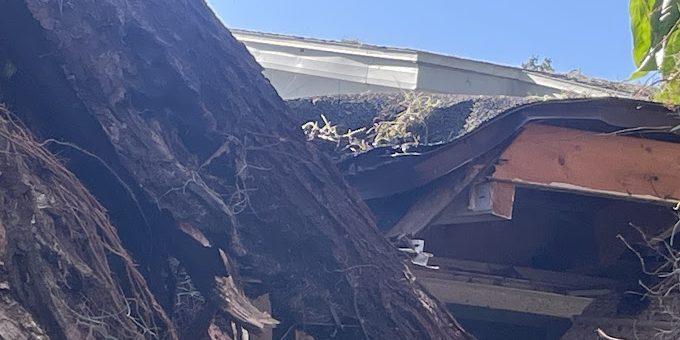
| A limb is hanging over a roof, garage, or driveway | Even partial failure can cause property damage and create sharp debris. | Request immediate professional evaluation and safe removal planning. |
| Trunk lean that increased after storms | Leaning can indicate root or structural instability, not just a branch issue. | Do not attempt DIY cutting. Get a professional on-site assessment. |
| Branches contacting power lines or power equipment | These situations require strict safety protocols. | Contact the right emergency authority and keep distance until professionals confirm safe next steps. |
| Multiple limbs damaged across the canopy | Secondary failures are more likely when the tree has widespread stress. | Schedule storm-damage evaluation and removal as needed. |
Why this matters in Valrico, TX
In Valrico, TX, many properties have established shade trees close to homes, driveways, and landscaping. When wind events create limb fractures, the most common challenge is that the “safe-looking” branches are not always the ones that will fail next. A professional tree team can help identify which parts are compromised and plan removal in a way that reduces the chance of additional damage. If you need storm-damage help after a weather event, Timber Kings Tree Service can guide you through what comes next.
Customer-focused question: If you are already moving cars inside the garage or stepping around debris, that is usually a sign the hazard is active enough to escalate.
Common Mistakes to Avoid
Homeowners often try to “handle it quickly,” but limb hazards can worsen during cutting, especially when the failure point is under tension. The safest approach is to treat unstable limbs like a structural issue, not a simple trimming job.
- Cutting from underneath a hanging limb: A branch can drop suddenly as tension releases.
- Using a ladder too close to the hazard zone: One shift can turn a stable position into a dangerous one.
- Assuming it is only surface damage: Internal rot and weakened unions may not be visible until the load changes.
- Waiting for “the next calm day”: Wind and ongoing settling can trigger additional failures.
- Ignoring collateral damage: A limb may be the first problem, while root issues or trunk stress may be the real cause.
Customer Checklist
Use this checklist to decide how urgently you should act. If you check multiple boxes, it is reasonable to call Timber Kings Tree Service for a hazard-focused plan.
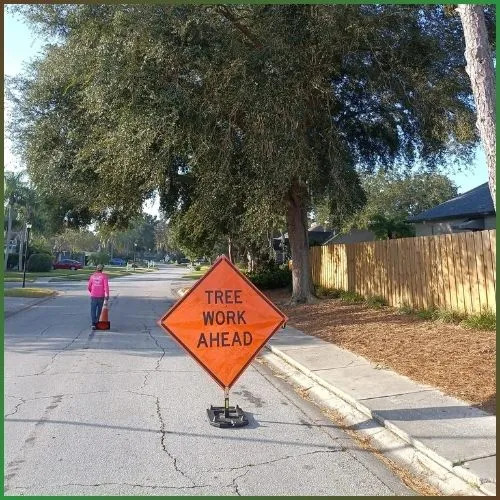
- I see fresh cracks, split bark, or exposed wood on a limb or trunk.
- A limb is hanging, partially broken, or visibly separated from its normal position.
- The hazard is over a driveway, walkway, patio, shed, or near a structure.
- The tree appears to lean more than before or shows new instability after storms.
- Branches are rubbing, wedged, or contacting the house, fence, or other objects.
- There are multiple damaged limbs after the same weather event.
Representative Scenario
A homeowner in Valrico, TX hears small cracking sounds after a wind gust and then notices a large branch has dropped a few inches. It is now resting across the top of a fence line and partially over the driveway. The rest of the tree still looks “green,” but the attachment area shows a new split. Instead of trying to cut the branch themselves, they keep people and vehicles away from the area and call Timber Kings Tree Service to evaluate the hazard and plan safe removal.
Need help assessing a limb hazard?
Call Timber Kings Tree Service in Valrico, TX and surrounding areas so we can help you understand what is unsafe and what steps to take next.
(813) 701-0498Frequently Asked Questions
How do I know if a “broken” limb is still dangerous?
A limb can be dangerous even after it breaks partially. If it is hanging, wedged, or resting in a way that could shift with wind, the remaining connection points may still fail. Look for fresh cracks, separation at the branch union, or bark splitting. Also pay attention to whether the limb is over a driveway, walkway, or structure, because even a small further drop can cause property damage or falling debris.
Should I wait until the weather calms down before calling?
If the limb is actively hanging, rubbing, or located over high-traffic areas, waiting can increase risk. Wind and settling can cause additional movement even on a “quiet” day. When you notice structural signs like trunk lean changes, fresh splits, or multiple storm-damaged limbs, it is smarter to request a professional hazard assessment so the removal plan considers how the tree is currently loaded.
Is emergency tree service only for fallen trees?
No. Emergency limb hazards include partially broken, suspended, or unstable limbs that have not fully fallen yet. These situations can be more unpredictable because tension may still be holding the limb in place. If the hazard is over a home, garage, driveway, or walkway, it is worth treating it as urgent and getting an on-site evaluation.
What should I do in the meantime while waiting for help?
Keep people and pets away from the area under the limb and avoid parking vehicles beneath it. Do not stand on ladders near the hazard zone or attempt to cut it yourself. If debris is present, treat the area like it can continue to drop. If the limb is contacting structures or there are signs of wider storm damage, limit access until a professional can safely assess and remove the hazard.
What if the problem is mostly cleanup and not the tree itself?
After storms, cleanup often involves more than clearing branches. You may need storm-damage removal, plus follow-up work like tree trimming or tree cutting to reduce future risk. If you are clearing land for a project, lot land clearing can also be part of the plan. A hazard-focused assessment helps you determine what needs removal first and what can be scheduled afterward.
Get a hazard-focused plan for your property
If you are seeing limb hazards around your home in Valrico, TX, Timber Kings Tree Service can help you move from “worried” to “clear next steps.”
Contact Timber Kings Tree ServiceAbout Timber Kings Tree Service
Timber Kings Tree Service provides tree care services for homeowners and property managers across Valrico, TX and surrounding areas. Our work includes tree removal, tree trimming, stump grinding, storm damage response, and lot land clearing, with an emphasis on safe, hazard-aware planning. If you need arborist services for tree pruning, crown reduction, crown thinning, or hazardous tree removal, we are ready to help you understand the situation and choose the right next step.
Timber Kings Tree Service
Tree Service in Valrico, TX & surrounding areas
Website: timberkingstreeservice.com
Phone: (813) 701-0498
Related services homeowners often need after limb hazards
Once a hazard is handled, many customers need follow-up tree care to restore a safer, more balanced canopy. Depending on what is damaged, you may also need additional work such as storm cleanup, tree trimming near power lines, or stump removal after tree cutting.