If branches are growing into your walkway, pushing toward power lines, or making your yard feel messy and hard to access, you are not alone. This guide helps you spot the safety risks of overgrown limbs and understand what to look for in tree trimming, pruning, and tree cutting decisions around Valrico, TX.
Last week you noticed a few branches hanging lower than usual. By the weekend, those same limbs are brushing the fence when the wind picks up, and the shaded area under the tree is getting harder to walk through. You can tell something is off, but you are not sure if it is just “overgrown” or if it could become a hazard.
In Valrico, TX, fast seasonal growth and storm-driven branch movement can turn a small trimming need into a bigger safety concern. This guide will help you identify what makes overgrown branches risky, what a safe trimming approach typically involves, and when you should consider related services like tree removal, stump grinding, or storm damage cleanup.
- Quick answer
- What to check first
- Main considerations
- Why this matters in Valrico, TX
- Common mistakes to avoid
- Customer checklist
- Frequently asked questions
Quick Answer
If overgrown branches are hanging low, touching structures, or showing signs of cracking, dead limbs, or unusual lean, the safest move is to schedule a professional tree pruning or tree trimming visit. A reputable arborist team will evaluate branch attachment points, check for dead tree removal needs, and plan tree cutting in a way that reduces damage to the tree and your property. In Valrico, TX, trimming sooner also helps your yard stay accessible after storms. If you are unsure, start with a quick on-site assessment and ask what hazards they see and what the trimming plan would accomplish.
What to Check First
Before you call, do a quick visual walkthrough of the tree from the ground. Look for dead branches, splits, or limbs that rub against the roofline, gutters, fences, or outdoor fixtures. If the branch is already contacting something, that contact often increases the chance of bark damage and instability during wind. Also check clearance above driveways and walkways, because low limbs can create both impact risk and trip hazards.
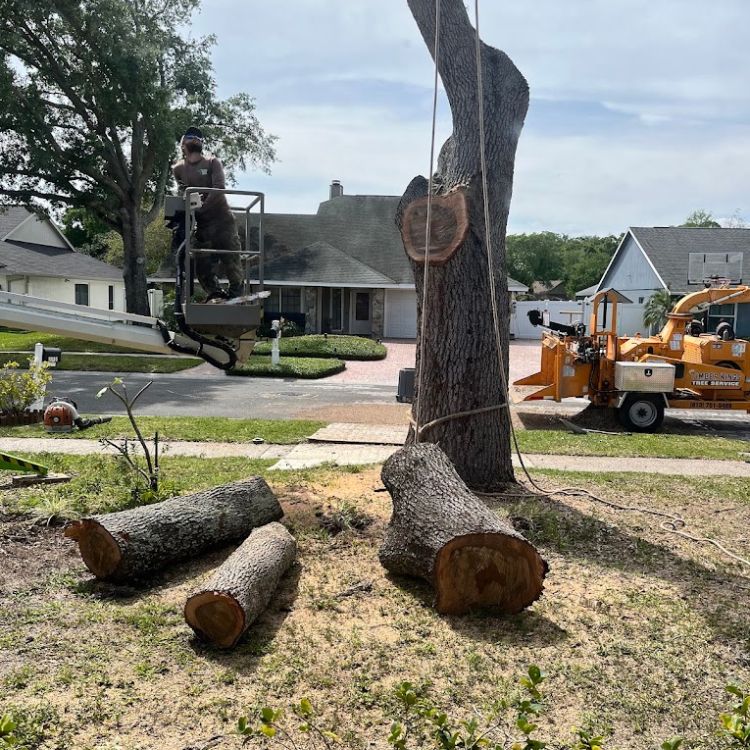
Professional observation: In many yards, the biggest “safety” problem is not the whole tree. It is a few specific limbs with weak attachments, dead ends, or storm-damaged growth that can fail under wind load.
If you can do so safely, note whether any parts look hollow, peeling, or unusually dry. Overgrown areas also hide brush clearing needs at the base, especially when growth has thickened and reduced airflow. Write down what you see (for example: “limbs over walkway,” “dead tips,” “branches leaning toward garage”), since that helps a tree care provider prioritize tree health assessment and cutting decisions.
Main Things Customers Should Understand
Tree trimming for overgrown branches is not just about making the yard look better. The goal is to reduce risk, protect the tree’s structure, and keep your property functional. For homeowners and property managers in Valrico, TX, common trimming objectives include crown thinning, crown reduction, tree shaping, and removing hazardous limbs that are dead or damaged.
| What you notice | What it often indicates | Typical service direction |
|---|---|---|
| Limbs hang into walkways or block driveway clearance | Low clearance and frequent contact risk | Tree trimming and pruning focused on access |
| Dead tips, brittle ends, or branches with no leaf growth | Dead wood that can fail in wind | Dead tree removal as part of pruning |
| Cracks, splits, or limbs rubbing against structures | Potential weak attachment or storm wear | Targeted tree cutting with a safety plan |
| Large limb already removed but stump remains | Stump trip hazard and regrowth potential | Stump removal and stump grinding |
| Tree is heavily damaged after a storm | Fallen tree removal and broken canopy | Storm damage cleanup and hazard mitigation |
Branch attachment matters
During tree pruning, the focus is where the limb connects. Cutting in the wrong place can increase future break risk, so a careful plan for crown reduction or thinning matters.
Tree health is part of safety
Overgrown branches can reduce airflow and sunlight. A proper trimming approach supports tree health assessment and can reduce stress that leads to decline.
Property safety is the priority
A practical trimming plan accounts for fences, roofs, landscaping, and nearby utilities. If you see storm-damaged limbs, consider storm damage service rather than “light trimming.”
Why This Matters in Valrico, TX
In Valrico, TX, many properties have mature shade trees and established landscaping that can grow quickly and become overgrown during the warmer months. Wind and storms can shift branches, making previously “fine” limbs start scraping, leaning, or dropping small debris. When limbs are overgrown, it is also easier for pests to hide in dense growth, and harder to spot early signs of tree disease treatment needs or tree pest control concerns.
One firsthand observation we see often: after a storm, homeowners may only notice the most obvious broken branch. But the safer long-term fix is usually addressing the surrounding limbs that were already stressed. That is why a focused tree trimming plan can matter even when the tree looks mostly intact.
Practical tip: If your property also needs cleanup after wind events, you can review storm damage tree service to understand how hazard removal and debris handling typically fit together.
Need overgrown branches trimmed safely around Valrico?
If you are seeing limbs that hang low, rub structures, or look brittle, Timber Kings Tree Service can evaluate the situation and plan tree pruning, tree trimming, or tree cutting around your property needs.
Call Timber Kings Tree ServiceCommon Mistakes to Avoid
It is tempting to handle overgrown branches with a quick DIY trim. The problem is that homeowners often remove the wrong parts, or cut in a way that increases stress on the tree. Another common issue is waiting until branches fully contact a roof, fence, or walkway. By then, bark damage and instability can be harder to manage without more extensive tree cutting.
Common mistakes:
- Cutting dead limbs without a plan: dead wood can fall unpredictably, especially when it is already under tension.
- Over-pruning for “shape”: aggressive crown reduction can stress the tree if it is not planned correctly.
- Ignoring clearance: trimming that does not restore driveway or walkway access can leave the same safety risk.
- Forgetting what remains behind: if you remove a limb or tree, the stump may still need stump grinding near me-style cleanup for safer footing.
If your situation is moving toward tree removal, make sure you also consider what comes next on the ground. For example, you may need tree removal followed by stump grinding to reduce trip hazards and prevent regrowth issues.
Customer Checklist
Use this checklist before and during your call so you can describe the problem clearly. It also helps you compare trimming approaches and make sure the plan addresses safety, clearance, and tree health.
- Identify where branches are overgrown (walkway, driveway, roofline, fence, patio).
- Note any dead tips, brittle ends, cracks, splits, or unusual lean.
- Check for contact points: rubbing branches, dangling limbs, or debris accumulation.
- Confirm what you want to improve: clearance, access, tree shaping, or crown thinning.
- Ask whether the plan includes tree pruning/cutting choices like crown reduction or crown thinning.
- If a tree was removed or is coming down, ask about stump removal options like stump grinding.
Representative Scenario
Take a common Valrico, TX setup: a mature backyard oak sits near a fence line, and a few limbs have grown into the space where the homeowner parks a small utility cart. After a windy weekend, one branch starts rubbing the fence and another sheds dead twigs more often. In this case, the safest approach is usually a targeted pruning plan. The work focuses on removing dead tree material, restoring clearance for daily access, and thinning the canopy so wind can move through more easily. If the homeowner also notices a lingering stump from an earlier cut, pairing the trimming plan with stump grinding can improve yard safety and reduce cleanup time.
Frequently Asked Questions
How do I know if overgrown branches are hazardous?
Hazard signs include dead tips with no leaves, cracks or splits in limbs, branches that rub structures, and noticeable lean. If branches hang low over walkways or driveways, that can create a safety risk even without visible damage. After storms, pay attention to limbs that shifted position, shed more debris than usual, or feel unstable when the wind blows. A professional tree health assessment can confirm what is truly risky and what can be safely pruned for clearance and tree shaping.
Is tree trimming the same as tree pruning?
They are closely related, and many people use the terms interchangeably. In practice, tree pruning is a more specific focus on cutting techniques and growth goals, such as crown thinning, crown reduction, or removing deadwood. Tree trimming is often the broader term for the overall work done to restore clearance and shape. For overgrown branches, the safest outcome usually comes from an approach that balances pruning objectives with property safety needs.
What should I do if branches are near power lines?
If limbs are near power lines, do not attempt DIY cutting. Treat it as a high-risk situation and keep people and pets away from the area. The right next step is to have a qualified tree service evaluate the hazards and plan work with safety in mind. If the issue is urgent due to storm damage, you can also review emergency tree service guidance to understand how hazard mitigation is typically handled.
When do I need tree removal instead of trimming?
Tree removal may be needed when the tree or key limbs are too damaged to prune safely, when dead tree removal is extensive, or when stability concerns remain after evaluation. If the canopy is compromised or the tree is leaning in a way that suggests weak structure, trimming alone may not address the underlying risk. A thorough assessment can help determine whether crown reduction and pruning solve the problem or whether tree removal is the safer path.
What happens after a tree is cut down?
After a tree or large limbs are removed, the remaining stump can still create safety and maintenance issues. Stumps can be a trip hazard and may attract pests or produce regrowth. That is why many homeowners plan stump removal as part of the overall job. If you are working through an overgrown-branch situation that ends in removal, consider pairing the cleanup with stump grinding so the ground is safer and easier to maintain.
Get a safe trimming plan for your yard in Valrico, TX
Timber Kings Tree Service helps homeowners and commercial property teams with tree care services like tree trimming, tree pruning, tree cutting, and related cleanup when overgrown branches become a safety concern.
(813) 701-0498
Timber Kings Tree Service
Timber Kings Tree Service provides tree care services for properties in Valrico, TX and nearby areas, including tree trimming, tree pruning, tree cutting, stump grinding, storm damage cleanup, and lot land clearing. If your branches are overgrown and you want a practical, safety-first plan, we can help you assess what needs attention and what the safest next step is for your property.