Tree Trimming For Curb Appeal: Fresh, Balanced Canopies
The first thing many Valrico homeowners notice after a storm isn’t the wind damage—it’s the “new shape” of the trees. Limbs that used to sit neatly along the yardline suddenly hang lower, branches cross into walkways, and canopies look lopsided like they were pulled by one side. If you’re seeing that uneven growth (or you’ve noticed branches rubbing roofs, gutters, or overhead lines), it’s a good sign to schedule professional tree trimming before small problems turn into safety issues.
At Timber Kings Tree Service, we balance curb appeal with structural care. A good trimming job isn’t just about making trees look “tidy”—it’s about reducing weak limb load, opening airflow, and guiding growth so the canopy stays healthy through Central Florida’s intense sun, humidity, and storm cycles.
Quick Answer
For curb appeal, the best tree trimming creates a balanced canopy: clean cuts, proper spacing, and selective removal of problem limbs (not blanket “shaving”). In Valrico, this also means accounting for hurricane-force wind behavior—overgrown canopies and poor pruning can increase risk of branch failure. A certified arborist can assess whether your tree needs shaping, crown thinning, pruning for clearance, or—if the tree is compromised—safe tree removal to protect people and property.
What Property Owners Often Overlook
Most homeowners focus on how far branches hang from the ground. That’s understandable—nobody wants limbs over a driveway. But the stability of a tree is rarely determined by a single measurement.
Here’s what we commonly watch for during on-site assessments:
- Canopy imbalance: One side grows faster due to sun exposure, prevailing wind patterns, or nearby structures. Over time, the tree “leans” in its growth habits—even if the trunk looks straight.
- Overextended branch tips: Limbs that have grown long and thin can behave like sails. In gusts, they pull on the branch union and can expose weak attachment points.
- Interior density: Many trees look full outside but are crowded deeper in. Dense interiors trap moisture and can contribute to decline—especially in humid conditions.
- Hidden defects: Decay and cracks are often not obvious from street level.
In one recent anonymized case, a homeowner in a Tampa Bay-area neighborhood asked for “a light trim” around their front oak. The canopy looked healthy from the curb. But when we inspected the limbs, we found a tight cluster of competing branches in the same section—resulting in included bark and rubbing. After selective pruning and crown thinning, the tree looked better immediately, and the structural risk was reduced significantly.
What We Commonly See in Florida Trees
Florida trees grow fast, and the climate encourages frequent flushes of new growth. That’s great for shade and landscaping—until growth becomes unmanaged.
Common patterns we see around Valrico properties
- Live oak limb crowding near eaves and roofs due to proximity and rapid lateral growth.
- Crape myrtle and ornamental trees with multiple stems that form tight “forks,” which can become weak under wind load.
- Pine and mixed evergreens with lower branches that accumulate deadwood and become a hazard during storms.
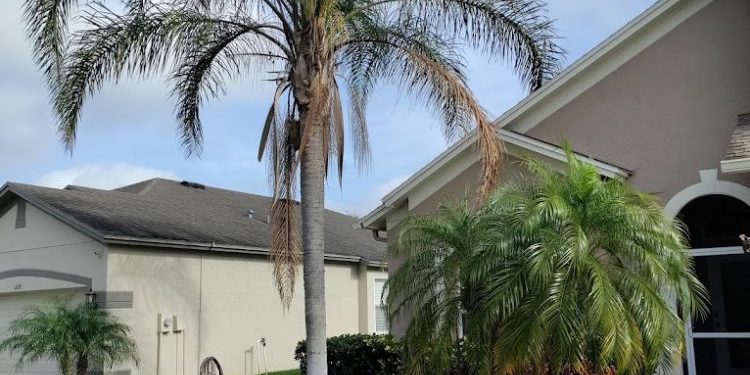
- Palms and understory brush that contribute to cluttered sightlines and can complicate emergency access after weather events.
Firsthand arborist observation (what stands out in the field)
During trims, we often find that the “worst-looking” branches aren’t always the ones that fail. The most concerning limbs are sometimes higher up—where the attachment is compromised or where repeated wind loading has already stressed the union. Proper pruning doesn’t just remove what you can see; it also respects how branches grow and where they connect.
Tree Trimming vs Tree Removal
Trimming can solve many curb appeal problems, but not every situation should end with pruning. The key is matching the treatment to the tree’s condition.
| Situation | Best Option | Why |
|---|---|---|
| Branches are overgrown, crowding, or blocking views | Tree pruning / crown thinning | Reduces wind resistance and improves clearance without removing the tree |
| Branches hang low over walkways/driveways | Tree cutting with clearance goals | Improves safety while preserving the canopy shape |
| Tree has significant structural defects (major decay, cracks, severe lean) | Hazardous tree removal planning | Sometimes preservation isn’t worth the risk, especially near buildings |
| Tree is dead or declining quickly | Dead tree removal | Deadwood can shed unpredictably in storms |
If a tree is hazardous, attempting to “trim it back” often doesn’t address the underlying issue. That’s where a proper tree health assessment matters.
Signs a Tree May Be Hazardous
Curb appeal trims should improve safety, but these warning signs mean you should escalate from casual trimming to a professional evaluation:
- Cracks in the trunk or major limb unions
- Large sections of dead branches or “flagging” limbs
- Mushrooms/conks near the base or on the trunk
- Soil heaving, exposed roots, or a tree that’s gradually leaning more each season
- Branches that repeatedly break or split after minor storms
- Rubbing limbs at the same point year after year (a sign of movement and stress)
Hazard scenario (realistic homeowner example)
Imagine you park under a tree canopy during a heavy rain. After a storm, you notice small limb pieces on the ground near the same area every time. That pattern often points to repeated stress at a specific union—meaning the tree isn’t just “shedding.” It’s failing in cycles. In these cases, selective pruning may be inadequate, and the safest solution may involve targeted removal of compromised limbs or, if the structure is too unstable, full removal.
Mistakes That Increase Storm Damage Risks
Many property owners unintentionally make storm season harder by trimming the wrong way or waiting too long.
Common mistake property owners make
They “top” or over-thin trees to reduce height quickly.
Topping removes large portions of the canopy and forces a burst of weak, fast-growing regrowth. Those new shoots may look dense, but they’re often less structurally sound. In high winds, the result can be more breakage—not less.
Other frequent missteps we see:
- Removing too many internal limbs so the tree loses its natural structure.
- Cutting branches too close to the trunk (damaging tissues and slowing healing).
- Using improper tools that leave ragged edges and increase decay risk.
- Ignoring clearance rules until branches reach gutters, roofs, or power lines.
Maintenance, Removal, or Prevention: Your Storm-Ready Checklist
A great canopy starts with thoughtful maintenance. Here’s a practical checklist you can use before hurricane season ramps up in Central Florida.
Storm Preparation Checklist for Home and Commercial Properties
- Walk the perimeter: Look for leaning limbs, cracks, deadwood, and rubbing branches.
- Check clearance: Measure whether branches over driveways, walkways, and near structures have adequate separation.
- Inspect the base: Watch for exposed roots, soil heaving, or gaps forming around the trunk.
- Assess canopy balance: If one side looks significantly heavier, ask an arborist about crown thinning or shaping.
- Clean up brush and understory: Dense brush can block access for crews and complicate emergency response.
- Plan ahead for aftermath: If you have older trees, schedule trimming early so storm cleanup doesn’t become a rushed emergency.
- Document key trees (especially for commercial lots): Photos and notes help property managers track changes and schedule timely work.
If you’re managing a larger property, brush clearing and land clearing can also reduce debris accumulation and improve access routes. For example, lot land clearing can be the right first step when your site has overgrowth that’s impacting mowing, visibility, and emergency access.
Our Experience Managing Trees During Florida Storm Season
Central Florida storms don’t just bring wind—they bring heavy rainfall that saturates soil. When roots are already stressed or shallow, tree failures can happen even if the trunk looks “fine.” That’s why we prioritize structural pruning and canopy adjustments well before storms.
During storm season, we also see a pattern in the cleanup phase:
- Trees that were trimmed with a plan tend to shed smaller limbs rather than large sections.
- Trees that were “cut back” without proper technique often leave damaged unions that deteriorate further over time.
- Properties that clear brush and manage understory early tend to have less blockage for emergency teams.
When storms do hit, timely response matters. If you need fast help after damage, emergency tree service is designed for the situations where safety and access are immediate concerns.
Tree Pruning Recommendations for a Balanced, Healthy Canopy
When clients say they want curb appeal, we translate that into specific pruning goals—because “nice-looking” and “healthy-structured” should go together.
What we typically recommend
- Crown thinning (selective) to reduce wind resistance while keeping the overall silhouette.
- Crown reduction (when necessary) for overextended limbs that threaten roofs, gutters, or sightlines.
- Targeted removal of dead, crossing, or rubbing limbs to prevent future weak points.
- Structural pruning for trees with included bark or competing leaders.
For many homeowners, the best outcome isn’t drastic removal—it’s smart shaping. A well-executed pruning plan can preserve shade, maintain natural form, and improve how the tree handles gusts.
Residential and Commercial Curb Appeal: One Approach, Two Goals
Residential properties
The goal is often a canopy that frames the home without interfering with doors, windows, landscaping, or walking paths. We focus on clearance, balanced shape, and long-term health.
Commercial properties
For property managers, the priority is liability reduction and operational continuity. Trees over parking lots, sidewalks, and signage need clearance and stability—because after a storm, downtime becomes expensive.
If your property has older stumps or leftover debris from past work, stump management also improves appearance and reduces regrowth issues. After removal, many clients choose stump grinding to clean up the site and restore a smooth, safe surface.
Valrico and Central Florida Relevance: Why Timing and Technique Matter Here
In the Tampa Bay area and across Central Florida, your trees are dealing with rapid growth, high humidity, and frequent storm systems. Heavy rainfall saturates soils, and humid conditions can encourage stress-related issues. Add lightning storms and shifting wind patterns, and you get a landscape where pruning technique isn’t cosmetic—it’s structural.
We also see how sandy soils can affect root stability. When roots are less anchored, storms can expose weaknesses that didn’t matter on calm days. That’s why we recommend proactive trimming for canopy balance and hazard reduction rather than waiting for the next weather event.
References and Arboriculture Notes (Trust Signals)
Professional tree care is grounded in established arboriculture practices. A few widely cited principles support the approach we use:
- The International Society of Arboriculture (ISA) emphasizes proper pruning techniques and the importance of safeguarding tree structure during cuts.
- The National Weather Service (NWS) highlights how strong winds and rainfall during tropical systems can lead to falling limbs and tree failures—reinforcing the value of pre-storm maintenance.
- Research and guidance from arboriculture organizations consistently note that improper pruning (like topping) can increase decline by forcing weak regrowth and disrupting natural structure.
Ready to Protect Your Property and Trees?
If your trees are growing fast, looking uneven, or creeping toward structures, curb appeal is a great reason to schedule trimming—but safety is the real payoff. Timber Kings Tree Service helps homeowners and property managers in Valrico plan trims that improve appearance, maintain tree health, and reduce storm-related risk.
About Timber Kings Tree Service
Timber Kings Tree Service provides tree removal, tree trimming, stump grinding, storm cleanup, emergency tree services, and lot land clearing solutions throughout Valrico, FL and the surrounding Central Florida communities. We focus on safe tree management, storm preparation, long-term tree health, and practical arborist guidance—helping protect homes, businesses, and landscapes before problems become emergencies.