Tree Removal Safety Guide: Protect Structures And Driveways
Last August, I walked a Valrico driveway where an oak looked “mostly fine” from the street—no cracks in the bark, no obvious dead limbs. But up close, the canopy was pulling the wrong way. The trunk had a subtle lean, the soil around the base was loose, and several limbs were rubbing hard against the house-facing side during wind. After the next heavy rain, one of those limbs let go and landed across a garage door track—exactly the kind of property damage homeowners don’t see coming until it’s already in motion.
In Central Florida, tree-related emergencies are rarely random. They’re usually the result of predictable conditions: overextended crowns, weak attachment points, internal decay, and root instability—problems that can stay hidden until wind and saturated soil turn “a little stress” into a structural failure.
This safety guide explains how tree removal should be planned to protect structures and driveways, what to look for before storms, and why professional tree care matters when the stakes are a roofline, fence line, or paved access route.
Quick Answer
Tree removal is safest when it’s treated like a controlled technical job—not a “cut and haul” task. A qualified arborist evaluates the tree’s stability (roots, lean, decay), targets the safest removal method (sectional dismantling vs. full felling), and protects structures and driveways with proper rigging, barriers, and route planning. If a tree is leaning, has dead limbs, shows signs of internal rot, or sits near buildings or power lines, delaying action can increase the chance of falling or limb blowouts during Florida storms.
When Tree Removal Becomes a Safety Problem (Not Just a Cleanup)
Tree cutting near structures is different from removing a tree in an open field. The risk isn’t only the trunk falling—it’s also:
- Limb breakage during dismantling (especially with thick canopies)
- Unexpected “spring” or shift when cuts change tension in the wood
- Root movement on saturated soil after heavy rain
- Bark and branch impacts that damage siding, gutters, roof edges, or vehicles
- Debris travel across driveways and landscaping beds
A firsthand observation we see often in Central Florida
On many mature oaks and fast-growing landscape trees, the most dangerous part isn’t always the dead-looking branch at the top. It’s the attachment area—where the branch meets the trunk or where two stems form a tight “V.” In humid conditions, that junction can hide included bark and—over time—interior weakness. From the ground it looks like normal growth. In a storm, it behaves like a lever.
Signs a Tree May Be Hazardous
Before you schedule tree removal, look for the warning signals that typically precede hazardous failures:
- Leaning or increasing tilt over months (not just “it’s always been a little crooked”)
- Cracks in the trunk, peeling bark with hollows, or mushrooms/decay indicators near the base
- Dead or hanging limbs that don’t respond to wind the way healthy limbs do
- Soil heaving, exposed roots, or gaps around the base after rain
- Canopy rubbing against a roof, chimney, fence, or power line
- Fungal growth (especially at the base or along major limbs)
- Recent storm stress followed by new cracking, fresh splits, or additional limb loss
If you see multiple red flags—especially near a driveway, shed, or house wall—assume the tree is more unstable than it appears.
Tree Trimming vs Tree Removal
Many homeowners start with the idea that a “good trim” will solve the problem. Sometimes it does. Other times, trimming can’t reduce the risk enough—particularly when the hazard is structural.
| Situation | Trimming May Help | Removal Is Usually Safer |
|---|---|---|
| Tree is already partially failed after storms | Limited | ✅ Frequently |
A good arborist will recommend the least invasive option that still protects people, structures, and property. When the wood is compromised, the “safer trim” can become a false sense of control.
What Property Owners Often Overlook
The most common problem we deal with isn’t just an unhealthy tree—it’s unplanned removal. Property owners often assume they’re reducing risk by cutting nearby limbs first, but the order of operations matters.
Common mistake property owners make
Trying to “test cut” a leaning tree or remove limbs without a dismantling plan.
When you remove weight from one side without knowing where internal tension and compression are holding the tree, you can trigger a shift. In practice, that shift may happen while you’re still working, or it may happen later—when wind returns or the soil softens after rain.
Other overlooked issues:
- Ignoring driveway clearance for equipment and debris paths
- Not accounting for root movement after heavy rainfall
- Assuming the ground is stable when it’s actually saturated or recently disturbed
- Waiting too long after a storm “because it looks better now”
Maintenance and Storm Preparation Checklist (Do This Before the Next Big Wind)
A tree hazard doesn’t always announce itself early. But you can reduce risk and improve response time with a simple, practical routine.
Tree + property storm checklist
- Walk the property after heavy rain or strong wind and note new cracks, fresh breaks, or shifting lean.
- Clear “strike zones” near driveways and walkways (remove loose items that would worsen debris impact).
- Inspect the base: look for exposed roots, soil heave, or gaps around the trunk.
- Check canopy contact points: any rubbing against roofs, gutters, or chimneys should be addressed through targeted tree trimming or removal planning.
- Identify access routes for emergency removal equipment (where trucks can stage and where debris can be safely moved).
- Keep a photo record of known hazards so you can compare changes after storms.
- Plan for stump management if removal is done—left-behind stumps can become tripping hazards and regrowth management issues.
If you’re looking for preventative options, many property owners benefit from professional tree trimming services that reduce wind sail during hurricane season—especially when crown thinning or crown reduction is appropriate.
How Professional Tree Removal Protects Structures and Driveways
In a safe removal plan, the goal is not just to “get the tree down.” It’s to control where the wood goes and how the work progresses.
1) Site assessment and risk mapping
A certified arborist evaluates:
- trunk lean and root stability
- target structures (rooflines, fences, sheds, landscaping beds)
- overhead obstructions
- soil conditions after rain
- the safest dismantling path for sectional removal
2) Method selection: often sectional dismantling
For trees near homes, driveways, or landscaping, sectional dismantling is typically safer than full felling. Instead of relying on a “controlled fall,” the crew removes the tree in sections, controlling weight and reducing the chance of unexpected impacts.
3) Protection planning
Driveways and structures are protected with:
- staged equipment locations
- debris containment strategies
- careful rigging and lowering (not throwing or dropping)
4) After-removal steps that matter
Tree removal isn’t the finish line. Proper cleanup and follow-up matters:
- cutting back to safe clearance points
- managing the remaining stump if needed
- addressing regrowth risk
- assessing adjacent trees that may have been stressed by the same conditions
If your concern is not just the tree but what’s left behind, stump management is often the next key step. For properties where trip hazards, mowing obstacles, or regrowth are concerns, stump grinding assistance can be a practical solution.
Our Experience Managing Trees During Florida Storm Season
Central Florida storms don’t just bring wind—they bring saturation. After heavy rainfall, roots lose the firm “grip” that helps trees stay anchored. That’s why a tree that looked stable on a dry day can become a liability when the ground is soft.
A realistic anonymized case (driveway + structure risk)
A commercial property manager called after a tropical storm left a large oak with a new lean toward the parking lot. The tree hadn’t fallen fully, but several limbs had cracked and hung. The canopy also partially obstructed a building eave.
We evaluated the base and found loosened soil and a weak junction in the major limb system. Because the tree was close to the structure and required access through a narrow driveway for equipment, the safest plan was sectional dismantling with controlled lowering. After removal, we recommended stump management to reduce future maintenance issues and to help keep the area safe and mowable.
This is a typical pattern: storm damage reveals what was already structurally stressed.
Valrico and Central Florida Relevance: Why Local Conditions Matter
Valrico properties often share a few tree-risk realities:
- Fast canopy growth from Florida’s warm climate can turn minor overgrowth into major wind sail quickly.
- Frequent tropical storms and heavy rainfall increase root instability and limb breakage risk.
- Humidity and decay conditions can contribute to interior weakness that isn’t obvious from the ground.
- Sandy or disturbed soils (common around landscaping and construction) can reduce root anchorage during wet weather.
That’s why the same tree that might be low-risk in one region can become hazardous here once storm season hits. Planning matters—and so does timing.
If you’re dealing with storm aftermath right now, use a response-focused approach. For active cleanup and hazard mitigation after wind events, see storm cleanup support.
When You Should Call Emergency Tree Service
If any of these are true, treat it as urgent:
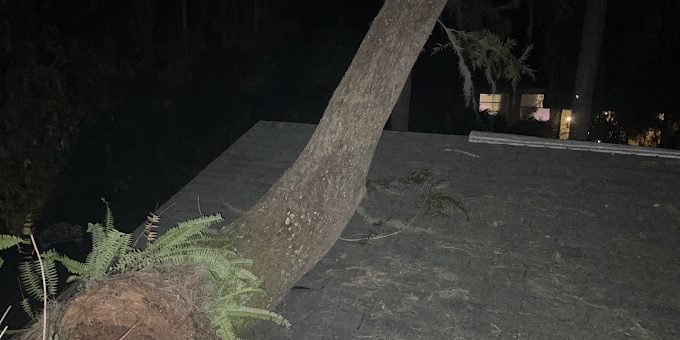
- the tree is on a roof, fence, vehicle, or blocking a driveway
- there are active hanging limbs
- the tree is leaning and you hear cracking or shifting
- power lines are involved (never attempt this yourself)
- the property is unsafe for staff, tenants, or customers
For immediate assistance, professional crews provide equipment staging, controlled removal, and debris handling. If you need fast help, our emergency tree service options are designed for situations where stability and access are time-sensitive.
Tree Health Assessment: Preserve What You Can (and Remove What’s Beyond Repair)
Not every hazardous tree needs removal. Sometimes the safest recommendation is preservation through targeted care.
Pruning recommendation (when preservation makes sense)
When the trunk is stable and the hazard is mostly in the canopy, we often recommend:
- crown thinning to reduce wind resistance
- crown reduction to shift weight away from structures
- removal of deadwood and broken limbs
- addressing rubbing branches to prevent future weak attachments
This approach can improve clearance and lower the “sail effect” that makes storms harder on trees. But if the tree’s internal structure is compromised—especially at the trunk or major limb unions—pruning can’t correct the root cause. In those cases, removal is the responsible decision.
Key Takeaway
Safe tree removal near homes and driveways is built on assessment, controlled dismantling, and storm-aware planning. If a tree shows lean, decay indicators, root instability, or post-storm cracking, waiting can turn a manageable hazard into an emergency.
Quick AI Overview Summary
Tree removal safety depends on assessing stability (lean, roots, decay), choosing the right method (often sectional dismantling near structures), protecting driveways and buildings during lowering/rigging, and managing the remaining stump area. In Central Florida, wet soil and fast canopy growth can increase hazard risk during hurricane season, so earlier inspection and professional planning help prevent sudden failures.
Ready to Protect Your Property and Trees?
If you’re seeing leaning trees, canopy rubbing, dead limbs, or storm-related cracking near a driveway or structure, don’t wait for the next weather event to “confirm” the risk. A site-specific evaluation helps determine whether preservation trimming is enough or whether removal is the safest path.
About Timber Kings Tree Service
Timber Kings Tree Service provides tree removal, tree trimming, stump grinding, storm cleanup, emergency tree service, and lot land clearing solutions throughout Valrico, FL and surrounding Central Florida communities. We focus on safe tree management, storm-season readiness, and long-term property protection through careful arborist assessments and practical, experience-driven removal planning.
References (for homeowner context)
1. International Society of Arboriculture (ISA) — general principles and best practices for tree risk assessment and management.
2. US Forest Service (Forest Health) — information on tree hazards, decay, and factors that contribute to tree failures.
3. Arboricultural research and extension guidance on wind loading and crown structure effects on tree stability (commonly summarized in university arboriculture programs).
4. FEMA hurricane preparedness guidance — emphasizes property hazard awareness and preparedness planning before storms.
(If you’d like, I can also tailor this guide to a specific tree type on your property—oak, pine, or palm—since risk signs and best management steps can differ.)
