Emergency Tree Service for Fallen Branches Tonight
A loud crack, a thud, and suddenly you’re staring at a massive branch across your driveway, leaning on your roof, or blocking the entrance to your business. In Valrico and across Hillsborough County, summer storms and strong wind events can turn a healthy-looking tree into a serious overnight hazard. The National Weather Service reports that thunderstorm wind damage is one of the most common severe weather threats in Florida, causing millions in property damage each year.
For homeowners and business owners, that damage often starts with fallen branches and unstable trees. The decisions you make in the first hour after a branch comes down can protect your property, your insurance claim, and your safety.
This guide walks you through what to do tonight if you’re dealing with fallen branches, how professional emergency crews handle the situation, what to expect from costs and timelines, and how to prevent the next storm from doing even worse damage.
Key Insight: Fast, professional emergency tree service doesn’t just remove branches—it stabilizes your property, protects people, and reduces long-term repair costs.
First Hour After a Branch Falls: Safety, Photos, and Smart Moves
The first 60 minutes after a large branch comes down are critical. The temptation is to grab a saw or rope and “just move it,” but that can be risky and costly.
Start with safety. If the branch is touching power lines, sparking, or you’re not sure, stay clear and call 911 or TECO immediately. Do not attempt to move or cut anything near utilities. Even in the dark, a downed line can be deadly.
Next, secure the area:
- Keep children and pets away from the damaged zone
- Block off walkways and driveways if branches are unstable
- Avoid walking on the branch or damaged roof
Now, document the damage. Use your phone to take clear photos and short videos from multiple angles—especially if branches have hit your roof, fence, vehicles, or AC unit. These images help with insurance claims and give your emergency tree service a quick visual assessment before they arrive.
A Valrico homeowner recently called us at 10:45 p.m. after a large oak limb crashed onto their pool cage. They did one thing very right: they didn’t try to cut anything themselves. The pool structure was under tension from the limb. Our crew used controlled cuts and ropes to relieve weight gradually. Had the homeowner started cutting, the cage likely would have collapsed, doubling their repair bill.
“Rushing in with a chainsaw is how minor storm damage turns into a major structural failure.” — ISA Certified Arborist
Once you’ve documented the scene, call a local emergency tree service that knows Valrico’s tree species, soil, and storm patterns. A team familiar with live oaks, laurel oaks, and pines common in this area can quickly judge whether the remaining tree is stable or a ticking time bomb.
How Professional Emergency Tree Service Works at Night
Middle-of-the-night storm calls look chaotic from the outside, but a well-trained crew follows a clear process designed for safety and speed.
When you call Timber Kings Tree Service for Emergency Tree Service, you can expect:
- Rapid phone assessment based on your photos and description
- Estimated arrival window and clear communication
- A crew equipped with lights, rigging gear, and protective equipment
- An ISA Certified Arborist overseeing complex or high-risk situations
Once on site, we start with a hazard assessment: Is the tree still moving? Are there hanging limbs above (“widowmakers”)? Are there hidden stresses on your roof, fence, or structure?
From there, we typically:
- Establish a safe work zone and set up lighting
- Use ropes and rigging to control how limbs come down
- Make strategic cuts to remove weight gradually
- Protect surfaces with pads or boards where possible
A recent example: A commercial client off State Road 60 had a large limb snap and hang over their parking lot entrance around 1:00 a.m. They needed to open at 7:00 a.m. Our crew used aerial lifts and controlled lowering to remove the limb without closing the entire lot. By dawn, the entrance was clear, debris was stacked for later disposal, and the business opened on time.
CALLOUT: Professional emergency work focuses on stabilization first, cleanup second. The priority is making the site safe and preventing additional damage.
Night operations require more than just chainsaws. Crews must anticipate how limbs will move in low visibility and wet conditions. That’s why working with a provider that does both emergency work and routine Tree Trimming and pruning is valuable—they understand tree structure thoroughly, not just how to cut.
Repair vs. Removal: Deciding the Future of a Damaged Tree
Once the immediate hazard is under control and fallen branches are removed, the next question is: Does the tree stay or go?
In Valrico, many properties feature mature oaks that provide shade, beauty, and energy savings. Removing them is a serious decision. A Certified Arborist will look at:
- Percentage of canopy lost
- Condition of the trunk and major limbs
- Root stability and soil conditions
- Pre-existing defects, decay, or disease
If damage is limited to a few large branches, strategic Tree Pruning and structural support may be enough. If the trunk is split, roots are heaving, or more than 50% of the canopy is gone, full Tree Removal might be the safest long-term choice.
We recently worked with a homeowner near Lithia Pinecrest Road whose laurel oak dropped a major limb on their driveway. The tree had internal decay we discovered during a post-storm inspection. Though the canopy still looked fairly full, a resistograph test showed extensive rot. The homeowner opted for Dead Tree Removal and replacement planting rather than risk another failure.
“Healthy trees bend in storms; compromised trees break where you can’t see the weakness.” — Timber Kings Arborist Team
Here’s how emergency cleanup and long-term decisions often compare:
| Scenario | Short-Term Action | Long-Term Recommendation |
|---|---|---|
| Single large limb on roof, trunk sound | Controlled limb removal, tarp roof if needed | Structural pruning and monitoring |
| Multiple major limbs lost | Remove hazards and hanging branches | Crown reduction or phased removal |
| Trunk split or major lean after storm | Emergency stabilization and partial removal | Full hazardous tree removal |
| Repeated limb failures over 2–3 years | Emergency cleanup as needed | Tree health assessment and likely removal |
A thorough tree health assessment after the storm—rather than just cutting what’s broken—can save you from repeat emergency calls every summer.
Costs, Timelines, and What Valrico Property Owners Can Expect
Emergency tree work is different from scheduled trimming or planned removals. It often happens at night, in the rain, with complex hazards. That affects both cost and logistics.
Several factors influence price:
- Size and species of the tree
- Proximity to structures, fences, or pools
- Nighttime or weekend response
- Use of cranes, lifts, or specialty rigging
- Volume of debris and disposal needs
For context, here’s a general comparison for Valrico-area properties:
| Service Type | Typical Timing | Relative Cost Level | Notes |
|---|---|---|---|
| Scheduled Tree Trimming | Booked days/weeks ahead | $ | Planned, lower-risk, daylight work |
| Daytime storm cleanup (non-urgent) | Within 24–72 hours | $$ | Debris removal, minor hazards |
| Nighttime Emergency Tree Service | Within hours | $$$ | High-risk, immediate response |
| Crane-assisted hazardous removal | Scheduled after emergency | $$$$ | Complex, technical operations |
In one Valrico neighborhood, a severe storm caused multiple limb failures on a single block. Homeowners who called immediately for emergency stabilization paid more for the night work but avoided secondary damage from shifting branches and roof leaks. One neighbor waited several days, trying to manage debris alone, and ended up with a collapsed section of fence and additional roof repairs that far exceeded what emergency service would have cost.
Homeowners insurance may cover part of your emergency tree work, especially if branches damage covered structures. Detailed invoices and before/after photos from your tree company make the claims process smoother.
If you run a commercial property—like an office park, HOA, or retail center—lost access or closed parking areas can quickly surpass the cost of prompt cleanup. Having a relationship with a local provider that offers both Emergency Tree Service and routine Tree Care Services can keep both risk and costs manageable.
Beyond Branches: Stumps, Hidden Hazards, and Site Cleanup
Once the big branches are gone, it’s easy to think the job is finished. Often, that’s when hidden hazards show up.
Fallen limbs can:
- Crack or destabilize smaller trees nearby
- Damage root systems and cause future leaning
- Leave behind jagged stubs that invite decay and pests
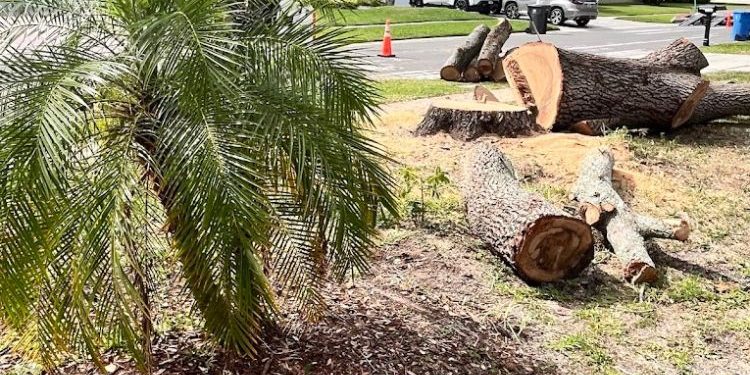
That’s where follow-up services come in. If a storm forces removal of a whole tree, you’ll likely be left with a stump. Leaving it in place creates a tripping hazard, attracts insects, and makes mowing difficult. Professional Stump Grinding takes the stump down below grade so you can re-sod, replant, or redesign that area.
We handled a case in central Valrico where a large pine snapped in a storm, leaving an awkward stump right along a frequently used backyard path. The homeowner initially wanted to “deal with it later.” After two near-trips and one stubbed toe, they called us back. A quick Stump Removal visit and some fill soil made the area safe and clean again.
“Storm damage isn’t fully resolved until the site is safe, usable, and ready for the next weather event.” — Timber Kings Operations Manager
In larger lots or semi-wooded properties, you may also need:
- Brush clearing of broken limbs and debris
- Selective Land Clearing Services where multiple trees failed
- Forestry mulching to manage downed material efficiently
For properties along the Alafia River or low-lying areas, proper cleanup also helps reduce pest harborage and improves drainage, which matters when the next heavy rain hits.
Preventing the Next Emergency: Proactive Tree Care in Valrico
Storms are a fact of life in Valrico, but repeat emergencies don’t have to be. Many night calls we respond to could have been prevented—or at least made less severe—with strategic maintenance.
A proactive plan often includes:
- Regular inspections by a Certified Arborist
- Structural pruning of young and mature trees
- Crown thinning to reduce wind resistance
- Removal of dead, diseased, or crossing branches
- Monitoring for pests and decay
Routine Tree Shaping, crown reduction, and Crown Thinning help trees flex instead of break in high winds. For example, one Valrico HOA we partner with saw a noticeable drop in storm-related failures after implementing a three-year pruning cycle on their common-area oaks.
For properties with older laurel oaks—a species known locally for internal decay—periodic Tree Health Assessments and, when needed, planned Hazardous Tree Removal can prevent that dreaded late-night crack and crash.
Businesses benefit too. Commercial centers with regular Commercial Tree Service see:
- Fewer blocked drive lanes and parking spaces after storms
- Less liability from falling branches over sidewalks
- Better curb appeal for tenants and customers
Preventative care doesn’t eliminate all risk—no tree is 100% storm-proof—but it dramatically reduces the odds that you’ll be calling for emergency help at midnight.
Large Properties, Lots, and Storm-Damaged Wooded Areas
For some Valrico property owners, the challenge isn’t just one fallen branch—it’s an entire section of trees affected by a severe storm. Acreage homes, church properties, and commercial parcels often need a broader solution after high winds or tornado-warned cells pass through.
In these cases, targeted Lot Land Clearing and brush management become part of the emergency response. The goal is to:
- Remove dangerous hangers and leaning trees
- Clear access paths for vehicles and emergency services
- Reduce fuel loads that could feed future fires
- Prepare the site for repair, rebuilding, or replanting
We recently worked with a property owner on the outskirts of Valrico whose back acre was hit hard by a microburst. Several pines snapped mid-trunk, and multiple oaks lost major limbs. Our team first focused on immediate hazards near the home and barn, then returned with equipment for broader Brush Clearing and selective removal.
“On larger sites, the priority is triage: stabilize what’s dangerous now, then plan a phased recovery.” — Timber Kings Project Lead
For these properties, a combination of emergency work, follow-up Fallen Tree Removal, and longer-term land management often makes the most financial sense. Forestry mulching and selective clearing can turn a storm-ravaged area back into usable land without stripping it bare.
What This Means for Businesses in Valrico, FL
For Valrico businesses—whether you manage a small office, a retail center, or an industrial property—fallen branches are more than a nuisance. They’re a direct threat to operations, safety, and reputation.
Blocked entrances, damaged signage, or obstructed parking lots can:
- Delay openings and reduce daily revenue
- Create slip, trip, and fall hazards for customers and staff
- Lead to negative reviews and tenant complaints
Having a trusted local partner for both routine care and urgent response allows you to move quickly when a storm hits. A provider that already knows your property layout, tree inventory, and access points can respond faster and work more efficiently in the dark.
In the competitive Tampa Bay business environment, being the only storefront on the block that’s still cordoned off by caution tape two days after a storm sends the wrong message. By contrast, businesses that invest in preventative pruning and have an emergency plan in place are often up and running while others are still scrambling for help.
For property managers and HOAs, the stakes are similar. Clear roads, safe sidewalks, and accessible amenities aren’t just conveniences—they’re part of your duty of care. Partnering with a team that provides Emergency Tree Service, routine Arborist Services, and post-storm Storm Damage recovery gives you a single point of contact when the weather turns.
Frequently Asked Questions
Q: A big branch just fell on my roof—what should I do before calling an emergency tree service?
A: First, focus on safety. If any wires are involved, stay back and contact emergency services or your utility provider before anyone approaches the area. Keep people and pets away from the damaged zone. Then, take clear photos and short videos of the branch, the tree, and any visible damage to your roof, vehicles, or property. This documentation helps both your insurer and your tree company. Once you’ve done that, call a local provider that offers 24/7 Emergency Tree Service and can dispatch a crew quickly in the Valrico area.
Q: Can I save money by cutting and moving the fallen branches myself?
A: It’s understandable to want to save on costs, but DIY work can be risky. Storm-damaged branches are often under tension; a single cut can cause sudden movement that injures you or causes more property damage. Branches on roofs, fences, or near glass are especially hazardous. Insurance companies may also question claims if unlicensed work makes the damage worse. Using professionals for hazardous Tree Cutting and stabilization, then handling light cleanup yourself, is often the safest and most cost-effective balance.
Q: How fast can a tree service realistically respond in Valrico at night?
A: Response time depends on storm severity and call volume, but a dedicated emergency provider will typically give you a realistic window—often within a few hours for high-priority hazards like blocked driveways, roof impacts, or access issues for emergency vehicles. During widespread events, crews triage calls, prioritizing life-safety and structural threats first. Having an existing relationship for routine Residential Tree Service or Commercial Tree Service can help ensure you’re on the radar quickly when you need urgent help.
Q: Will my insurance cover emergency tree work and stump grinding?
A: Coverage varies by policy, but many homeowners policies will pay for removing trees or branches that damage covered structures like roofs, fences, sheds, or driveways. They may not cover removing a tree that simply falls in the yard without hitting anything. Emergency stabilization and hazardous limb removal are often covered when directly tied to property damage. Follow-up services like Stump Grinding Near Me may or may not be included. The best approach is to contact your insurer, provide photos, and share a detailed estimate or invoice from your tree company that clearly separates emergency work from optional cleanup.
Q: How do I know if the remaining tree is still safe after a big limb falls?
A: A large limb failure is a red flag that the tree may have structural issues or decay. A Certified Arborist should inspect the trunk, major branches, and root zone. They’ll look for cracks, cavities, fungal growths, and signs of past failures. In some cases, targeted pruning and crown reduction can restore balance and reduce risk. In others, especially with older laurel oaks common around Valrico, full Hazardous Tree Removal may be recommended. A professional Tree Health Assessment provides a clear picture and helps you make an informed decision.
Q: What’s the difference between storm damage cleanup and regular tree trimming?
A: Regular Tree Trimming Near Me is planned, controlled work done under good conditions to improve tree structure, health, and appearance. Storm damage cleanup is reactive and often involves unstable wood, compromised trees, and difficult access in wet or dark conditions. The risk level is higher, and the goal is immediate safety and stabilization. Once emergency hazards are addressed, your provider may recommend follow-up pruning, Fallen Tree Removal, or Storm Damage restoration to return your property to a safe, healthy condition.
Q: I manage a commercial property—how can I reduce after-hours emergencies from trees?
A: The best strategy is proactive management. Schedule annual or biannual inspections with a company that offers full Arborist Services. They can identify high-risk trees, recommend Crown Thinning, structural pruning, or planned removals, and prioritize work based on risk to buildings and public areas. For larger sites, strategic Land Clearing Services and brush management can also reduce hazards. Establishing a written storm response plan with your tree provider ensures you know who to call and what to expect when severe weather hits.
Ready to Get Started?
If you’re reading this because a branch is already down tonight, you don’t need theory—you need action. The sooner a professional crew assesses the situation, the sooner you can protect your home or business, secure your insurance documentation, and start getting life back to normal.
Valrico’s storm season doesn’t wait, and neither do unstable branches. Whether you’re facing a limb on your roof, a blocked driveway, or hanging branches over walkways, Timber Kings Tree Service can help with rapid-response Emergency Tree Service, expert hazard assessment, and follow-up care like Stump Grinding and Storm Damage restoration.
Call now to speak with a local team that understands Valrico’s trees, weather, and building styles—and has the equipment and experience to handle your situation safely and efficiently. We’ll walk you through immediate next steps, give you a realistic timeline, and help you move from crisis mode to a clear recovery plan.
About Timber Kings Tree Service
Timber Kings Tree Service is a locally owned and operated tree care company serving Valrico, FL, and surrounding communities. Our team includes ISA Certified Arborists and experienced climbers specializing in Tree Removal, Tree Trimming, Stump Removal, Storm Damage recovery, and Emergency Tree Service. With deep roots in the Tampa Bay area, we focus on safety, honest recommendations, and long-term tree health for both residential and commercial clients. Learn more about our services at https://timberkingstreeservice.com/.